
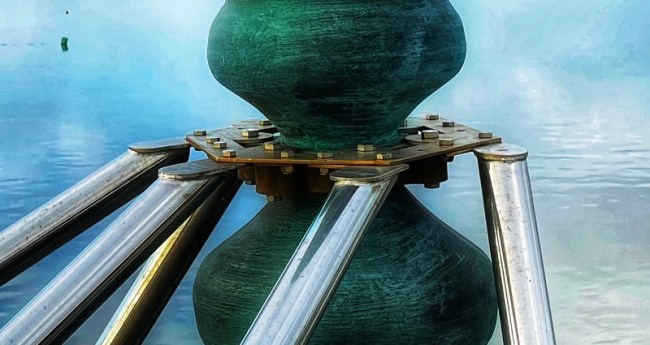
Badly out of pocket in Limoncello after the eagle-eyed spotters of last week’s ‘groyne’ image cut through my deviousness, I’ve upped the ante with this one…
The cunning clue: you wouldn’t want to get caught the wrong side of it!
++++++++++++++++++++ Answer Time ++++++++++++++++++++++
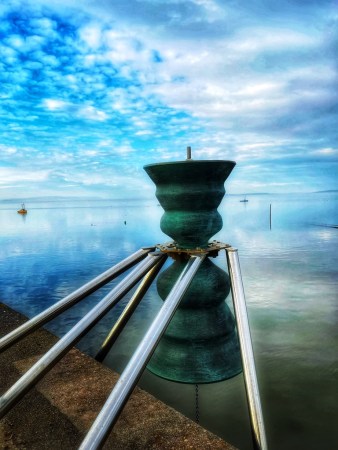
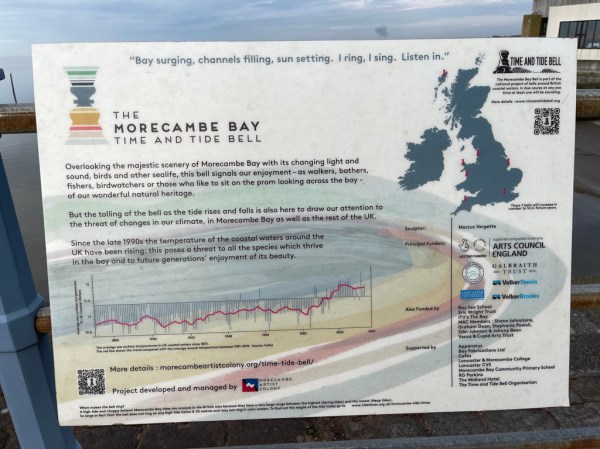
There were no fully correct answers. Audrey Driscoll came the closest, but I’m going to be magnanimous with this one and open two bottles of Cabalié and invite round all those who replied. We can all have a glass of this delicious French red and watch the sunset… well, we could if it wasn’t raining.
Thanks to all who took part. Another mystery image on Sunday…
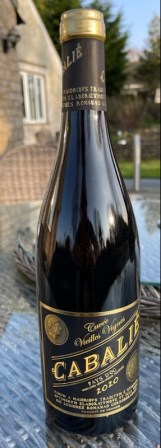
We’re moving to wine for our tantalising tipple…. This is one of our favourite reds, Cabalié; from the Languedoc region of south-east France, close to the Mediterranean Sea. Smooth, lusty and refined… what more could you ask!
The brochure says:
About Cabalié Wine
One of Laithwaites’ customers favourite, Cabalie wine received many excellent reviews as well as a few awards attesting for its high quality. It is produced by the amazing winemaker Hervé Sabardeil in a 2,000 old vineyard situated in the south of France along the Cotes Catalanes.
And no, I’m not on commission… Nor am I a wine merchant!
The answer will be given – here– after 9 pm London time on Monday 28 March.
©Stephen Tanham 2022
Stephen Tanham is a Director of the Silent Eye, a journey through the forest of personality to the dawn of Being.
http://www.thesilenteye.co.uk and http://www.suningemini.blog
Share this:

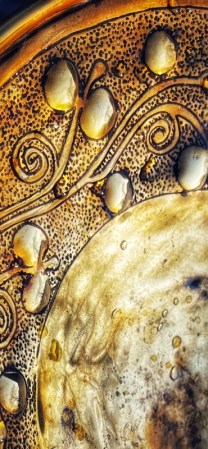
The man put down the copper piece. Its construction had taken months, each day a voyage of learning. The elderly and bearded tutor had been patient, his bright eyes – a contrast to the dark beard – had eagerly overseen the development of the shaping of the copper pieces, then the detailed carving of the flowers, followed by the refinements, and eventually, the final buffing and polish.
At the beginning, the student had known nothing of making art in metal; had never even heard of ‘industrial art’. All he knew were the valleys and hills and the cattle and sheep that grazed on them in the summer… but not in the winter, when there was no work…
In the December of a normal year, he would have been unemployed and near starving to death, with occasional hand-outs from the local church keeping him alive. Until the pasture work in spring returned, he would spend his nights in a barn, graciously granted by one of the farm-owners who employed him in the summer. Being ‘dumb’ – as the inability to speak was then known – was often a death-sentence.
Now he was being called forward to receive the school’s accolade for best-worked piece of the term. Hesitant, he carried the beaten copper ‘raised dish’ through the rows of benches to the front of the class. At the age of thirty-one, but looking twice that, it was the last thing he expected to be doing.
His mentor with the dark beard watched him, nodding and encouraging his progress to the front. When he got there, their class teacher held up the copper dish and the rolled certificate of merit that had resulted from it and said, “Gentlemen, we’d like to present this special award to Tom Hardkess…” he paused, then, as though the emotion were too much. “Tom has been unable to speak from birth, so his gestures are all he has to express his feelings at being such a successful part of the Keswick School of Industrial Art.”
Hardkess turned, nervously facing his classmates – all of them adult males. He bowed and placed his hand over his heart… nothing more. Then he went back to his seat beneath the glowing and somewhat misty eyes of his personal mentor, a man named Hardwicke Drummond Rawnsley.


Hardwicke Drummond Rawnsley wasn’t just the man’s friend and protector, he was the founder of the Keswick School of Industrial Art; one of several such metalworking ‘evening colleges’ found in the Lake District in the 1880s. They were established to alleviate the seasonal unemployment of the region, and, as a social force within the Arts and Crafts movement, to reduce alcoholism among the poor workers of that remote farming region… long before mass tourism lifted it to relative prosperity.
Rawnsley was a church Canon and had served as personal Chaplain to the King, George V. He attended Oxford University before rising rapidly through the church. He was deeply attracted by the writings and speeches of John Ruskin, a fellow student at Oxford, who was a pivotal figure in social reform legislation and the Arts and Crafts movement. Ruskin was a fellow Lake District dweller and I hope to do one of these post on him. Ruskin was the primary sponsor of the artists of the Pre-Raphaelite Brotherhood, a group of English painters, poets, and art critics, founded in 1848 by William Holman Hunt, John Everett Millais, Dante Gabriel Rossetti and William Michael Rossetti.
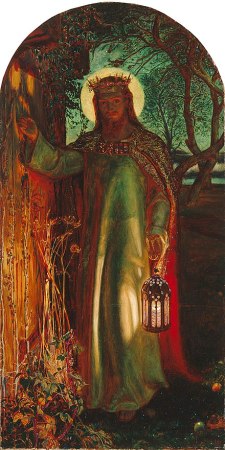
Note to the above Pre-Raphaelite painting: The door in the painting has no handle, and can therefore be opened only from the inside, representing “the obstinately shut mind”.[2] The painting was considered by many to be the most important and culturally influential rendering of Christ of its time. Those of a mystical persuasion may reflect on the deep symbolism)
The Arts and Crafts movement was dedicated to the retention of ‘hand-made’ skills in the face of ‘ugly’ mass production’. We can perhaps smile at the implicit indulgence of those wealthy people who were at the centre of the movement. But it did provide a critical balance to bad design and produced its own practical creations – such as many of today’s most sought-after country houses.
Good design, like art, is timeless…
Rawnsley loved the Lake District. The latter half of his life was devoted to improving the lot of those in his small parish of Crossthwaite, near Keswick. He was a modestly wealthy man, though he donated much of it to local causes.
Canon Hardwick Rawnsley and his wife Edith founded the Keswick School of Industrial Art (KSIA) in 1884. Its aims were to teach woodwork and repoussé metalwork. The school prospered. Within ten years more than a hundred men were enrolled and working on the production of beautiful objects of furniture and metal-based decoration. Shortly the school became self-funding and was able to move to its own building on the outskirts of Keswick – see picture. The school closed in 1984. The building became a restaurant.
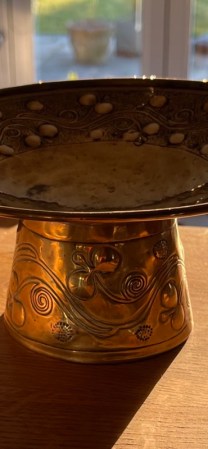
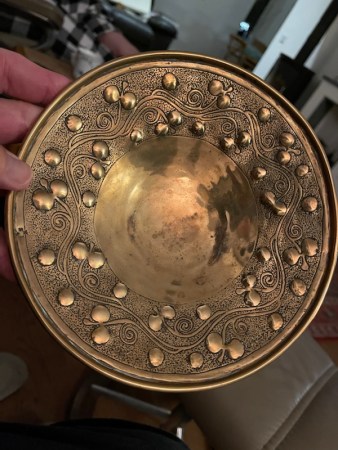
My personal connection with the Kendal School of Industrial Art came about unexpectedly when I spotted the copper dish above in the window of a Keswick antique shop. It was expensive and, after dithering in the shop, I walked away… only to run back an hour later and buy it, declaring that I would have it as a Christmas present. It sits in pride of place in our living room and comes into its own when the summer sun shines on its hand-worked surface. Recently, I began to research the school that created it, and the kind of man whose deft fingers made it… and decided to write this blog; hopefully the first of several on the unsung heroes of the Lake District.

Hardwicke Drummond Rawnsley was a man of amazing energy, he devoted his life to improving the welfare of those less fortunate. In addition to his religious duties at Crossthwaite and as Canon of Carlisle Cathedral, he was a County Councillor in Cumberland and fought hard to extend education to a wider community and to bring about improvements in public health.
He masterminded campaigns against the despoilation of the Lake District by indiscriminate railway construction and mining operations. An active campaigner for the Open Spaces movement, he did much to ensure that public rights of way in the Lake District remained open – ensuring a lasting legacy for the millions of walkers who enjoy its unique scenery. Finally, and to his eternal credit, he was one of three founders of the National Trust, which spearheaded the preservation of our unique history in landscapes and historic gardens and buildings.
Hardwicke Drummond Rawnsley published some 40 books, including biographies, travel guides and accounts of archaeological excavations. He published several volumes of poetry and wrote hundreds of sonnets.
He died in 1920.
There is an excellent family website here.
©Stephen Tanham 2022
Stephen Tanham is a Director of the Silent Eye, a journey through the forest of personality to the dawn of Being.
http://www.thesilenteye.co.uk and http://www.suningemini.blog
Share this:

©Stephen Tanham 2022
Stephen Tanham is a Director of the Silent Eye, a journey through the forest of personality to the dawn of Being.
http://www.thesilenteye.co.uk and http://www.suningemini.blog
Share this:

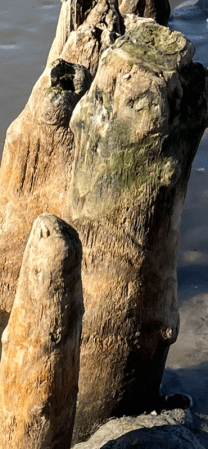
Here’s #4, a very strange object!
A new feature: the ‘cunning clue’ :
‘It may have been there a long time?’
The answer will be published below on Monday evening. This will give time for our blogging friends in far places to consider the image and cogitate!
Please write your entries in the blog’s comments.
Good luck!
————- Answer ————
I’m going to do badly out of this because several people recognised what it was…
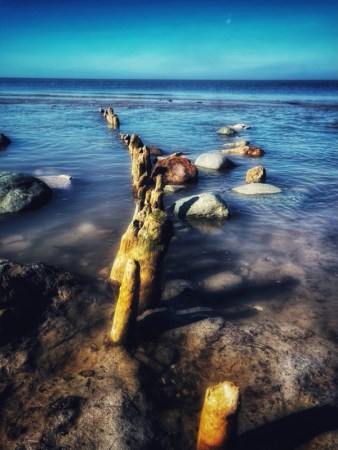
So here’s the bigger picture! It was the wooden remains of a groyne or sea-break on Heysham Beach.
So congratulations and a virtual bottle of Limoncello to each of our winners:
Willowdot21, Caroline and Audrey Driscoll and Pensitivity.
Another one on Sunday…
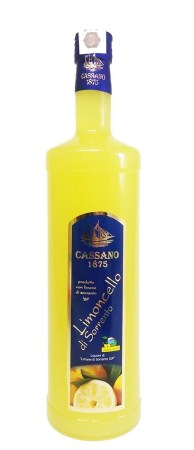
Virtual bottles of this week’s fave tipple, Limoncello, to the two best answers. I’m not bored with this superb drink, yet!
©Stephen Tanham 2022
Stephen Tanham is a Director of the Silent Eye, a journey through the forest of personality to the dawn of Being.
http://www.thesilenteye.co.uk and http://www.suningemini.blog
Share this:


No-one needs reminding of the dangers we now face…
‘World War Three’ seems to be on everyone’s lips. There’s a danger of self-fulfilling prophecy about this, with images of clever told-you-sos grinning after the event… albeit it, briefly.
How did we get here? I’d like to propose four new horsemen of the modern apocalypse: greed, fear, impotence and ego. There’s nothing new about any of them, but, together, they have (in my opinion) come to define an age that was supposed to offer creativity and freedom to a world of people made comfortable by progress.
My father is Ukrainian and my mother is Russian…
Each of us has an opinion, hopefully, though there are signs that having an opinion actually formed by our own thinking is a dying art…
We watch the deadly horror of the nightly news, seeing Ukrainian cities destroyed by the will of a man whose response to protest is greater and more extreme violence. His techniques of destruction were honed in Syria, while the world looked on and did little. He is a psychopath, one of many thrown up by extreme events throughout history; Alexander ‘the great’ spent most of his time pursuing the same path, but history is written by the ‘victors’. Hitler was defeated but only by a remarkable unity of ‘Western’ determination.
They were never enemies…
Such determination is expensive. Britain only recently finished paying off its war debt to the USA. What was left of the British Empire changed at that point, effectively ceasing to exist. Hitler may have been vanquished, (and we should remember this was greatly assisted by Russia) but the new order soon marked itself by virtue of Europe and America’s fear of Communism, and for good reason, though isolated countries produce extreme and often violent responses.
This is a deadly thing when the front line of the technology of war is the hydrogen bomb, several of which will effectively destroy a country.
Such cataclysms are the place where history is re-written, where it comes to an end for many and where the world ‘order’ changes. Occasionally, there are even greater changes. Astrologers tell us we are in one of those periods. There is not sufficient space here to go into details, but the planetary conjunctions of the past two years have been once in a lifetime events…and continue to be so.
Our brotherly nations will then still be able to make peace…
It can reasonably be said that all of this is an externalisation of human nature; that everything befalls country is an outward projection of its collective inner state, which, itself, is the sum of the individual inner states.
That would have been rejected as fanciful before the last century – the period in which man’s internal ‘processes of self’ were finally made visible. We can acccurately label President Putin as a psychopath because we watch him accelerate the destruction of Ukraine and know he feels nothing.
Actually, that’s untrue. The self-centred person feels a lot, and it’s all to do with the inflation of their inner importance, their ego. President Putin knows this is his last chance to restore the cold-war status of Russia and go down gloriously in its history. That this is already impossible, except by coercion on a massive scale, is of no concern to him.
I am ashamed I allowed lies to be told on Russian TV screens…
It’s likely that China does not want a world war, but it does want a new world order. It will become the markets denied by sanctions to Russia, but will set its own price. No-one else will bury from him. Russia will become a vassal state to its Eastern neighbour. Its economy is already tiny, in comparison to other large nations, and the success of Western economic sanctions, although painful to the rest of the world too, are already destroying the rest of Russia’s economic options.
Into the arms of China it will go, leaving the entire far-northern hemisphere dominated by a single super-power, with Europe, now damaged by Britain’s exit at the worst possible time, facing the economically-united northern neighbour. Sobering thoughts…
The Russian oligarchs are an example of extreme greed, but are not alone. London is the world capital of money-laundering. When I last looked, something like 90% of the world’s wealth was ‘owned’ by less than 5% of its people. No-one sane wants Communism, but that Democracy has led us here suggests that Democracy has long ceased being democratic. Its societal manipulation of voters’ minds – gleefully enriched by the ability to buy social media influence – is a war on the individual. We can exercise few choices that affect the super-rich, or the continued growth of their power, just as the citizens of Russia and other authoritarian regimes have no real say in the running of their countries .
We were silent in 2014 when it all started…
Positives… We should end this by examining what they could be. Renewable energy on a massive scale could be one example. Against the odds, and thanks to strategic investment by companies like Siemens, wind power has become efficient and economic. Vast wind farms now operate offshore, delivering an increasingly significant proportion of our energy.
On the negative side, a prolonged economic war with Russia will empower the calls for restored ‘dirty energy’ to be given special and ‘temporary status’. This will include fracking, currently suspended in the UK. The first round of this has been negative from a parliamentary ‘advice’ perspective, but watch this space for manipulation.
Right-wing MP’s have their fingers in many pies. A good deal of funding has come from Russia into their coffers. Serious journalistic investigations are ongoing into the influence of Russian money on the Brexit campaigns. Anything that breaks up Europe benefits President Putin; the rest is common-sense logic for a dictator prepared to poison the city of Salisbury to get to one oligarch.
It’s unlikely we will stop President Putin from destroying Ukraine, though the valour of the people of that brave country is remarkable, and the west has made united efforts to support the democratically elected leaders. ‘Crush and destroy’ will continue to be Putin’s approach; and we needn’t think that he will stop at the Ukrainian border, as his missile attack on the army base only 20 miles from Poland has just demonstrated. It is the action of a determined man, one who cares nothing for the world’s opinion, and has seen how effectively it worked in Syria.
Hitler followed a similar path. He was stopped only by force, far later in the day than it could have been. No-one wants to believe that really bad things are happening… things that change their world-order.
It can be argued that the West had a chance to prevent this. To do so it needed to acknowledge Russia’s right to be protected from having a NATO country on its immediate borders in the former Soviet Union territories. Putin asked NATO not to do this. The West could have invested in Ukraine, economically, without accepting its demands to be a NATO member, thereby creating a buffer zone between European and Russian interests. The economic structures to support this were already well established – just look at the oil pipeline through Germany. Ironically, at the time of checking this post, there are new, ongoing peace talks centred on this very option,
The Ukrainian people would originally have rejected it, since they viewed themselves as politically independent, but how much better might this have been than a destroyed country and a massacred population?
No-one believed Putin would do what he has done. Nor did he believe that the West would be so efficient in its opposition to his actions. So here we are, with Putin holding the balance of terror and the trigger to his nuclear weapons. A psychopath isn’t worried about consequences in the same way that a sane person is.
I always worry when I hear people voicing the opinion that ‘our best hope is that someone close assassinates him’. It’s a clear failure of everything else.
If we have a prayer, beyond the devastating suffering of the Ukrainian people, let us use it for Marina Ovsyannikova, an editor at Channel One, Russia’s state media channel. On Tuesday evening, she rushed onto the early evening live news channel with an extraordinary protest against Vladimir Putin’s invasion of Ukraine.
She has been released after nearly 24 hours of questioning. A fine has been levied for her production of a video accompanying her actions. Other state legal action against her is likely.
I don’t know anyone else that brave… but our collective history does. The quotes throughout this post are hers, taken from the pre-recorded video she left behind. We should be suspicious if she mysteriously falls ill…
Moments such as Marina Ovsyannikova’s TV protest are pivotal in the world’s inner history of humanity. They strike through the slow crawl of politics and bring us into contact with our Being. Perhaps at that level, equipped with the power of truth, and facing our fears, we can make a difference.
©Stephen Tanham 2022
Stephen Tanham is a Director of the Silent Eye, a journey through the forest of personality to the dawn of Being.
http://www.thesilenteye.co.uk and http://www.suningemini.blog
Share this:

+ #Poetry, #Silent Eye, #Silenti, Consciousness, landscapes, Memories, Mystical poetry, Photographic techniques, Photography
Rivers of the Sun
by Steve Tanham
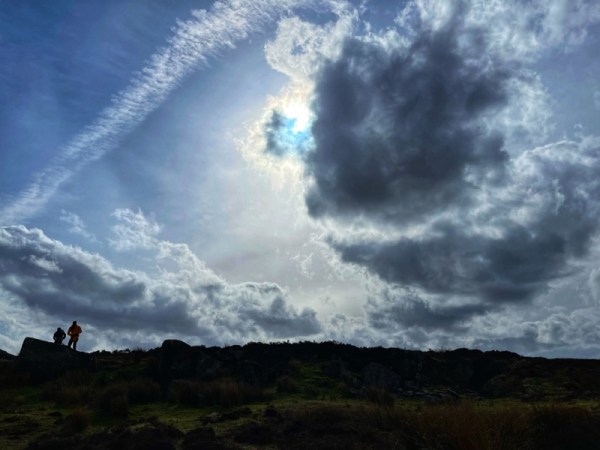
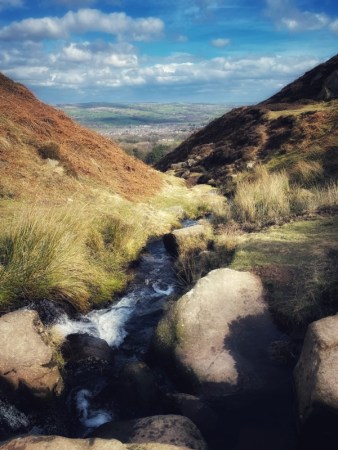
And did we dare, upon these rugged Yorkshire hills.
To dream we could, then frame in would, then do…
Life mirrored in the human word, embracing those who spoke it
With commitment and with love
That, flowing into what was seen up high, in heather heaven
Became, like sparkling stream in winter, a promise.
-;–;–;-
Then, eight circles later of the Sun, you left us
Three into two does go, though not in maths
But in the chambers of the heart and soul
Shared streams still flow from heather’s heights
Forever new, forever home, forever in our thoughts
Yesterday, I heard your voice, homed upon the Ilkley wind
And smiled…
-;–;–;-
©Stephen Tanham 2022
Stephen Tanham is a Director of the Silent Eye, a journey through the forest of personality to the dawn of Being.
http://www.thesilenteye.co.uk and http://www.suningemini.blog
Share this:


People said ‘more!’ after #2 – (the china cup and silver spoon), so here’s another…
Now updated with the answer, see below…
Good luck!
Please write your entries in the blog’s comments.
The blog will be updated with the answer by 11 pm on the day of the post.
The placeholder, below will be replaced by another photo showing the context of the opening image.
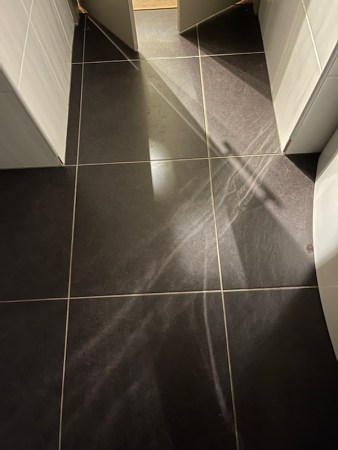
It is a photo of a light-effect cast upon the marble tile floor of an en-suite bathroom. Congratulations to Pensitivity and Caroline for guessing correctly – not an easy image to decipher!
Virtual bottles of this week’s fave tipple both of them…
©Stephen Tanham 2022
Stephen Tanham is a Director of the Silent Eye, a journey through the forest of personality to the dawn of Being.
http://www.thesilenteye.co.uk and http://www.suningemini.blog
Share this:

+ #Silent Eye, #Silenti, Consciousness, esoteric psychology, Higher Mind, Silent Eye School, spiritual turning around
The ejector-seat of self…(1)
by Steve Tanham
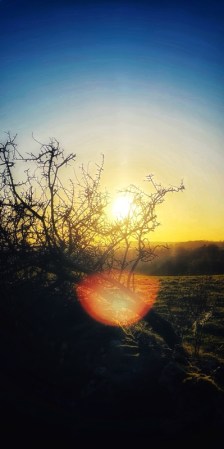
Do we really understand mindfulness? It’s become one of those ‘must do more of that’ sentiments, as though we could press a button on the side of the head.
Perhaps the reason for our chagrin is not that we lack diligence, but that we think it’s a chore… Possibly that we don’t feel pulled or compelled from within to practice it? After all, we don’t need telling to breathe. It just happens because we need it.
Could we build an internal process that mirrors that life-affirming need for air? Could every thought be automatically checked for its origin and purpose, so that our real existence wasn’t diluted in an exhausting maze of events?
The world practice is key. Like (say) piano practice, we know we need self-discipline to reach the results we want – in the piano’s case the ability to make beautiful music. This generally gets agreement, but the word ‘reach’ is telling. Reach suggests that this mindfulness is not a native state to us; is not part of our intrinsic self… It has to be added with effort.
This expectation of effort may be entirely incorrect, and may provide the key to a more intelligent attention beyond ‘duty or practice’.
We don’t need a formal method to investigate mindfulness. We simply need to let our ‘self’ be the teacher. We are learning about that self every time we turn out attention inwards to watch how we work, how we think, why we wander in our thoughts and end up being frustrated and annoyed.
We could wipe clean our mental idea of the mind and investigate it – right now, reading this! The dialogue you are having, reading these lines on a screen, is the mind. It’s not the act of perception – that operates at a lower, unconscious level. It’s the act of interpretation that is the first part of how the mind (me) reacts to the continuous stream of events.
We can listen to this process of registration by seeing how we turn practically everything we experience into language. Reading this – if you are engaged with it – you will be forming the letters into words spoken by your own voice. Did you hear it, then? It’s quiet, but it’s definitely you.
One interesting technique to make this startlingly conscious is to change that voice – literally change it to another person: say, your wife, or your sister, brother, boss, or even your mother… as though they were reading you a story. It’s not difficult but can be shocking when it reveals how adept this language-based part of the mind is at narrating our everyday experience.
Try changing between two or three voices as though you are all taking turns to read aloud…
Now lets make it different. Drive your car, or take a short walk. Note how the inner narrative is created in language as the external events arrive. We may think that there’s just ‘silent me’ in here, but that’s not the case. The ‘me’ is anything but silent and constantly verbalises your experience, based upon the information of the senses and the automation of the pleasure-pain complexes of the past.
Walk this verbalisation carefully and you will notice that it is all based on what’s happening to you. You may think of others, as in a driver saying, “That young fool is driving like an idiot!”. But the observation is based upon a relationship of ‘I’ and ‘he-she’it’, and neither can exist without the other. To have an external ‘it’ we have to have an ‘I’ to which the ‘it’ is external. In a very short time, this gives vast power to the sense of ‘I’ within. Yet, in reality, it may not be there at all… just a very clever nexus of thoughts.
In other words, our mind – our consciousness of our experience – is based upon a subject-object relationship that divides our entire existence into the ‘me’ at the centre of things and the encircling world experienced as flavours of ‘it’.
From this, we can work backwards… and this is where it gets really interesting.
The Hindu philosopher and teacher Sr Ramana Mahararj made this the nucleus of a lifetime’s teachings.
He taught that the beginning of our physical, brain-led lives was the establishment of an ‘I-thought’. As infants, we move from a state of pure consciousness which has no sense of ‘I and it’, to an awareness of and apparent duality of ‘me and that’. This duality gradually separates us, in large part due to our subject-object language, from the vivid purity of our experience, Gradually, but necessarily, we get pushed away from ‘home’ in order that we survive and mature in the world.
In the next part of the story, we will examine how we can build a new state of consciousness simply by asking two questions of the world as its events flows ‘at us’.
©Stephen Tanham 2022
Stephen Tanham is a Director of the Silent Eye, a journey through the forest of personality to the dawn of Being.
http://www.thesilenteye.co.uk and http://www.suningemini.blog
Share this:


The station at Przemsul was frantic. The kind of dirty, smelly and noisy frantic that signals a refugee crisis… I’ve seen a few. My grandfather lived through many and made sure I knew their signature.. and what the reality was beneath the headlines.
They were streaming into the central concourse of the station in their hundreds, eyes wide in terror of the unknown – safe, yes, but not home, not warm, not even together with friends. With fathers left behind to face the tanks in this so-called battle, never complete families…
Like a football crowd, the refugee women emerged from the dark tunnel that bled them from the platforms, off the latest surviving train from Ukraine.
Children…many of them had children. One woman, eyes red with tears and lack of sleep, clutched a small baby inside her quilted coat, only the top of its wool-covered head visible; a thin wisp of steam the only sign of its life. She hurried up the steps as best she could, clutching the left hand of a toddler as she half-urged, half dragged him along the space.
I felt something heavy collide with the heel of my boot, and whirled to get out of the way. A young, smartly-dressed couple hurriedly apologised and edged past me, the woman’s blond hair bouncing with the intensity of her approach. She was pushing what looked like a new pram along the concrete towards the line of emerging refugees.
The pram was packed full of clothes and food supplies; the bright edges visible over the dark sides of the buggy.
Designed in Syria, perfected in Ukraine…
Designed in Syria, perfected in Ukraine… I thought. The quote kept coming back. Filled with the bile it deserved to carry. Images of the many destroyed cities we had seen from the train filled my mind.
The young couple stopped when they saw the refugee clutching her children. The eyes of the women locked on to each other. I could see tears cascading from the blond’s elegantly made-up eyes, over her cheeks, turning to steam in the icy cold.
They continued to approach each other, but more slowly. The refugee began shaking her head… “No. no… not know you,” she said. It was a wail, the sound of last hope dashed.
“You do know me, you know kindness…as you would do for another!” said the blonde, taking the other’s hand and placing it on the frame of the pram.
“This is for you… I’m sorry it is so little, but in here is warmth, and food and a little money. It will help with the children.”
Against my better judgement, and bad for my smart uniform, my own eyes were streaming.
I could taste the agony in the air, as the well-dressed couple pulled away, leaving the loaded pram with the woman and her two children. The toddler had tried to climb into the buggy, but his mother had to restrain him. They were all so very tired. The moment racked my soul. I was glad it did so… it showed I was still alive.
‘You have to do something…his words said, softly in my head. To truly live is to care…’
By rights, I should never have been here to witness this – an Englishman in Poland. But my grandfather’s tales of devastation at the hands of madmen were deeply etched into my consciousness. Having fled to a welcoming England, he had spent the rest of his modest life helping others. He had been so proud of his former skills, that he had paid for my training as an engine driver.
Years later, with a sadly failed marriage behind me, I moved myself back to his former country in search of something real. Now – here – I should have smiled… but didn’t.
The refugee family, along with hundreds of others, had just got off my train… I had to check myself for being so parochial; the train for which I was the driver. The end of a long shift being chased by Putin’s tanks in this ‘battle’ for the soul of a nation had placed me here… Witness. – after the horror – to the most profound kindness. I looked around the station. There were hundreds of prams. All of them filled with simple but life-supporting things. The refugees with children were being guided to them by the station staff.
My grandfather arrived in England with nothing. He had been helped by kind people. The refugee woman before me had nothing but their three lives and the new pram in front of them. I strode the few feet and stood before her. She tensed in alarm at my uniform.
“It’s okay,” I said softly. “I am a kind man, too. I drove your train.” I watched her relax, slightly.
I took a breath and could swear I felt his presence.
“I have a small house here,” I said. Would you like to come home with me and spend a few days while we work out what can be done?”
I reached out my hand… she looked down, then at her children. Then she took it. Her fingernails dirty on my palms. I closed my skin over them to share the warmth. It’s such a simple gesture, but it means the world.
Authors note: This fictional story is based on true events currently happening in Poland, on the Ukrainian border.
©Stephen Tanham 2022
Stephen Tanham is a Director of the Silent Eye, a journey through the forest of personality to the dawn of Being.
http://www.thesilenteye.co.uk and http://www.suningemini.blog
Share this:


#1 was quite popular, so here’s another…
Update is below…
This will answer the puzzle:
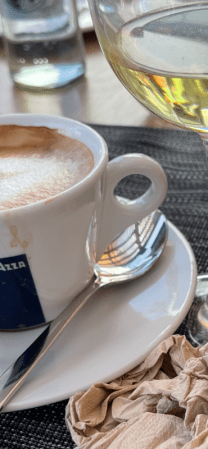
The image was the handle of a coffee cup, with a silver spoon reflecting the border of the cafe in which we were taking a break from our walk In Maspalomas, Gran Canaria – hence the bright sunlight.
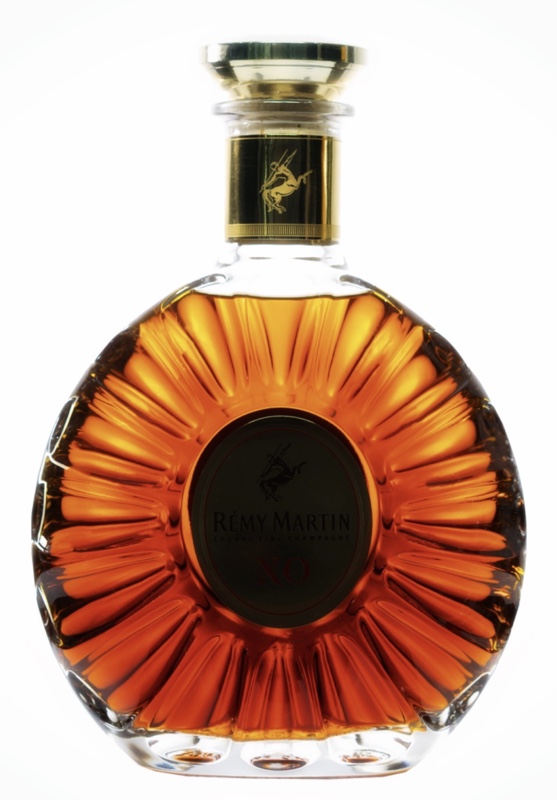
Thanks to all who took place. Virtual bottles of Cognac, as below, go to Jaye at Books and Bonsai and Audrey at Audrey Driscoll’s Blog .
More next Sunday!
Virtual bottles of best cognac for the two closest answers.
©Stephen Tanham 2022
Stephen Tanham is a Director of the Silent Eye, a journey through the forest of personality to the dawn of Being.
http://www.thesilenteye.co.uk and http://www.suningemini.blog
Share this:


It’s looking quite forlorn now
The larder shelves are bare
There’s a rocket in my kitchen
And my kitchen isn’t there
-:-
He doesn’t want the kitchen
That father carved in wood
He only wants its ruin
And the land on which it stood
-:-
My children went outside to play
And found his cluster bombs
All brightly decked with spirals
To reckon all our wrongs
-:-
He speaks another language
Not Russian – that we share
But one that more than has enough
Yet steals my very air
-:-
I was a pin upon his map
A million of us were
But now the dust above the ground
Is all the wind can bear
-:-
There’s a rocket in my kitchen
And my kitchen isn’t there
Nor my children nor my father
There’s just remembering air
-:-
So breathe me and absorb these words
Remember what we were
And hold our home and family
Within a heart not scared to care.
-:-
©Copyright Stephen Tanham, 2022
Stephen Tanham is a Director of the Silent Eye, a journey through the forest of personality to the dawn of Being.
http://www.thesilenteye.co.uk and http://www.suningemini.blog
Share this:

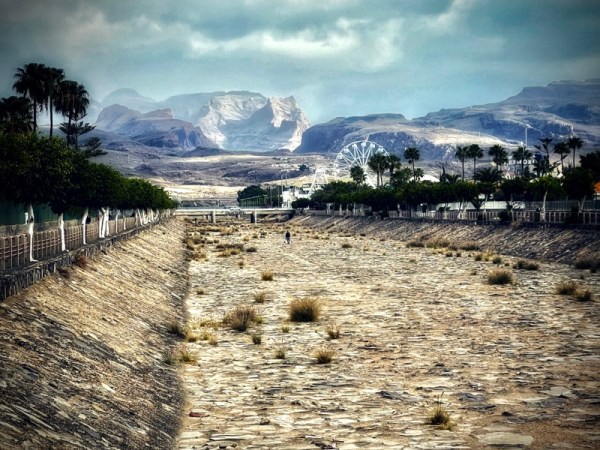
Devoid of real feeling, the Dictator treads his lonely way along his chosen, barren path.
All around him is life, in its shared love and simplicity, but he stays true to the vastness of his egoic channel, long baked by hate into clay that will not sustain growing things.
Behind him, the mountains of ambition keep him focussed on the goal, which he thinks is glory… but really is the ocean, where the parts of his body and brain will be rolled, crushed and broken, before Nature recycles him into dusty history to which we may point, but from which few learn…
©Stephen Tanham 2022
Stephen Tanham is a Director of the Silent Eye, a journey through the forest of personality to the dawn of Being.
http://www.thesilenteye.co.uk and http://www.suningemini.blog


 Sun in Gemini
You must be logged in to post a comment.