+ #Silent Eye, #Silenti, Ancient Landscapes, Ancient Sacred Sites, Consciousness, esoteric psychology, humour
Spirituality in Transition
by Steve Tanham

There are times when you know that a particular world is changing. By ‘world’ I mean a specific part of life, not the whole world, though that could be said to be in a state of apparently chaotic change, too…
The ‘world’ I mean is that of spiritual teaching; and the challenges to its present methods come in various forms:
The major one is the worsening economic situation across most of the planet. If you’re not a billionaire, you’re getting poorer, as essential goods, such as sources of energy for heating, cooking and transportation become the subject of international strife.
When many are struggling to pay essential bills, the idea of paying out more for what appears to be a speculative investigation into the inner nature of ourselves may seem a scrambling of priorities. When such considerations are set at the end of a pandemic, and the world is struggling to get back to some sense of normal, we might expect little interest…
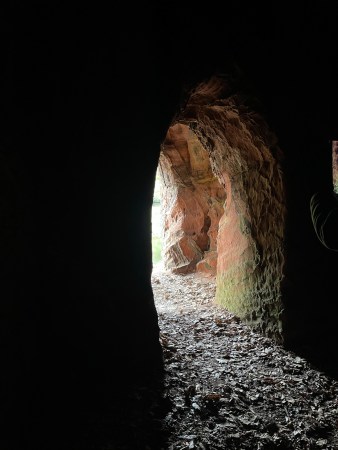
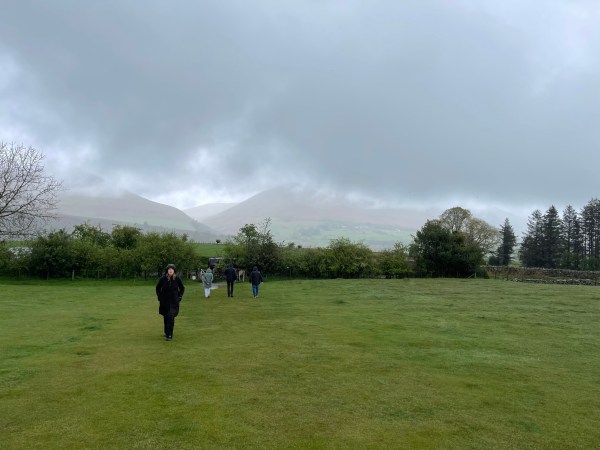
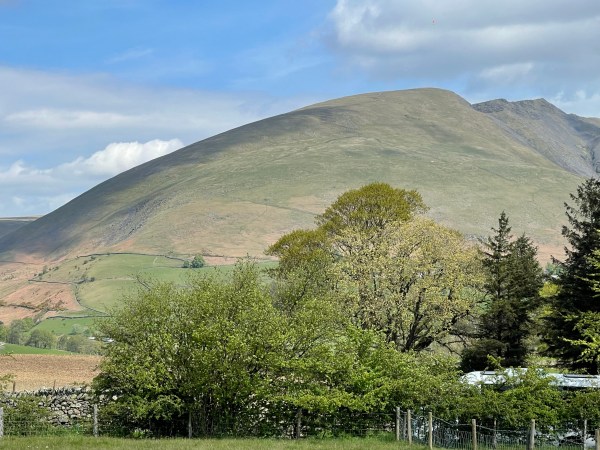
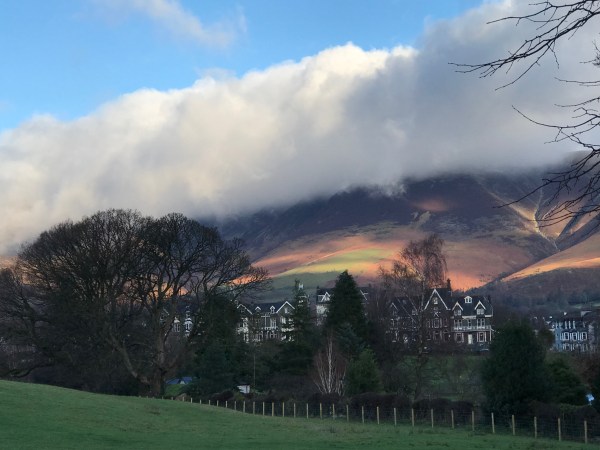
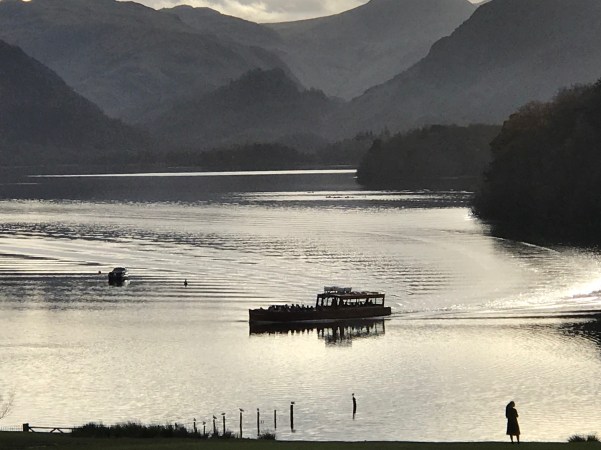
But last weekend, a group of dedicated adventurers from a variety of traditions enjoyed the immense beauty of the northern Lake District in all its spring glory, even venturing into the nearby Eden Valley – home of some hidden and mysterious treasures.
This experiment in using the outdoors, rather than a conventional indoor setting of rented hall, was forced upon us by the decline in the ‘old model’ of how such gatherings are conducted. Covid simply stopped such meetings from happening But it’s eventual fading did not automatically trigger a restart of the ‘old world’. No-one knew what would happen when travel was allowed, again. Things whose time has come can often fail to revive in these circumstances.
To compound the problems, there was a ‘new world’ in town, in the shape of Zoom-based meeting (and similar technologies). In order to maintain some contact with those we used to see, often, we too had begun to hold at least monthly meetings over zoom – involving people from across the world and slowly learning how to conduct meaningful dialogue and shared experiences across international video links.
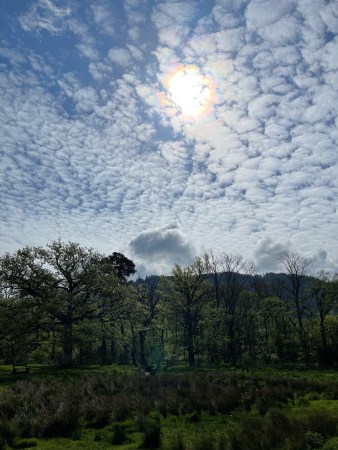
But, although here to stay, most said that video conferencing was no substitute for face to face gatherings. Having said that, the costs of travel and accommodation, post-Covid, mean that Zoom and it’s rivals are here to stay. Although this post is primary to introduce the weekend’s outdoor explorations, the Silent Eye team will be continuing and even expanding their Zoom presence in parallel with pioneering new ways of mystical experience in dramatic landscapes, as in Keswick.
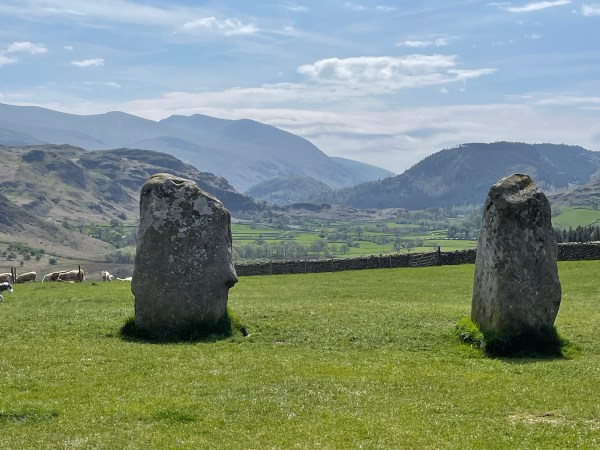
That’s not to say that it was all plain sailing. The weather on the Friday afternoon – our first slot of the weekend – was enough to send anyone home. The ancient stone circle of Castlerigg was the soggy setting for the opening, and it was a challenge to get through, let alone enjoy. But it did begin the event, signaling, possibly rashly, that we were intent on making this happen.
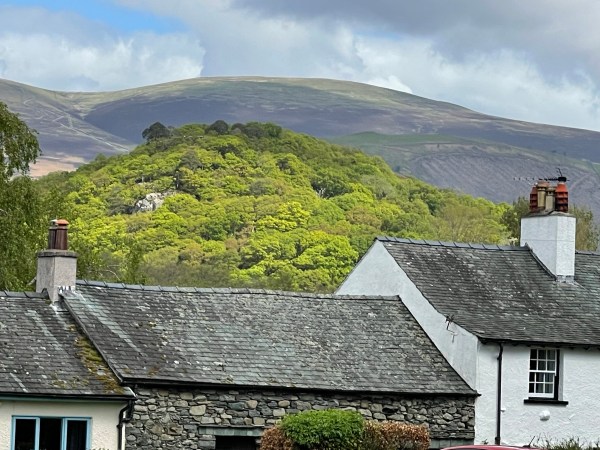
There is always some mischief on these meetings. It would be rash to attribute them to ‘mischevious spirits’ but sometimes it felt like that – especially on the Saturday; that long day of wonderful adventures… and some challenging mishaps.
Yet, enjoy it people did… enough to say so, as we all hugged in the bright sunshine of the final Castlerigg session and resolved to meet again in September.
The photos, here, will provide a taster. The detail – involving much humour and not a little irony – will be presented in what follows over the course of a series of posts. We hope to convey to you a little of what it was like to be there. It’s a wonderful journey and often a triumph over unexpected adversity, but it’s a story that’s never dull…
Part One will be on Thursday, here and on the Silent Eye blog.
©Stephen Tanham 2022
Stephen Tanham is a Director of the Silent Eye, a journey through the forest of personality to the dawn of Being.
http://www.thesilenteye.co.uk and http://www.suningemini.blog
Share this:

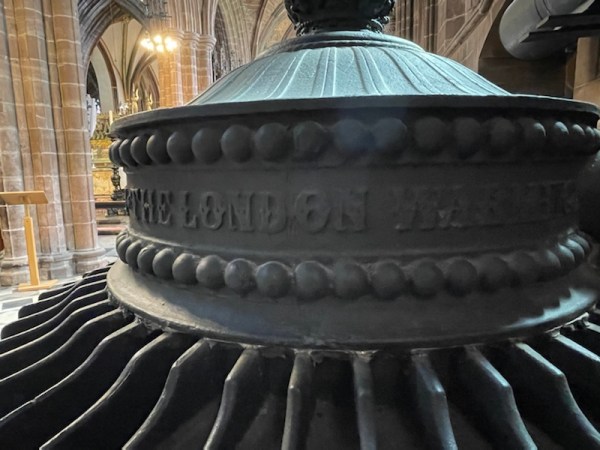
Taken on a weekend trip – which is the only cunning clue I’m giving away, this rather unusual and large object was completely at odds with its surroundings…
Answer+++++++++++ below
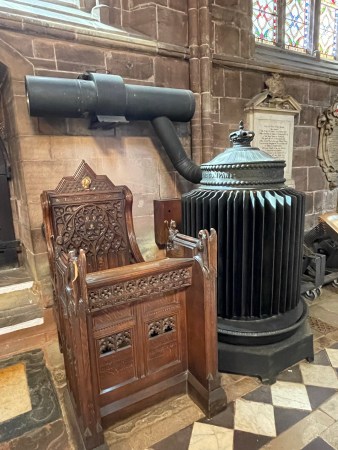
Here’s the solution. I was convinced that no-one would get this but Carol of Carolcooks2 got it on the nose! It’s a very early form of church radiator, with huge, cast iron fins. At first, we thought that it was placed next to the seat of an important figure, but it turned out there were several of them and its positioning was purely engineering-related.
Congratulations to Carol, who gets the first prize bottle of delight. I’m giving a second prize bottle of virtual Limoncello to Di at Pensitivity who offered an old style fire hydrant – which visually was a possible close fit.
Thank you to all who played. Another one, soon!
I’m giving away two more virtual bottles of Limoncello, since I appear to have generated a lots of interest in this wonderful tipple. Treat it with caution – it’s a lot stronger than it first tastes…
Have some fun and enjoy the chase. At the time of publication, Stuart and I will be crossing the Shap summit on the way to the final day of the ‘Journey of the Hero’ workshop in, and around, Keswick.
The answer will be given on Monday evening. Thanks for playing.

©Stephen Tanham 2022
Stephen Tanham is a Director of the Silent Eye, a journey through the forest of personality to the dawn of Being.
http://www.thesilenteye.co.uk and http://www.suningemini.blog
Share this:

+ #Silenti, Ancient Landscapes, Ancient Sacred Sites, Consciousness, English Lake District, humour, mystical travel, myths and spirituality, Photography, Places and Prose
Orderly and Aligned?
by Steve Tanham
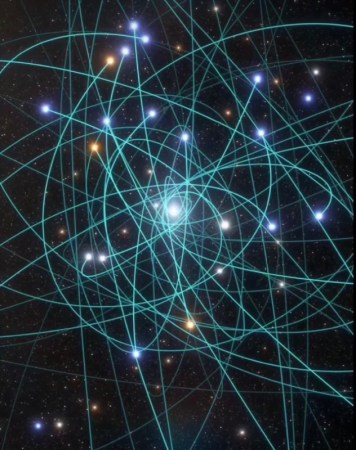
There’s an old aphorism in the field of teaching mysticism: that if you endeavour to do something of significance; something that requires careful planning and even more careful resourcing, then you will be surprised how ‘testing’ the ‘final approach to the event will be. Moreover, the difficulties thrown at one may- humorously – be taken as a reflection of the event’s importance.
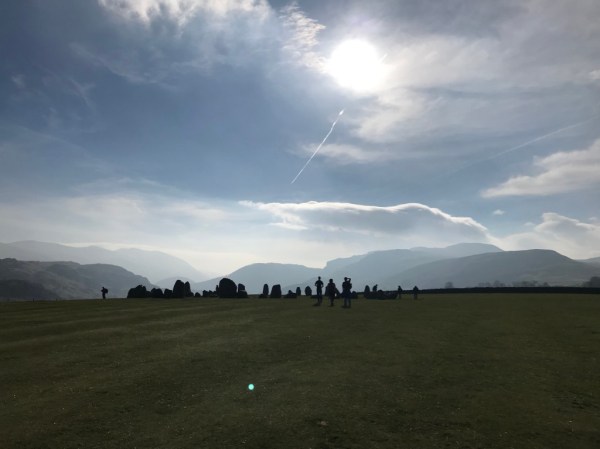
The word’s ‘final approach’ are borrowed from the art of flying a plane. As a much younger man, I did have ‘private pilot’ flying lessons; about fourteen hours of them in total, nearly enough to do my first solo flight – a big moment in a trainee pilot’s life… Sadly, we set up a software company at that point, and I didn’t have the time to dedicate to anything other than commercial survival…
I remember those days of flight-training, well. I learned a lot about how focussed pilots have to be in those last few minutes – then seconds – before the wheels hit the ground, hopefully together and in an orderly and aligned way. My instructor had a great sense of humour and those words of his stuck in my memory.
The same is exactly true of running a mystical workshop – any workshop, in fact, that requires acres of planning and ‘what if?’ testing.
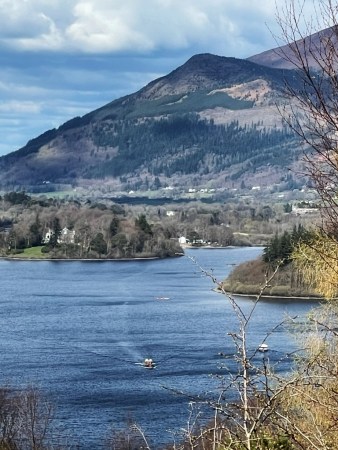
In theory, the Silent Eye’s ‘Journey of the Hero’ workshop, centred around the beautiful town of Keswick in the northern part of the English Lake District, was ready to roll about a week, ago. All the proposed walks – along lakes, rivers, ridges and mountains, had already been rehearsed and timed. The written material for our opening and closing ceremonies at the wonderful stone circle of Castlerigg had been examined and fine-tuned.
The only thing that remained was for me to design a new language…

J.R.R. Tolkien was a professor of ancient languages, and once designed the whole Elvish language so that the books comprising the Lord of the Ring trilogy would be founded in an actual spoken tongue. My admiration for this knows no bounds, especially since I’ve spent the last several weeks attempting to create an infinitely simpler language of ‘gesture’ so that we can carry out part of the workshop in complete silence…
It’s part of a series of ‘triggers’ that, with the right sense of place can induce the ordinary rational mind to have a rest and let the whole of our being come out to play. For hundreds of years we have lived too much in one side of our minds, and much damage is being done by this. The high goal of the Journey of the Hero weekend is, in some small part, to extend this.
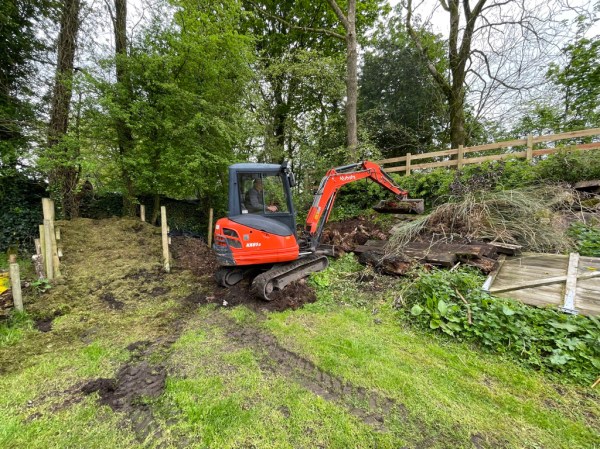
And then the Fates began to have their sport…
On Sunday, Simon – a local contractor who has done wonderful things with a small digger to remodel what was once an old canal and now actually looks like a garden – called by in his pick-up truck to tell us that he was ready to start work on our new fence… the day after. The old fence having been storm-damaged some time ago. I swallowed hard. Part of the deal with Simon is that, when needed, I act as his labourer. It’s not exploitation; it’s just that he’s a one-man-band and wants to stay that way. It’s not even a money thing, it’s simply a question of time. He’s very good at what he does and works on the projects he likes and with the people he gets on with. The issue is that he’s always short of time to finish each project, and deeply appreciates my help fetching and carrying things and materials (like truckloads of earth) to his point of focus in the garden. We had waited three months to get him back, and the spring was in full riot… I had little choice…
In the middle of his first day, with me a dirty and sweaty bundle, the phone rang, again. This time it was the company from whom we have just ordered two exterior doors to replace the low-budget ones we had to settle for when the ‘building fund’ ran out, ten years ago. This company came highly recommended and we were eagerly awaiting their arrival… just not this week. We said yes, of course, knowing that it was going to detract from the available time to ‘write that language’.
Fast forward to this morning, when, after the third 05:30 start in as many days, we were driving through a violent downpour on the M6 south, enroute to our annual checkup at our old dentists near Chorley. We liked the team there so much, we elected to stay on their books and put up with the hour’s travel when needed. I’d already allowed for this interruption to the week’s plan, but not in concert with the other two… My ‘light aircraft’ was fast becoming, in the immortal words of Johnny Depp in the film Pirates of the Caribbean, ‘full of ‘oles’. I was beginning to lose my presence of mind.
And then, on the outskirts of our destination, the mobile rang in the car. It was the receptionist from the dentist… frantic. She’d just arrived in, to find a phone message from her boss (the dental surgeon) to report that he’d been up most of the night with food poisoning – possible Norovirus. She knew we had driven down from Kendal through torrential rain… for nothing.
It was then that the magic happened. My wife and I looked at each other and burst out laughing; assuring the lady that it was okay; just another link in the testing chain of the week and something that could be re-arranged.
So here I am… typing away, having lost three days of my ‘finals’ week and hoping my remaining energy reserves will pull off a small miracle and deliver that ‘language of gesture’ before we leave for Castlerigg on Friday.
It’s not the first ‘final approach’ to an event that has been bumpy like this. Hitherto, they have gone well. I think I can see that small strip of safe landing space in the far distance. It’s starting to look orderly and aligned… I just hope my wheels are, too. Wish us luck!
©Stephen Tanham 2022
Stephen Tanham is a Director of the Silent Eye, a journey through the forest of personality to the dawn of Being.
http://www.thesilenteye.co.uk and http://www.suningemini.blog
Share this:


Answer: So I’d better reveal the story of the strange object in the photo. We ran many Silent Eye weekends over the past decade. The events were all stories where each person played a part, reading their part as though doing a final dress rehearsal, but these were real and carried a high degree of involvement and intensity.
Knowing how many parts to write was a nightmare. If you found yourself short, then people had to be asked to ‘play’ two parts, which make their enjoyment more challenging. One particular workshop, River of the Sun, was set in Egyptian times and told the story of a trainee priest of the Sun who had to navigate the wrath of a visiting Rameses II.
I had been looking forward to a ‘year off’ in the sense of simply directing and carrying out the job of musical technician – starting dramatic music and sound effects requires careful timing. In the two days before the workshop, two attendees came down with flu and were unable to attend. This meant we did not have enough people to stage the ‘play’ as planned.
In desperation, I sorted through my electronics drawer and found I had bought – then forgotten – a small but powerful portable speaker: the blue object fastened with wire wrapped in gold cloth in the above image. The snake was one of the props used by a character that I now had to play… plus I had to be the technician as well. To make this work I had to carry around the music (hosted from my iPad) as well as reading the character’s part from the same device.
The ‘tech-snake’ as it came to be known, achieved a degree of notoriety and served us well. The workshop, with its play and music, was judged a success by all. The combination of snake and tech saved the day…
TanGental’s response was popular with everyone, so I’m going to award both bottles of Cognac to him. Well done, Geoff. Thanks to all who took part. Another one next Sunday…
Original text below:
Slight change of emphasis with this one – and some wacky fun.
It’s pretty obvious what it is… in one sense. But!
Here’s a clue: it rescued me at a Silent Eye event a few years ago. That’s all I’m saying!
I’m giving away two virtual bottles of Cognac; one for the most accurate answer (including ‘why it is’), the other for the most humorous answer to ‘what’ it is.
Have some fun and enjoy the madness…
The answer will be given on Monday evening. Thanks for playing.
You’ll need a strong and refined tipple after having a go at this one, so here’s one I consider among the best: A VSOP Courvoisier Cognac.
The supplier (Virgin wines in this case) says about this fine Cognac:
- All Courvoisier Cognacs are double distilled in traditional 25 litre alembic stills to create eau-de-vies of epic intensity.
- Master Blender Patrice Pinet carefully selects each barrel and skilfully brings them together to create exceptionally fine brandy.
- This VSOP (Very Superior Old Pale) Cognac is smooth, has lovely oak spice, floral notes and plenty of lovely stone fruit character.
- Stephen Tanham is not on commission!

©Stephen Tanham 2022
Stephen Tanham is a Director of the Silent Eye, a journey through the forest of personality to the dawn of Being.
http://www.thesilenteye.co.uk and http://www.suningemini.blog
Share this:

+ #Silenti, Consciousness, esoteric psychology, Higher Mind, Love, meditation, Photography, Psychology
Painting the Universe (1)
by Steve Tanham
There are some ‘big blocks of colour’ in an understanding of the mystical perspective – which is the inner truth of our lives. Even a cursory examination of these brings great value. Let’s consider them…
Foremost of these is that there is a more powerful Life behind life; that the life we see is seen through a lens that distorts, and that our belonging, our real identity, is with that which is beyond the distorted lens. The basis of this is quite simple, but let’s approach it carefully.
The Sufi philosopher and poet, Rumi, wrote:
“Your task is not to seek for love, but merely to seek and find all the barriers within yourself that you have built against it.”
What did he mean? Was he simply talking about love between two people – that we should devote our lives to ordinary love as we know it? Clearly this is insufficient. We can sense something vast in what he was trying to import, something that used the passion of love as a metaphor.
The Sufi poets used both ‘love’ and ‘wine’ to convey the experience of what lies beyond the clouded lens we use to look at the world. They also had a special meaning for the word ‘Beloved’. We will examine all of these in this series of posts.
True teachers of the ‘mystical life’ see – by direct experience – that there is a deeper life centred in the human consciousness. Our ordinary consciousness is a product of a ‘self’ developed from birth onwards. This self sees and feels objects around it. Some of them are pleasant and some aren’t. Because the newborn has no sense of itself – it simply is – it hungers to know more, and so adopts these reactions to the objects around it.
It’s a tasty world, and the child is hungry to understand it… and even more hungry to understand it-self, since this is where all the impressions of its world come to reside and stay. Even at this stage, the brain is busy recording the history of the person, generating a vast store of experiential data that will be added to all its life – as the primary filter (memory) against which all experience will be judged.
The adoption of these vivid early impressions becomes its first identity. We all have a primal hunger to know who we are. These patterns of identity, like and dislike, become the foundation of its character, its self. As the child grows, we say it develops a personality, more accurately, an egoic self.
We all have one… we were all once children experiencing this, hopefully under the loving eyes of our parents, who could do no more than guide the child to be what they were…
The word ego was bestowed on the developing self by the pioneering psychologist Sigmund Freud, whose work showed that the egoic-self had three divisions: id, superego and ego. As the child developed, it suppressed – under guidance from the parents – some of the wilder instincts in its nature (the id) – in order to fit in with the expectations of the parents, and, later on, society. This pattern of censure became the superego. Between id and superego, the child developed an identity of ‘acceptable me who gets praise’ and this is viewed as the ego, though really it’s part of a three-fold psychological structure.
From this early stage, the child colours everything that happens to it with the lens of its egoic-self. As the growing human becomes more capable, it fortifies its self. By adulthood, it is a suit of armour, which, initially, is wonderful… but gradually is seen to progressively dull the experience of life. This ‘dulling’ invites a question: If the suit of armour of the egoic self is all there is, then how does it know that fresh expereince has become ‘dull’?
Wordsworth famously wrote:
“Our birth is but a sleep and a forgetting: The Soul that rises with us, our life’s Star, Hath had elsewhere its setting, And cometh from afar: Not in entire forgetfulness, And not in utter nakedness, But trailing clouds of glory do we come From God, who is our home: Heaven lies about us in our infancy!”
It is a profound re-telling of what I’ve written above, but written in the 1790s. It illustrates the depth of perception that great poetic and emotionally sensitive minds have always found, in ages that did not possess the idea that truth had to be numbers…
We shall have more to say about these ‘clouds of glory’ and – without trying to upset anyone, God, in future posts of this series.
For now, let’s close Part One, with the idea of ‘Object Relations’, an understanding of which, in the context of the truly spiritual, is the basis of these blogs.
The different experiences that colour the infant’s perception, and eventually becomes adopted or ‘imprinted’ on the child’s consciousness as building blocks of its identity, are referred to in developmental psychology as ‘Objects’ – that is, they are recognisable as separate things, capable of being labelled by the consciousness. In others words, they have repeatable properties. The field of Object Relations is one of the backbones of modern psychology. But this series of blogs is not intended to focus on psychology, beyond borrowing some of its words. Our purpose is to pursue Wordsworth’s ‘clouds of glory’ to see if the nature of the early ‘objects’ in our consciousness actually contain signposts back to the Greater Life from which we came…
And whether we can, in our modern world, remove the many barriers to Rumi’s ‘love’.
©Stephen Tanham 2022
Stephen Tanham is a Director of the Silent Eye, a journey through the forest of personality to the dawn of Being.
http://www.thesilenteye.co.uk and http://www.suningemini.blog
Share this:


The great Victorian steamers that used to take excited day-trippers across Morecambe Bay to glimpse the still distant splendour of the Lakeland fells are gone.

Much later, old and tired ships would be chained to the north side of the industrial dock and broken up for valuable iron; to be re-smelted and given new life via giant and ‘satanic’ furnaces in Salford and Sheffield.

The space at the start of its length was large and open, and looked across at the terminus of the Midland Railway – the reason that Morecambe could attract so many visitors in its heyday.
And then, in the course of a the decade of the 1930s, not long after the end of the ‘Great War’, in an age when the well-off were intent on enjoying themselves, two wonderful things happened to the bleak and largely abandoned Stone Jetty.
The first was the creation at its landward end of the new Midland Hotel – an Art Deco masterpiece known across the world.


The second was the opening of Morecambe’s state of the art ‘Super Swimming Statium’ – a giant pool that had a record-breaking capacity of 3000 people.

Time passed… and the hundreds of thousands of visitors who flocked to Morecambe during the industrial ‘wakes weeks’ dwindled. Cheap flights and guaranteed sun drew families to spend their precious summer holidays in Spain. Morecambe suffered, badly. To this day, its promenade, though popular for day-trips, still holds a fraction of those of its Edwardian heyday.
The Super Swimming stadium is long gone, as is the much smaller ’Bubbles’ pool that replaced it. The Midland Hotel thrives, newly restored by developer Urban Splash and now owned by English Lakes group.
But the Stone Jetty remains. Simple and enduring, stretching far out into one of England’s most beautiful marine landscapes, it retains a special magic born of time, endurance and something special that no-one can define. These days it simply sports its spectacular views and a small cafe half way along its quarter kilometre length.
But, a few times a year something truly magical happens…

At certain high-tides, the sea appears to rise up and nearly engulf its structure. People flock to experience the remarkable ‘peace’ as the high-water laps quietly around its concrete and stone.

People begin to gather at the end of the Stone Jetty. Everyone is quiet, as though hypnotised by the feeling of the place…


At moments like this, I feel a new perspective emerging, one that takes us from the grime of the old ship-breakers to the splendour of nature and the potential of Morecambe Bay to fascinate and enchant, I hope you’ve enjoyed this journey though the Stone Jetty’s past and present.
©Stephen Tanham 2022
Stephen Tanham is a Director of the Silent Eye, a journey through the forest of personality to the dawn of Being.
http://www.thesilenteye.co.uk and http://www.suningemini.blog
Share this:

+ #Silenti, Lake District, nature, Photographic techniques, Photography, Places and Prose, Silent Eye School
Light in the Park
by Steve Tanham

It’s not a park in the usual sense of the word. Levens Park is the ancestral home of the Bagot Family who maintain a footpath along both sides of the often turbulent River Kent as it winds its last mile out to join the vast expanse of Morecambe Bay.
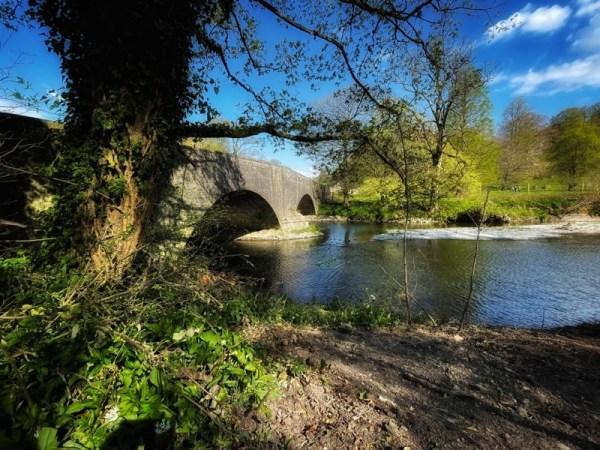
The ‘park’ is the perfect place to walk the collie. A round trip from Sedgwick takes three hours, so it’s a great benefit that the Bagot’s manor house – Levens Hall – has a tea room. Sadly, it only allows dogs in the open courtyard. We’ve got used to dining outside… even in this dog-friendly region.
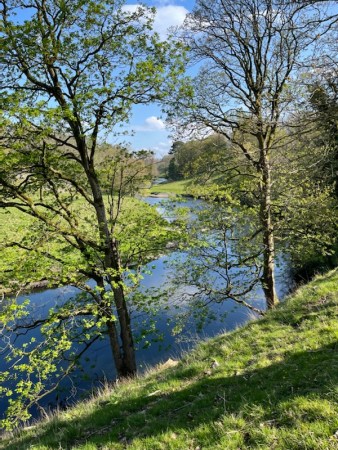
There are usually a few days at the end of April when the bright sun and spring greens make this place a joy to photograph.
Today was one of them…
©Stephen Tanham 2022
Stephen Tanham is a Director of the Silent Eye, a journey through the forest of personality to the dawn of Being.
http://www.thesilenteye.co.uk and http://www.suningemini.blog
Share this:

+ #Silent Eye, #Silenti, Consciousness, enneagram, esoteric psychology, Higher Mind, meditation, Mindfulness, Mystery Schools, Photography
Shaping the unshapeable
by Steve Tanham
We had a lively discussion the other night; ten of us linked at 8:00 pm, English time, across the planet…
On these occasions, it’s hard not to be moved by the sheer wonder of technology in making the impossible possible. The ten of us – the number varies from month to month – are part of what we call SE-Explorations; ‘SE’ for Silent Eye, our mystical school.
The ‘tech’, in this case, was Zoom – that universal enabler of ‘real-ish’ contact during the Covid pandemic. In our case, learning to operate Zoom also allowed us to keep in touch with my son’s family – including our grandchildren in Australia. As an aside, a new grandson is fast approaching via my other son and his wife who live in Yorkshire… Watch this space…
Some of those attending these talks are connected with the Silent Eye school, but most are not; they are from assorted backgrounds, each with a deep interest in the power of consciousness and emotion to take us deeper into our ‘lives’ than we thought possible.
Before Sue Vincent and Stuart France joined me in establishing the Silent Eye School, back in 2012, I worked with an organisation known as The Servants of the Light, SOL for short. Many of the people who join us for the monthly SE-Explorations meetings are from that background. They are a wonderful bunch, full of warmth and wisdom. To connect across the planet once a month, using the Zoom video signal, is a joy.
There is no sense that this is an ‘elite’ group. It’s not. We work hard to ensure that the conversation topic is generalised and applicable to all: beginner and seasoned practitioner.
Our topic last Thursday followed on from my Thursday blog, here: ‘Alignment’. By this, we mean the power of certain symbols to fine-tune our consciousness to a certain purpose, to take us on a journey, or alter our orientation to a goal, renewing that spark of attraction that we glimpsed when we began an endeavour. The purpose of our meeting in cyber-space was to discuss this, and share our views on what really works… and makes a difference. Diagrams can be one of the most wonderful teaching aids. Say I asked you to consider the image below:
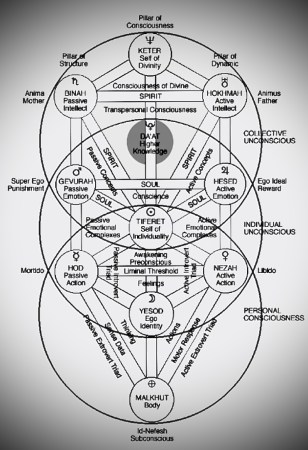
If this were our first such discussion, you’d rightly be horrified…
Realising my mistake, I might apologise and offer you another:
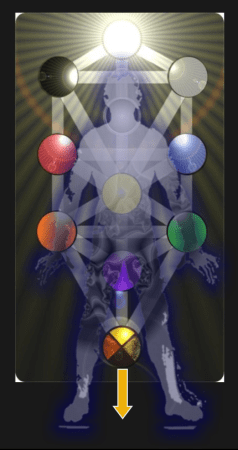
Suddenly, there is a difference – the human being superimposed on the geometrical figure inserts the idea of a relationship into what is being discussed. Here we have a dual image that invites discussion – and that is the key. Diagrams are all well and good but the best ones are those that invite discussion and even suggest the questions:
What is happening to the figure in the diagram? Why is he (or she) surrounded by two sets of coloured spheres? Is there a third column of spheres running up the middle of the figure? The sphere at the top appears to be brighter than all the others; is that because it’s representing God or is there an elevated state available to mankind, too?
Immediately, through a combination of clear diagram and something that can easily be related to our experience, we have a starting point for what could become an important discussion.
Some time later, we might return to the first diagram – the complex one – and be shown, now that we were familiar with the core meaning of this ‘tree of life’, how the findings of psychology were mapped onto this story of spiritual evolution of the individual consciousness.
The SE-Explorations group decided that the really important thing was that whatever the image used, or even the system of teaching, it should be designed to promote and provoke discussion. Only in the comfort and familiarity of spoken language do we get the necessary dialogue of question and resulting understanding.
The spiritual journey is within, but that gives the impression that it is entirely about the interior of our lives, whereas nothing could be farther from the truth. This journey deals only with realities and the test of those is how much they have the power to change our worlds…
That moment of beginning such a mental and emotional journey has great power, and we can often look back and know with certainty, that many benign ‘forces’ were at work to bring to a beginning something that may subsequently have changed our lives for the better. The attraction of a symbol or glyph is part of its magic.
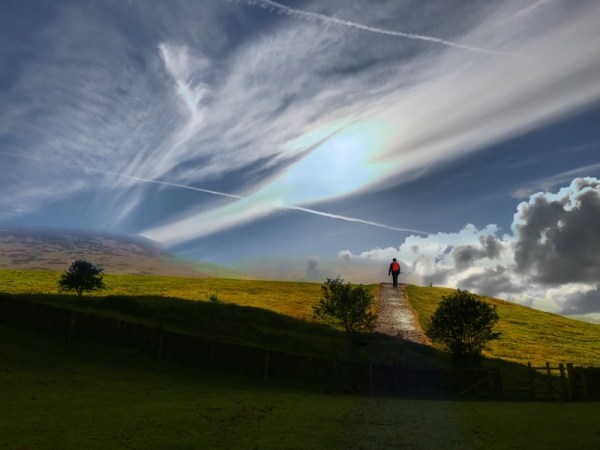
Stephen Tanham is a Director of the Silent Eye, a journey through the forest of personality to the dawn of Being.
http://www.thesilenteye.co.uk and http://www.suningemini.blog
Share this:

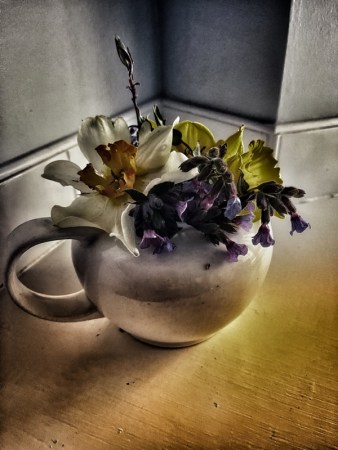
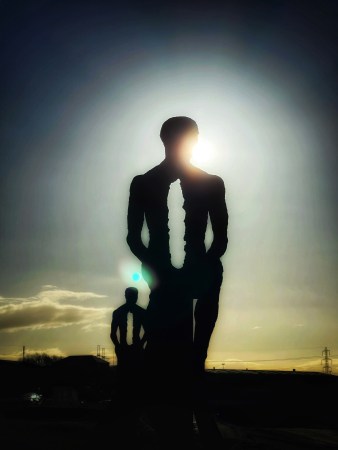
A simple grouping, photographed, then post-processed to look like a painting. The spring beauty of night and day.
©Stephen Tanham 2022
Stephen Tanham is a Director of the Silent Eye, a journey through the forest of personality to the dawn of Being.
http://www.thesilenteye.co.uk and http://www.suningemini.blog
Share this:

+ #Silenti, Consciousness, Lake District, nature, Photographic techniques, Photography, Places and Prose
Blossom in the Park
by Steve Tanham
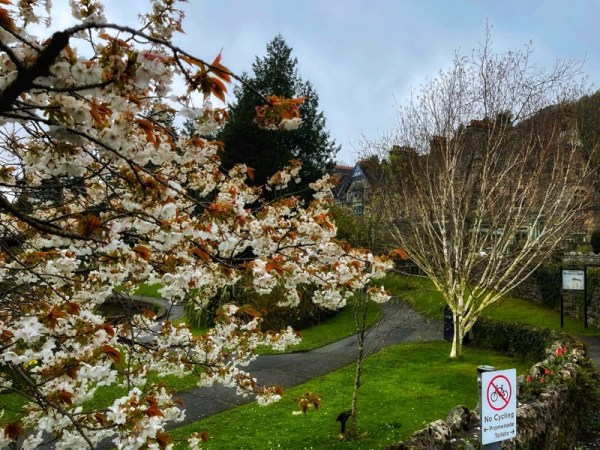
We all love blossom, and the time of year with which it is associated. That visceral feeling of renewal is a deeply tangible thing.
It’s difficult to photograph, in my experience. Ideally, you get yourself beneath the tree and point the camera upwards – becoming wrapped in the soft light beneath the floral canopy.
No such luck with this one, taken at Grange-over-Sands, yesterday. The sky was gloomy, but it did highlight the lovely colour mix of the deep green and the delicate, linen-like texture of the blossom.
I’ll try to get a few more shots before its brief season ends. The cold and often dark spring is resisting all attempts at present!
©Stephen Tanham 2022
Stephen Tanham is a Director of the Silent Eye, a journey through the forest of personality to the dawn of Being.
http://www.thesilenteye.co.uk and http://www.suningemini.blog
Share this:

+ #Silent Eye, #Silenti, Christianity and modern mysticism, Consciousness, esoteric psychology, Gurdjieff, Mindfulness
Aligning with Gods
by Steve Tanham
When we encounter the word ‘Gods’, we think of entities related to ancient views of the world; of ages before science threw the ‘definitive light’ of repeatable and numeric method onto our subjective experience of the world. In other words, we think of an outdated symbol system; one that describes natural events, and which seemingly lost its relevance to modern man a long time ago. Mankind came to define itself by reflections of the ‘without’ – such as wealth, and stability, rather than what was ‘within’.
Until the advent of modern psychology, we lived in a world that was fixated on the fruit of the senses, with no thought to how we as ‘selves’ experienced and related to it.
After the pioneering psychologists, Sigmund Freud and Carl Jung, we began to have a picture of the inner landscape that had some significance, instead of the random and meaningless flow of sensory impressions – plus the mysterious things called dreams. The psychologists recognised that this sense of ‘me’ had some validity; moreover, it had a structure, one shared by us all. Our inner architecture had rooms… Together, these rooms made up a mental and emotional construct we called ‘self’. When we act, we act from within this self. It has likes and dislikes, fears and triumphs,
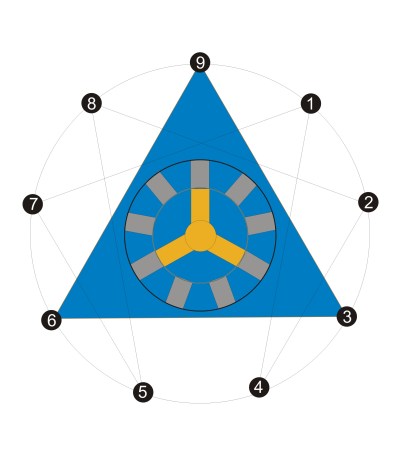
In Freud’s model, which is often used as a foundation by those studying the interior paths to a ‘deeper self’, the regular ‘daytime’ self is divided into the (1) the lower passions – unruly and energy filled; (2) the image of perfection, such as a child might inherit from a stern church; and (3) the daily self (ego), whose impossible job was to mediate between the two, managing excitement and guilt while maturing a strong sense of being the ‘captain of the ship’.
Superimposed upon this were the elements of character, variously indicated and interpreted by systems such as astrology and, latterly, the findings of developmental psychology expressed in the mysterious figure of the enneagram; and historically related to the esoteric Christian work of the Desert Fathers, who mapped mankind’s highest ‘Christ’ potential to the lowly state of the average personality, and showed the latter’s weaknesses, yet linkage with the original nine deadly sins. These included acidia: the turning away from spiritual purpose, perhaps the most deadly in the face of much-need alignment.
All of these encouraged us to examine our inner lives, where we find not only psychology’s broader ‘containers’ but also encounters with certain archetypal figures – first pointed out by Jung – that appeared to correspond closely with the cast of ancient mythology – the Gods, heroes and heroines.
Those interested in the esoteric ‘mystery traditions’ were the first to point out that this was no coincidence; that the visualisation of such Gods were, in fact, examples of early teachings designed to take us on active imaginative journeys of ‘inner workings’ – landscapes loosened from the grip of the material in such a way that our consciousness is free to explore other realms of our interior, and literally ‘meet up’ with that which was trying to reach us from ‘within’.
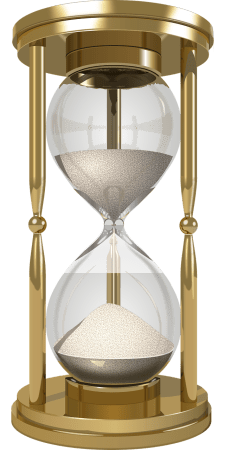
We can envisage two worlds, set in an upper/lower relationship like an hour-glass, in which the sand grains glide through, vertically. To change the relationship of the worlds, we turn the glass over… a similar state to that of the Hanged Man in Tarot, who, though apparently sacrificed, is smiling…
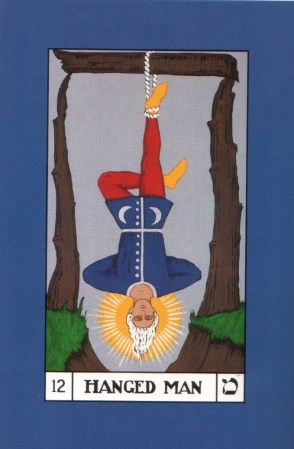
These symbolic systems are reference maps to states of consciousness. For example, the Tarot card of the Hanged Man corresponds to one of the paths connecting the spheres on the Tree of Life (see below). On one level, it’s just a cleverly painted and striking image. On another it’s a place we live in when we are on a particular journey.
To be on that journey, we need to have a longing for reality…
This may seem a strange notion. Surely, we already live, firmly, in a reality? Well, yes and no. We do appear to live in a physical reality, but what of our interior one? Does that offer us the same stability of existence and purpose? And what about those ‘rooms’ that divide the ‘self’ into id, superego and ego? We may find we need to understand ourselves at the level of the everyday self, or psyche, before we can use that as a start-point for a journey into the beautiful interior world that appears to be much bigger and real than we had thought. This doesn’t mean we need to be psychologists; just that we need to borrow a few of their well-worked notions to help us on our way.
The mystical enneagram will give us the rigour to work with our psyche, showing us how our outer characteristics are closely related to deeper and more spiritual layers of ‘us’, and requiring us to strip away ideas and attitudes that are detrimental to that journey.
Once we have a clean foundation, the Tree of Life is there to show us a journey to a different Self, one that lives with the Gods and has always done so.
The Sufis would simply say that our one task is to look for love and the bestower of that love – the Beloved. In this task, no map is necessary, since we can always determine if we are closer this day than we were the day before, by how we feel. The work of that path, as with the enneagram, is to remove the obstacles to love.
Each of these systems, and many more, are the ways to align ourselves with something higher within us, and to make that a way of life rather than an idea which will soon fade. The intellect of the modern age is a wonderful thing… but it won’t take us to the Gods.
Only the whole of you can do that.
©Stephen Tanham 2022
Stephen Tanham is a Director of the Silent Eye, a journey through the forest of personality to the dawn of Being.
http://www.thesilenteye.co.uk and http://www.suningemini.blog
Share this:

In dream I woke and stood bewitched
Before a door of oak and cedar
To hear a voice that played upon
A song of keys, part lost, part won
And tugged and pulled my heart to be there
With haunting glimpse of lifetime fixed
As though my past had been remixed
➰
Who knocks? – In truth, I had not yet
A saving grace of dream’s regret
For shame, I turned and stole away
Returning to the light of day
By darkened alleys’ coffee cake
In little houses where they bake
The whitened streets of darker Bézier
➰
And if I’d stayed to read the keys
Of life deployed in sated needs
Would piercing eyes unseen but known
Which through the cedar mocked my guile
Then chase through ever darkening streets
With courage ‘lost’ and weakening knees
This fragile soul so far from home…
➰
Come breakfast Cognac, help dispel this dream
And let me know not what it means
Content to walk this ancient place
Where death once stalked with foulest face
Albigenses, Cathars, hear my prayer
And lift my spirit’s deep despair
And with this light of morning give me grace.
➰
©Stephen Tanham 2022
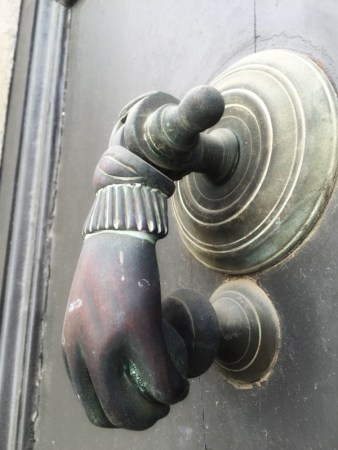
Photo of Bézier door-knocker by the author.
Stephen Tanham is a Director of the Silent Eye, a journey through the forest of personality to the dawn of Being.
http://www.thesilenteye.co.uk and http://www.suningemini.blog


You must be logged in to post a comment.