
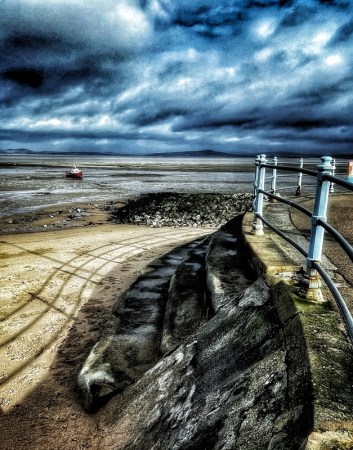
An exceptionally lucky moment…
I was walking mum along the promenade, back to the care home in Morecambe. When we got close to the steps down to the road. I asked her to stop so I could take her photo against the stormy sea.
As I was framing the shot, I noticed that the curved railings were casting their shadows immediately below us, onto the sand. Having taken mum’s photo, I walked a a few metres backwards to get a good perspective that combined the beach and railings.
I’ve upped the contrast and slightly darkened the sky, but the result was exactly how it looked…
©Stephen Tanham 2022
Stephen Tanham is a Director of the Silent Eye, a journey through the forest of personality to the dawn of Being.
http://www.thesilenteye.co.uk and http://www.suningemini.blog
Share this:

+ #Silent Eye, #Silenti, Consciousness, Egyptian Gods, enneagram, esoteric psychology, Higher Mind, meditation
An Artist named Giselle
by Steve Tanham

Geographically, it’s an unlikely partnership… One person in Victoria, Australia, the other in Cumbria…
Giselle Bolotin is an Australian artist, but was born in Europe. She and I have never met, face to face, but have established a good working relationship via the virtual world of the internet. We are collaborating on a set of images to illustrate the Silent Eye’s new ‘Oracle’ deck of cards.
When I say ‘we’, I mean Giselle paints what will become the oracle images, while I do my best to define to her the physical, intellectual and emotional nature of each of the characters to which she is giving form.
Giselle is joining us for the May 2022 workshop based in and around the Lakeland town of Keswick, so we will finally get to meet.
The words oracle and tarot are often confused. Both pertain to a set of cards representing the position and meaning of the image in a symbolic diagram.
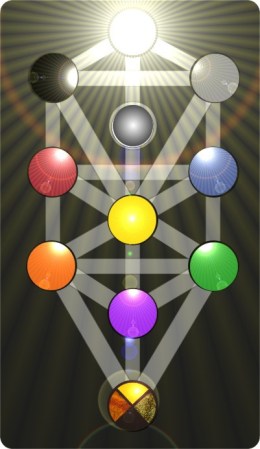
In the case of the Tarot cards, the images are pictorial representations of states of consciousness and experiences within the Tree of Life: a map of personal exploration. Those exploring the Tree can use the cards as a basis for meditations about where they feel themselves to be on the journey that the glyph encapsulates.
In the case of the Silent Eye’s Oracle, the cards will represent the journey of nine characters (each person’s different primary mix of characteristics) interacting and moving over three inner landscapes, taken in sequence as the journey from ‘self to Self’ deepens. The three landscapes are:
1. The Land of the Exiles – a desert kingdom representing the experiences of the egoic self.
2. The Shallow Sea – an emotional and watery landscape in which personal transformation gathers speed.
3. Nine Gates of the Sun – a place of mysterious laws where the Egyptian Gods assume the forms of living beings who teach…
The Silent Eye’s work does not use the Tree of Life, though the founders of the School have experience of both systems. Instead, a figure called the Enneagram is the visual basis of the system.
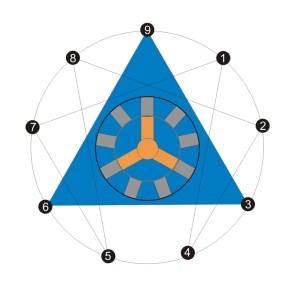
Brought to the west by G I Gurdjieff, an Armenian philosopher from the early 20th century, the Enneagram has evolved in the hands of a fusion of developmental psychologists and modern mystics to describe the dominant characteristics of mankind’s ‘interior makeup’ – its personality, and the accelerated evolution that is available to us all.
In the Silent Eye’s system, the companion’s journey is taken through what we call the stations (1-9 in the image) of the outer personality. These develop inwards, eventually revealing the faces of the soul whose early loss – in childhood – gave rise to the shape of our personality. Each of the outer stations is reflected at two deeper levels, each involving deeper levels of our Self.
It’s a journey to the inner Self, by – as the Sufi poet Rumi wrote – ‘removing the barriers to love.’
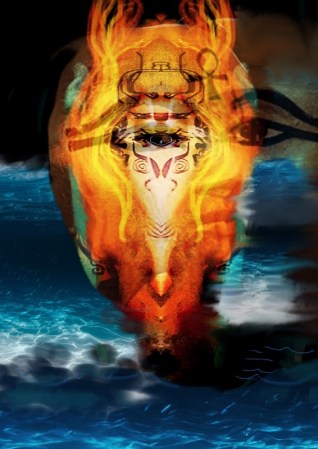
Giselle’s opening image is of a character known as the Arbiter-Queen within the landscape of the Shallow Sea. It illustrates the psycho-spiritual transformation of this formerly self-important and judgemental figure.
The Silent Eye Oracle is a work in progress. We hope to release the full deck, with accompanying guide-book, before the end of the year.
You can find samples of Giselle’s work on Instagram. Just enter her name in the search box.
©Stephen Tanham 2022
Stephen Tanham is a Director of the Silent Eye, a journey through the forest of personality to the dawn of Being.
http://www.thesilenteye.co.uk and http://www.suningemini.blog
Share this:

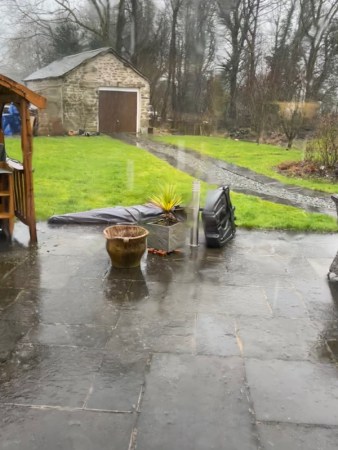
Heavy metal, thinly sailed, is cast
Like toy, and dropped onto the stone.
Hedges bend, bow and form
New writhing shapes – grotesques –
Their twisted tongues malforming names
Of foolish men who thought to tame
The wild and winds of Cumbria…
——–
And yet, from this we do emerge
In harsh, unruly tufts of grass
And mud that drains off torrents passed.
Bleached and battered, humbled, mute
To greet, at root, the rites of Spring
With eyes washed clean of Winter.
——–
©Stephen Tanham 2022
Stephen Tanham is a Director of the Silent Eye, a journey through the forest of personality to the dawn of Being.
http://www.thesilenteye.co.uk and http://www.suningemini.blog
Share this:

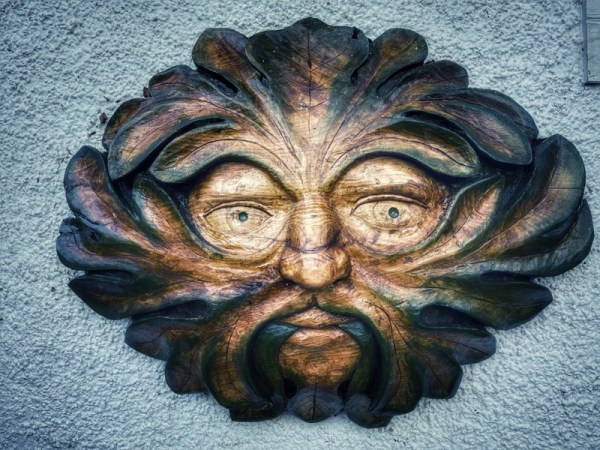
It’s a large rendering of the Green Man. I have no idea whether it’s new or whether it has been on that wall for five years – back to the time when the ‘new’ stumpery was added to the promenade at Grange-over-Sands.
The Green Man is hidden from general view, which, I suspect may be deliberate, and in tune with the wisdom it represents. You have to find it, and then decode what it is trying to teach you…
It has prompted me to think about a post on this subject. Coming soon.
We visit Grange often; in fact it’s our main place of shopping – being full of quality local shops and old-fashioned service. We divide our efforts: I take Tess the collie for her walk through one of the parks, a vigorous frisbee chuck, then back along the promenade to meet up with my wife. The whole thing takes about an hour. We then have coffee in the car and set off home.
On the last trip, Tess dragged me into the stumpery. It comes into its own in the winter, when there is so little to see on the other flower beds. There on the far wall, hidden from general passing view by a tree, was the Green Man face. I suspect it’s new, and mounted on the only place that would be solid – the side wall of the public toilet…in itself amusing, and somewhat in tune with the be what you are theme of the whole myth.
I do detect some dry humour, here. Grange is not short of retired minds and wits…
The figure of the ‘Green Man’ is a rich symbol in the cultural and religious history of these islands. Most famously featured in the Arthurian tale of Sir Gawain and the Green Knight, the enigmatic figure is of a human face from which abundant natural growth is emerging from all the openings in his startled head.
©Stephen Tanham 2022
Stephen Tanham is a Director of the Silent Eye, a journey through the forest of personality to the dawn of Being.
Share this:

+ #Silent Eye, #Silenti, Child of Light, Christianity and modern mysticism, Consciousness, Esoteric Meaning of Myth, esoteric psychology, Mystery Schools, Myth
The mystery of the soul-child
by Steve Tanham
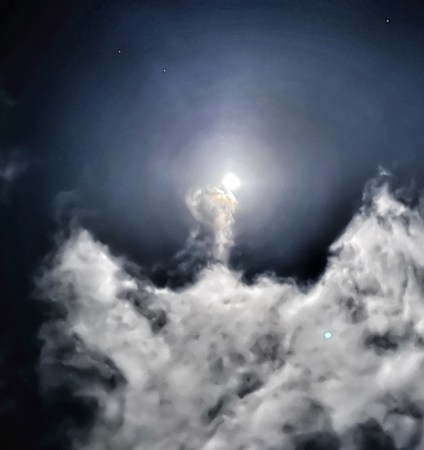
One of the most enigmatic mysteries in spirituality is the idea of a ‘soul-child’ – the finding within us of a spiritual figure whose characteristics are those of purity and youthfulness; untainted by the world, yet somehow immature within it…
To approach a deeper understanding of this – one beyond the fanciful – we need to consider the words ‘soul’ and ‘child’, and set them within a context of both spiritual growth and modern psychology.
The word ‘soul’ may have started its long life in our learning as a word of precise meaning, but having passed through the fluffy ‘new age’ of spirituality, its definition is anything but exact.
Ask a person from a hundred years ago, and they would have said it was simple: a person has a body and a soul. When we die, if we’ve been a good person, we go to heaven – a place where the soul has a natural home, free from the harshness and temptations of the everyday world, rewarded for its goodness.
Psychology, more than anything else, taught us to use look beyond limitations of formal religion to use our minds to explore how we were made, not from a physical point of view, but from how we feel inside; how we think of our-selves as we grow and develop into a useful human. In short, to become our own priests.
The word ‘self’ is pointed to, here. Somewhere around the age of seven, we typically find ourselves in a moment within which we know we have suddenly gained a strong sense of identity with some state within us that we know to be ‘me’. Once won, it is never lost… and its emergence gives us an apparent centre of awareness and, eventually, power in our lives. It emerges as the personality.
This sense of ‘me’ is the product of the massively sophisticated machine in our head – the brain. But we don’t like to attribute our aspiring ‘spiritual self’ to the brain, instead reserving another invisible space, usually co-existent with our bodies, that we view as the actual or potential soul.
Our self or personality becomes the garment on which we paint the attributes of like and dislike; on which we pin the badges of achievement… and the fears of rejection. The self becomes an increasingly specific entity, until, with success in the face of effort, we become an adult – brave, powerful and capable… at least in our own minds, if not always recognised in the world.
The primary measure of this is how others view us; how much influence we have in the small world of our lives.
Sigmund Freud was the first popular psychologist to blaze the trail of understanding that this ‘self’ had at least three elements:
The Ego (Das Ich ‘I’ ); our centre of identity and consolidated awareness – what everything else affects.
the Uber Ich; Superego, ‘Over-I’ – an idealised and authoritative figure that is a composite of all the ‘should-dos’ of our life; constantly chiding us to do better and live up to our moral potential… the personal ‘road to Saint Me’. A road on which we are always destined to be disappointing.
The Id: a monster lurking in the basement. A collective of all the unhealthy, yet somehow natural traits and appetites of our nature. The ‘animal within us’, the beast…the wolf.
Freud was deeply engaged with the idea that the sexual force lay at the source of mankind’s motivations, and was an escape of energy from all this structure of societal expectations that frames our outward lives. The ego spends much of its life resisting the Id, thereby forcing the personality to life a divided life. Other psychologist, such as Carl Jung saw a spectrum of motivations, rather than just sex.
We can see in this an echo of the more lurid fairy tales that have been with us for hundreds of years. Of course the bad lone wolf wants to eat the desirable maiden! And which maiden has not wanted to run through the forest, chased by the (right) wolf! Only grandma, that usually dependable friend, spoils the action… But as crone – wise woman, she has another role harvested over a much longer time frame than the lovers.
Our emerging ‘self’ – the ego – wants, above anything else, wholeness; yet it knows it must divide its world and create a threefold castle in order to protect itself. Within this structure, it cannot be seen, but its presence will define ‘me’ for the rest of that life, and more importantly, it will determine how we act, how we behave… how we are. I may never know that it is a machine and not really me.
But for all that, it is a reflection of something very powerful and utterly real. Something that redefines the word ‘identity’.
But we did not choose to have this body, this wolf, this red-riding hood, this devil and angel. Worse, it is made up from the very substance of this earthy, beautiful and growth-driven planet…as though the very material of its ‘stuff’ wanted a vehicle to get back to the wholeness of which it had a primal memory…
Real spirituality is about – and only about – the relationship of this stressed ego with something found in the very heart of it-self. Eventually tired of the societal ‘joys and pastimes’ it notices that its greatest delight actually lies within and not without. With a shock, it begins to have a conversation, then a relationship with something within the self that is more ‘me’ than the personality. At this point we should swap the me for I, and begin adding a capital letter to the word Self.
The Self of the self is not fantasy, nor is it a product of the mind- much to the mind’s astonishment. Whether the personality is strong enough to take on itself will determine whether it can enter the forest and find the soul-child within. If it does it may find itself being taught by a loving symbolic child-mother-crone that seems to know everything about it…
Coming?
©Stephen Tanham 2022
Stephen Tanham is a Director of the Silent Eye, a journey through the forest of personality to the dawn of Being.
http://www.thesilenteye.co.uk and http://www.suningemini.blog
Share this:

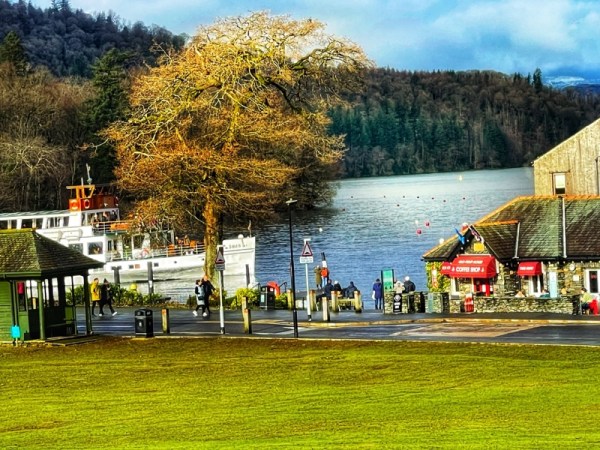
I thought you might like a walk through Bowness-on-Windermere. It’s the place that most people think of as ‘Windermere’, but the actual town of Windermere is a 45 min walk up the hill from the lake: the final station on the rail line from Kendal, and as close as the Victorian engineers could get to the lake from the surrounding hills.
Holidaymakers arrive in droves from Easter onwards, so it’s nice for us ‘locals’ to make the most of the Winter quietness. We’re driving to the outskirts of Bowness so that our stroll into the town can incorporate a dog walk and ‘frisbee chuck’ on the hilly pitch-and-put course that wends its way to the ferry point.
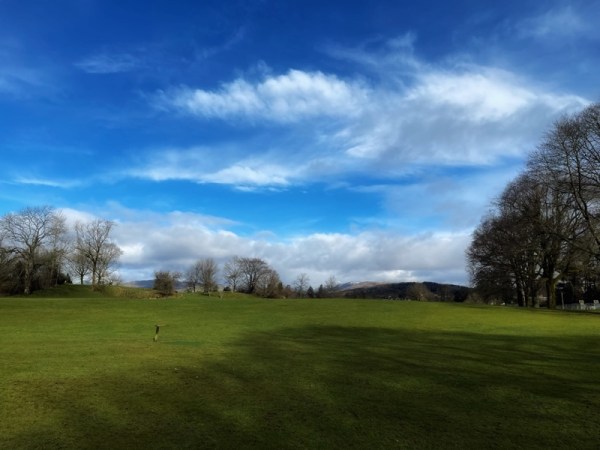
We were expecting it to rain the whole day – as it has for the previous two; but the skies are brightening. My trusty iPhone 12 is in hand and I’ll be making this a very visual walk, so you can ‘feel’ the atmosphere of this beautiful place.
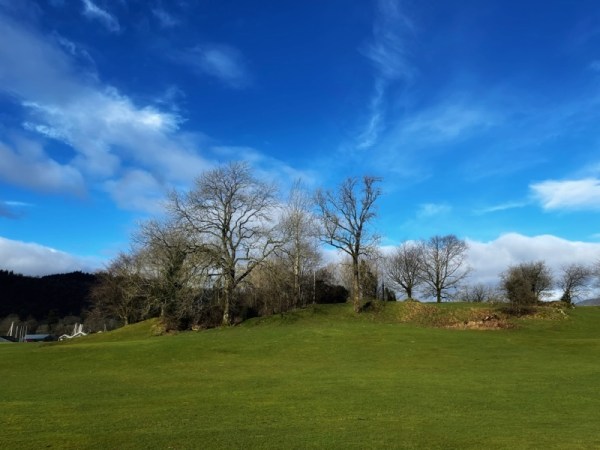
After much barking and running – and that’s just me – we cross to the other side of the pitch-and-put course and arrive at the far hillock that overlooks the town of Bowness-on-Windermere (Bowness) and its busy ferry point.
The local council allows dogs on the mini-golf course, which is deeply appreciated. Being a former (but not very good) golfer, I stay off the greens of course!
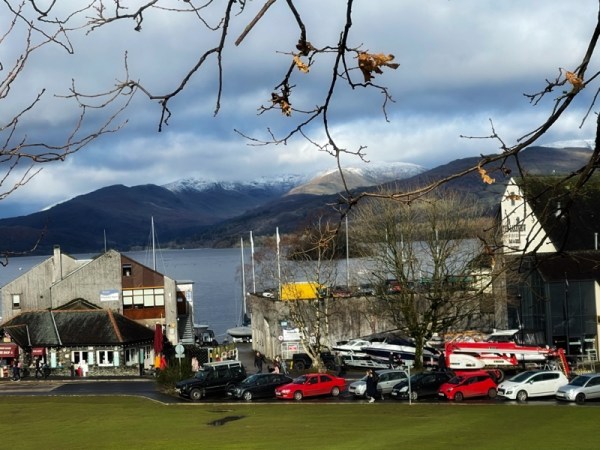
It’s at this point that we realise that it’s a lot busier down there than it should be on a winter Monday… We share this view with a passing fellow dog-owner who laughs, and reminds us it is both half-term and Valentine’s Day. We remember exchanging cards, and tea in bed, but the school holidays have somehow eluded our radar…
Crestfallen, we descend towards the crowded ferry wharf…and don our Covid masks…

As we near the bottom of the hill, a graceful shape slides through the trees. One of the large passenger ferries is about to dock. You’d think it was summer…
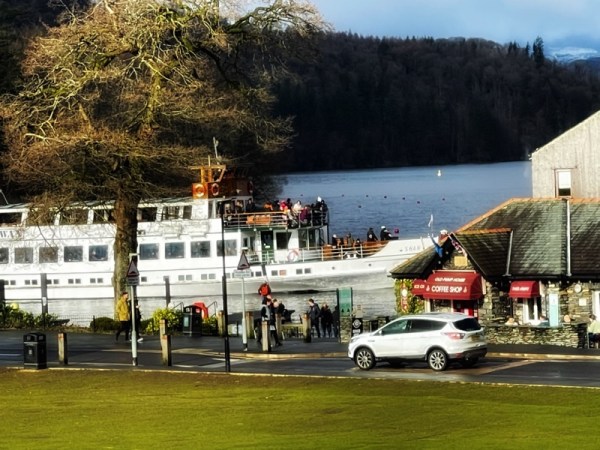
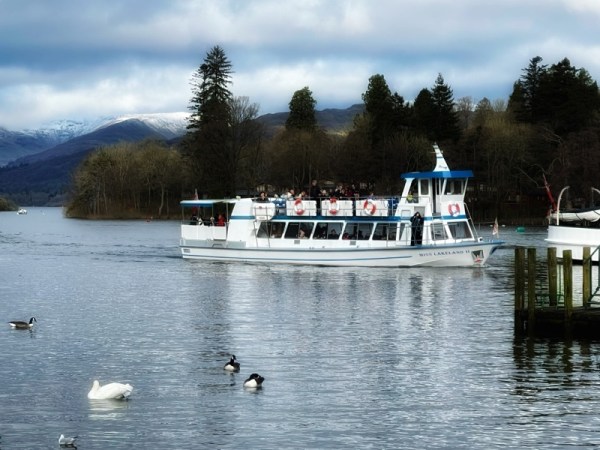
You can take ferries along the whole ten miles of Lake Windermere; from Lakeside, in the south; via Bowness; and on to the northern tip near Ambleside, whose ferry point is Waterhead.
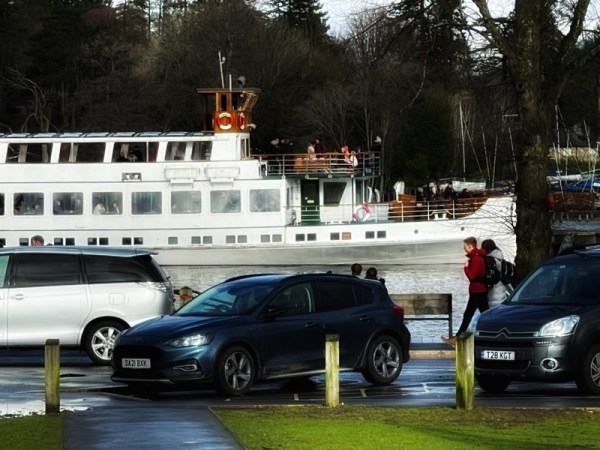
The boat – now seen to be the M.V. Swan – the largest of the passenger boats on the lake – beats us to the dock as we watch its graceful entrance to Bowness. There’s something deeply moving about seeing a large craft like this dock, elegantly.
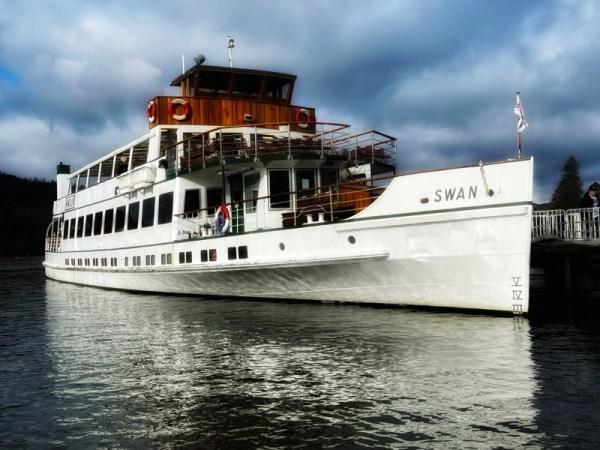
Ahead of us, the Swan dominates the space, its sheer, white presence lighting up the winter water.
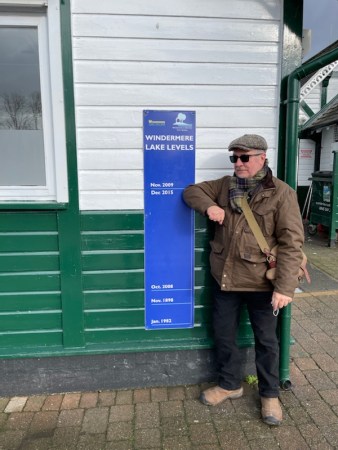
Bernie notices a panel on the side of the ticket office which shows the height of the terrible floods caused by Storm Desmond in 2015. She has me pose with extended elbow to show the water level at the time… The ferry harbour was closed for weeks.
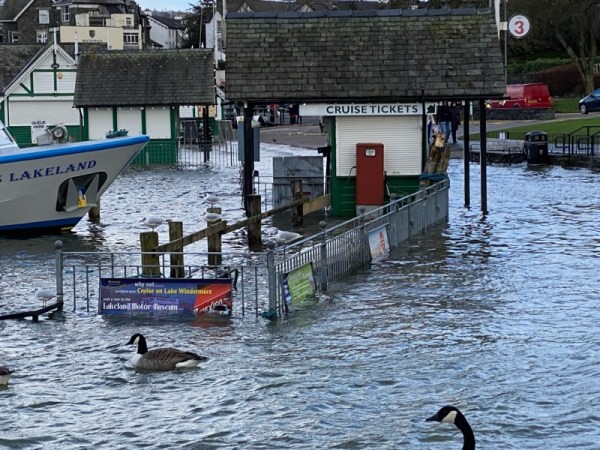
The picture below shows the same place after the floods … Devastating.
It’s time Tess had a drink of water, and we’re due a coffee, so we head along the shore and into the town. We’re about to turn off the road into a Costa Coffee shop (with outside seating for dog owners – we know how to live!) when I notice that the intensity of the ‘holiday’ traffic on this main road has diminished…to nothing.

I turn to view a road empty of traffic and there’s one of the largest articulated lorries I’ve ever seen. It’s slowly climbing up from the ferry point, flanked by an escort car that is racing ahead to halt and disperse all other vehicles.

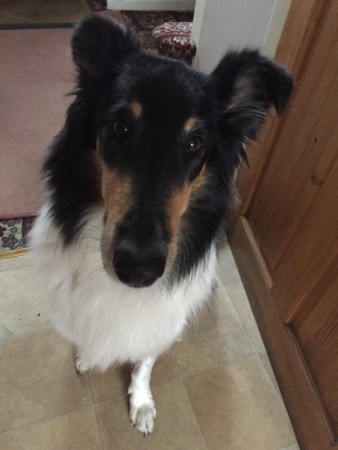
Tess has been in the adjacent ‘coffee garden’ many times. Terrified of the behemoth roaring up the gradient, she drags me towards the gate…
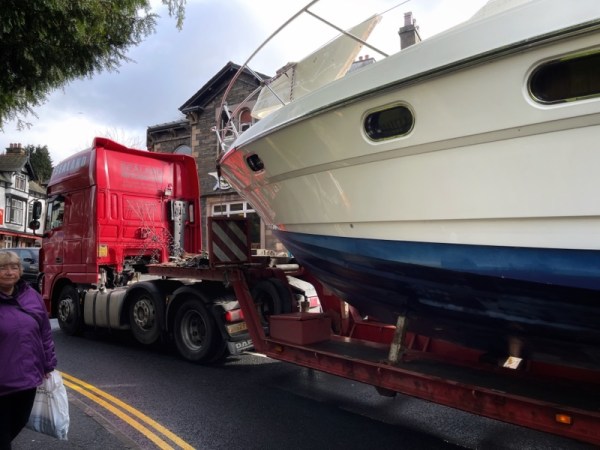
I manage to grab a final shot of the monster as it rages past, then turn to console the Collie… Large coffees, we think… are they licensed? She nods… we’re a complete synthesis of human and dog. Inseparable.
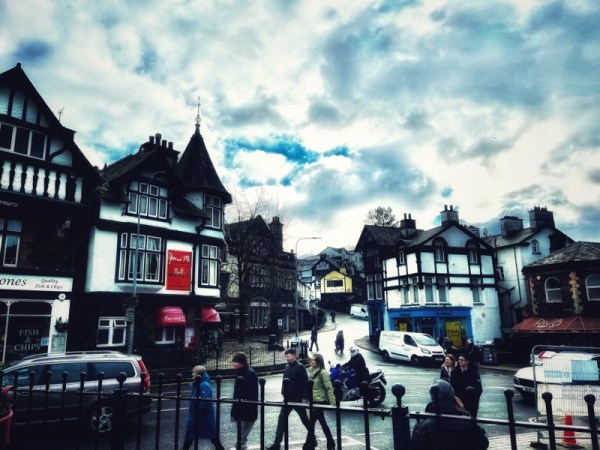
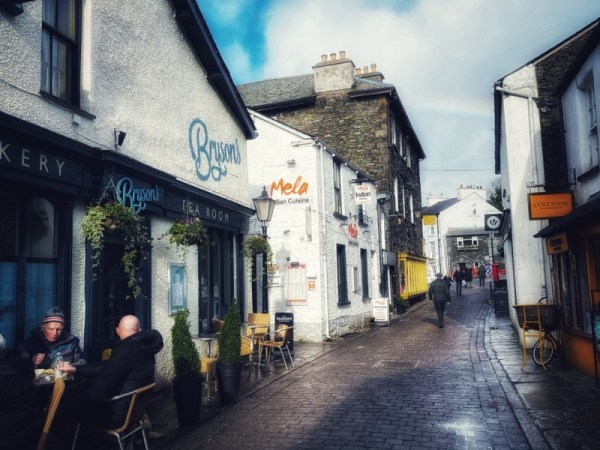
And that’s about it, really. We amble around the shops, loving Bowness’ artisan back streets and alleyways…
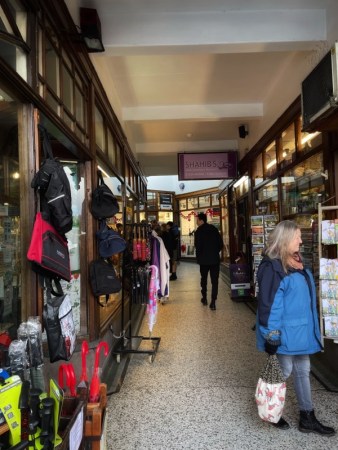
There are even some period arcades, their original woodwork intact…
I always look for some humour on these occasions; something to end the piece with a smile… Here’s today’s offering. The new owner of a shop that’s been there ‘forever’ has repurposed its space.
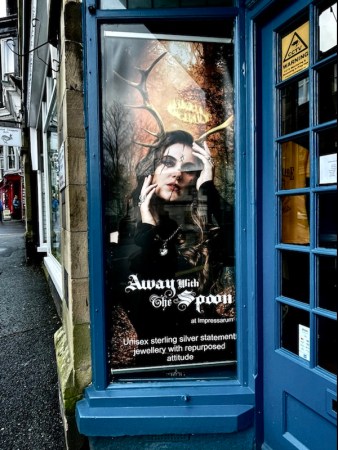
I’ve expanded their wonderful (and I’m sure tongue-in-cheek) tag line in the image below…
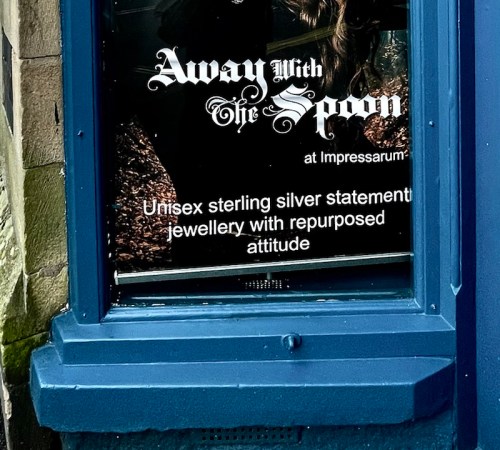
Next time you need that unique sterling silver statement jewellery with repurposed attitude, you know it’s time you visited Bowness-on-Windermere… love it!
It’s never dull in Bowness. Come and join us…
©Stephen Tanham 2022
Stephen Tanham is a Director of the Silent Eye, a journey through the forest of personality to the dawn of Being.
http://www.thesilenteye.co.uk and http://www.suningemini.blog
Share this:

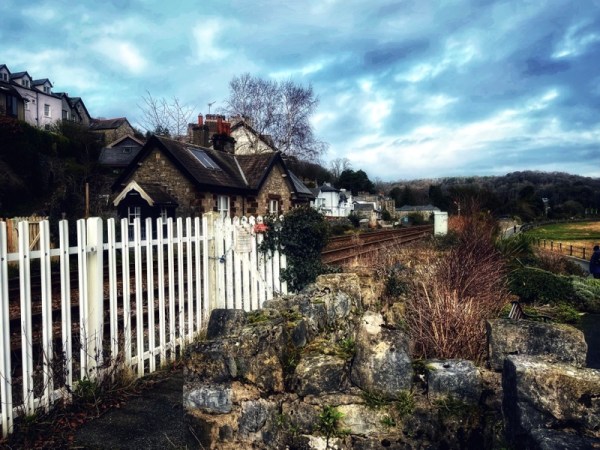
It’s one of the most scenic parts of Grange-over-Sands. The old railway pedestrian crossing connects the town centre with the seafront by providing a walking space across the twin railway tracks. A simple enough role and one that you might think would endear it to both visitor and resident, alike.
But the picture-postcard crossing at Bailey Lane now lies closed to pedestrians, despite an illustrious history. The same trains still pass by as before, but pedestrians can no longer cross the track, as they have been able to do since Edwardian times. Other crossing are available, but the Bailey Lane gated crossing is the oldest.

Lying a few miles south of Lake Windermere, Grange-over-Sands is a prosperous town with excellent communication by road and rail. It’s popular with those who wish to retire to the fringes of the Lakes District. Unusually, these days, it is self-sufficient in local shops, having at least one of just about everything…
The entire Cumbrian coast is served by the connection to the West Coast Main Line, with trains south to Lancaster, Preston and all points to Manchester, including its busy airport.

Grange sits on the northern end of the viaduct across one of the main estuaries of Morecambe Bay. It is a thoroughly pleasant place, with an unrivalled set of volunteer-tended gardens along most of the mile-long promenade. In the summer, there is an art exhibition the shore that brings in thousands of visitors.
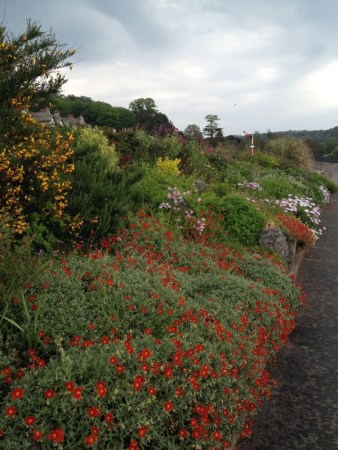

This mixture of ‘old and new blood’ provides a heady, if conservative, melting pot of intellect and opinion. And the closure of the direct foot crossing to the sea seems to have divided opinion equally.
Network Rail, which controls the tracks and stations, has long campaigned for the closure. The long history of the line – first as a freight carrier, and subsequently as a passenger service – has seen an often quoted ‘two deaths and several near-misses in the past thirty years’. But, as one of the locals said to me, ‘You could find that statistic connected to any busy line… and much worse, in cities’.

In 2017, the near miss of an inattentive couple crossing the line was used by Network Rail as justification to close the crossing, which has remained locked ever since.
The town is not without an alternative, but it is one that does not have the cultural history of the Bailey Lane crossing. A nearby car park hosts a dedicated underpass constructed by Network Rail in 2005, at a cost of 5 million pounds. Its a very sound piece of civil engineering, and works well.
Local council planning officers had recommended that the older level crossing remain open, but the council majority disagreed, illustrating the strong division of opinion.
We had often crossed the line here, to climb the very steep lane into the centre of the town, affording wonderful views back across the sea. There’s a sadness about the fact that this interesting foot route is now unusable. You can still access Bailey Lane, even from the car park that houses the alternative; but the ‘energy’ is gone, and part of the lovely town’s fine history has been removed.
It is likely that it will never be restored.
©Stephen Tanham 2022
Stephen Tanham is a Director of the Silent Eye, a journey through the forest of personality to the dawn of Being.
http://www.thesilenteye.co.uk and http://www.suningemini.blog
Share this:

+ #Silenti, Consciousness, esoteric psychology, Love, Photography, Silent Eye School, Spirit, Spirituality
Being being…
by Steve Tanham
I usually write it with a capital: Being. But strictly it is just another noun, so it’s fine as simply being.
Except it’s not…because that devalues its importance.
Being is the word. Being is the gold ‘hidden in plain sight’ of the alchemists.. They were searchers for the inner nature of Nature. Some of them found it but had to create a language of obfuscation or be burned at the stake.
Let’s set it in context: Being is the highest state of existing we can envisage. It is a state of such utter fullness-in-itself, that all else in creation aspires to it, the aspirer believing itself to be separate, then finding that the separation was an illusion, all along. Nothing actually changes except the consciousness of the experiencer. And then that changes everything. It’s a paradox. The highest concepts in mysticism often are. It’s a deliberate way to turn the mind.
The world ‘plane’ is often used here; in the sense that Being is ‘on a different plane”. Frequent use and repetition of ‘plane’ takes away the true sharpness of meaning; and the modern association with an aircraft doesn’t help. Rosicrucian mystics of a previous generation, like my father, used ‘plane’ extensively to paint an inner picture of a world tightly linked with ours, but above it.
‘Above’ it creates its own problems, as we immediately look up! This involuntary vertical association undoubtedly derives from religious pictures of holy figures in the air, or on a kingdom of clouds. Saints, Saviours and God were to be seen in this different land – represented as elevated humans of course… which has an amusing irony of its own.
Being is more correctly placed as ‘within’ the other, rather than above it. That sense of inner separation at least implies that Being is at the heart of everything – although its very nature may later suggest that there never was an outer… Paradox is everywhere at this level of language, and used to tease at something that can only truly be experienced, not written about. But we must try; to recombine old words so that a hint of what lies beyond the tired letters may trickle through.
There are, then two worlds: Being and Becoming. Being does not become. It is already what the next state is. It unfolds. Human consciousness sees a past and a future and ascribes becoming to the prior state of what has just arrived in front of us.
In last week’s blog I wrote about how our use of language literally locks us into the ‘level of being’ that we currently occupy. I catch the ball is an example. ‘I’ is the subject. ‘ball’ is the object. There is a verb – a doing word in the middle. One of the keys to understanding the role of language in spirituality is that there must always be a subject and a doing-word for ordinary consciousness to make sense of it.
Language does permit ‘the ball is caught’. But it’s an abstraction. We envisage that here is someone, as yet unstated, who, as subject, has caught the ball. So, all is right with the world. No-one has broken the laws of doing by getting rid of the doer.
If we postulate that there could be a ‘state’ of caught…. Without there necessarily being a catcher, then our brain consciousness begins to get a bit queasy. Our mind quickly constructs something like: ‘He has been caught’ to correct the potential void that looks troublesome.
This can rapidly get academic, whereas Being is not at all academic. It’s a state of experience. More accurately, it’s a state of consciousness beyond the brain’s normal world of perception; a state in which the observer is changed into something else – without loss of continued consciousness.
It’s a state in which the experiencer and what is being experienced are the same. There is no subject-object relationship, no ‘me and it’. There is a continuous stream of knowing – the origin of the world ‘gnosis’. Some of our Silent Eye students humorously remark that this crystal-clear consciousness is an act of gnowing… And that’s accurate.
The mind is a better word. The mind has a magical ability to look out on the world… or back on Being – the place it came from. When the mind looks at the world it sees duality: subject and object, me and it, the world of doing. When it looks back at its source, it sees an all-and-everywhere centre of the universe, its home, and its substance. Being birthed the mind, which bore the egoic self; each is a reflection of the source at the next outer level. Only a return to that source – fully conscious, restores mankind’s rightful place in the universe.
All spiritual journeys are along this path. Various techniques are used, but the inner goal is the same. Eventually, we loosen the ties between subject and object, me and that, so that we cast off our ‘subject anchor’ and learn to sail on a different sea. Nothing of real value is lost. The ship is better navigated from the top of the mast rather than at the wheel on the deck…and the air is beautiful up there.
Other parts of this series:
Part One: Language: maker and destroyer of worlds
©Stephen Tanham 2022
Stephen Tanham is a Director of the Silent Eye, a journey through the forest of personality to the dawn of Being.
http://www.thesilenteye.co.uk and http://www.suningemini.blog
Share this:


I remember finishing the count… And being astonished that there were fourteen of them.
Suits… two and three piece suits. For younger readers, the three-piece ones were so called because they had matching waistcoats…whose bottom button was never fastened.
Fourteen is quite a number. They were all expensive, mainly double-breasted, and made of the lovely variety of silky textiles that so proliferated in the business world of the late 80s and early 90s. I was not alone. In the office of the Californian computer company for whom we were the most northern base in England, there were another six people for whom quality of dress was essential to success.
We were selling expensive, fault-tolerant computer systems to many of the most senior board members in the north of England.
Life was good…but I’m not here to brag about those illustrious days. They served their purpose and the world moved on… though many of those mainframes are still in place at the hub of major banking systems.
The reason the former platoon of suits is relevant to a post about blue denim is that I bought what must be my seventh pair of jeans the other day, and the number reminded me that I had double that number of suits. I was amused that my new and trimmed-down wardrobe depends almost entirely on these blue denim garments: simple, warm and un-sophisticated. And they last forever.
We buy my jeans – and just about every other domestic item – from a general purpose warehouse fifty miles away called CostCo – a far cry from the neon lights of Manchester’s Piccadilly district where many of the suits originated.
CostCo specialise in high-quality merchandise that they buy in bulk, receive in the store then scatter over frankly unimpressive pallets in the middle of acres of space containing everything from the best consumer electronics to salted nuts. Although the quality of everything is top-notch, the experience is functional, to say the least, and requires some getting used to.
But the merchandise is top quality, and offered at reasonable prices, providing you have the energy to leaf through piles to find your size.
Jeans-wise, they delight folks like me because they do winter versions as well as the more usual summer ‘fashions’. The last three pairs of blue jeans have been made from a thicker denim with a winter lining… They are sheer heaven to put on, and you know that your dog walking in the wet and freezing Lakeland countryside will at least be accompanied by toasty legs.
They aren’t waterproof, but I never found a pair of waterproofs that were remotely comfortable.
These days, I only have two suits. The first is black and only deployed for the not infrequent funerals that pervade this time of one’s life. The other is a Rohan travel suit that does everything else that involves a matched jacket and trousers.
The rest of my outfits are constructed from my jeans upwards; which just shows how well blue denim has stood the test of time… It’s more than can be said for my fourteen suits; now long departed.
I held onto a few of my smart blazers. To my – now simpler – eyes, they look great with a newly-washed pair of jeans and my small assortment of tan loafers.
And I’ve never felt more comfortable.
Neil Diamond sang about being ‘forever in blue jeans’. Here’s a snippet. I smile every time I hear it…even though it’s ancient. Something about his voice said he understood – even if it was going to take you a few years to get there.
©Stephen Tanham 2022
Stephen Tanham is a Director of the Silent Eye, a journey through the forest of personality to the dawn of Being.
http://www.thesilenteye.co.uk and http://www.suningemini.blog
Share this:


It’s around November time when I begin to think about the ‘vastness’ of the winter, ahead.
I let my mind play over the run up to Christmas, which, although increasingly dark, is brightened by the colourful lights and the spirit of the season.
My mental journey continues through New Year, which always seems an anti-climax, and on into the wasteland of January. I can feel a certain tension as I think about the cold and the days of rain and overcast skies that offer little light to lift the heart.
But that long dark month is good for testing one’s resolve, and getting more done than is strictly necessary… to set the scene for the year ahead.
And then something wonderful happens… My memory of that reverie is replaced with the pristine silver-whiteness of a hedgerow filled with the real thing. We are lucky to have a road lined with a wide bank, on which hundreds of snowdrops spring to life in the first few days of February.
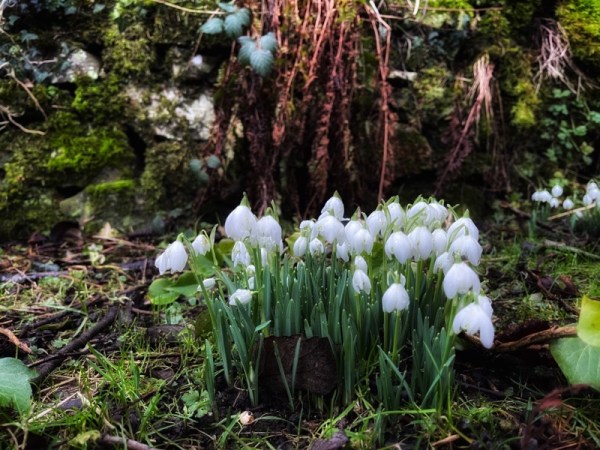
Although still a long way to the spring. There is suddenly an emotion like ‘hope’ in the heart; and the idea of trudging through the mud for another two months isn’t so bad.
All contained in those beautiful silver-white petals… and their supporting stems of virgin green.
©Stephen Tanham 2022
Stephen Tanham is a Director of the Silent Eye, a journey through the forest of personality to the dawn of Being.
http://www.thesilenteye.co.uk and http://www.suningemini.blog
Share this:

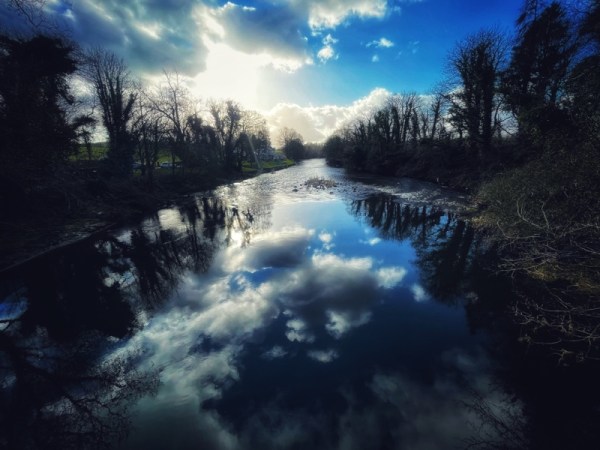
I remember the admonition from decades ago, though I’ve forgotten who wrote it:
Admire and beware language, for it frames the mind and blockades the spirit…
Bold words; and possibly overstated, until you come to certain stage of your own inner journey and realise how true they are.
In general terms, our western languages are predicated on the style of the following sentence: ‘I hold my wife’s hand’.
I ( the subject of the sentence – the do-er)
hold (the doing-word, the verb)
my wife’s (a relationship between the subject and object/recipient)
hand – the object; the recipient)
The subject-object relationship is at the heart of our sentence… and at the heart of our world.
This constantly repeated identification acts like a mantra at the heart of language – and therefore at the heart of our thinking.
In the intellectual west, this is at the core of who we are.
Most modern languages are structured this way, but some ancient ones were not. Sanskrit, the western world’s oldest language, had an optional alternative – often used in the most sacred of the texts, such as the Rig Veda: “There is holding of my wife’s hand.”
At first glance, this may seem less specific, as though we had stepped back and generalised the ‘holding of my wife’s hand’, but used within the sacred texts, such as the oldest – the Rig Veda – its meaning is something entirely different… to which we will return, later in this post.
Language is one of the foremost powers of the mind; along with logic, memory and the power of visualisation – the forming of an image (or something corresponding to an image, like music) to be held in the consciousness in order to bring it into existence – as a great sculptor like Michaelangelo would have done.
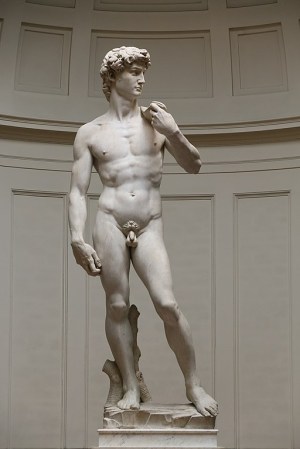
We can mirror this, now, by imagining that we are Michelangelo; standing in front of a block of pristine marble for days, walking around it… assembling millions of possibilities until, with an intake of breath, you settle on where the hammer and chisel will begin their work. It’s interesting to consider that the sculpture of David, above, was already in the stone… The sculptor simply chipped away what wasn’t it.
This duo of subject and object is at the heart of one of the most powerful finds within meditation, where the practitioner comes face to face with the idea that the mind may only exist because it is dancing between ‘out there’ objects at such a rate that it appears to have continuity.
That should make us all think, and possibly rush to have a go… Imagine the edge of reality being so close!
What lies beyond? Sages have spoken for millennia about the new land of pure consciousness that lies across that threshold of a quieted mind. That last sentence may contain a surprise if we think that consciousness is on the same level of the ‘self’ as the brain and its mind-mechanisms. It’s not. It’s higher…
The mind is actually a ‘filled arena’ of consciousness, and the brain keeps it that way because of the essential need to protect the egoic self – the only centre it knows.
But this self – though essential for the wold of ‘doing’ – is only a shadow of a deeper and far more personal inner Self whose outward facing aspect gives rise to the mind, which gives rise to language in order that it may continue its existence, in the form of continual chatter about what it sees.
See the pattern?
One of the time-honoured exercises for getting that all-important first glimpse of the world of the higher Self, is to take away the ‘subject’ of the sentences. “I see the house” becomes “The house is seen”. This immediately shifts the ‘lower me’ out of the equation. Suddenly, we are in a space where the joy of seeing is something that is part of consciousness and not predicated on the existence of an ‘I’.
There are many more… and deeper techniques for this, but it’s important to feel comfortable with the intention before working deeper back toward the Self (also called, but less precisely, the Soul).
It may just be that those ancient writers of the Vedic ‘poems’ were communicating a new landscape; one in which the ‘gods’ of their prayers were the forces and faces of Being that they found in the land of the inner Self; the place of ‘love beyond words…’
©Stephen Tanham 2022
Stephen Tanham is a Director of the Silent Eye, a journey through the forest of personality to the dawn of Being.
http://www.thesilenteye.co.uk and http://www.suningemini.blog
Share this:

©Stephen Tanham 2022
Stephen Tanham is a Director of the Silent Eye, a journey through the forest of personality to the dawn of Being.
http://www.thesilenteye.co.uk and http://www.suningemini.blog


 Sun in Gemini

You must be logged in to post a comment.