+ #Silenti, Consciousness, esoteric psychology, Powers of the Mind, Silent Eye School, Spirituality, Technology
The rotating blade of meaning (4)
by Steve Tanham


Everything is in motion… Arthur M. Young and Isaac Newton both knew that, but in different ages and different ways. Let’s take a slight detour into some basic ways of looking at one of our fundamentals – the way things move. Our search for Arthur M. Young’s ‘geometry of meaning’ will be enhanced if we can enrich our vocabulary…
Someone in the age of Newton would have said. “This chair upon which I sit is plainly still.”
We can be cleverer than that, now. We all know that our planet is rotating once per day. We may remember that the Earth orbits around its sun once per year. We can even know that the atoms from which the chair is made are themselves in constant motion, albeit within a quantum envelope which renders them solid only when they are observed. The chair is therefore in constant motion, but most of that motion is irrelevant to the scale of human life. The rotation of the Earth is not likely to upset the stability of the chair, but it would be theoretically possible to create a hyper-sensitive chair that was…
Newton did not know of atoms, though the ancient Greeks discussed their necessity. But he knew that there had to be a limit to how many times you could divide something. At that limit you would find the essence of matter. He was very adept at envisioning the practical consequences of pursuing things to their limit…
He knew that things moved differently; not just in how one thing could overtake another, but that – within how they moved – there were differences of what we now call ‘rates’. To grasp this, we need to revisit the idea of a rate. If I have a dripping tap, and it results in one gallon of wasted water, measured over an hour, then I have loss of one gallon of water per hour. That is a rate: it is one relevant number divided by another – something per something else. It is a measure of how something that changes (dynamic) behaves with respect to something else. But our dripping tap may not waste water in a uniform way. Within that hour there may be peaks and troughs in leakage due to aspects or factors not known about in our ‘averaged’ one hour period. This is important to hold in mind when thinking about ‘motion’, too.
In Newton’s time, it was known that the ‘motion’ of things had different aspects. Imagine Isaac Newton as a child playing a game whereby he used a fallen branch of a tree, suitably trimmed with his penknife, to strike stones in his garden to see how far they would fly. He would notice that such stones went from being stationary (at rest) to suddenly going as fast as they might (a maximum) before travelling through the air in an arc and falling to earth again. The motion of the stone would therefore vary from nothing (taking out the Earth’s motion) to maximum speed – as it climbed into the air; to a point where what we now call gravity caused its upward motion to cease and its downward motion to increase, even though it was still moving away in terms of distance from the child Newton in the garden. Thereafter, the grass and earth would tangle its motion and it would come to rest again.
If we measure the whole of this motion, we might simply conclude that the stone was whacked by the strong child wielding a stick and shot down the garden for a length (distance) of, say, 10 metres. If a modern time instrument had been available, we might also discover that it took five seconds to come to rest. This would be accurate as an ‘average’ of what had happened, but would tell us little of the stages of the lifecycle of that overall motion – the interesting bits!
The above motion of the stone (with the help of a modern timer) would yield a measure called the speed or velocity of the stone of as: 10/5 = 2 metres per second: distance divided by time. But that’s not what happened, except seen as a historical thing. What really happened is that when child Newton whacked the stone, it didn’t just have a constant speed; its speed changed from nothing to its maximum value, sufficient to propel it (with the correct angle of strike) into the air in its graceful, if short, arc. Thereafter it slowed and sank through the air while still travelling along the line of its trajectory – the direction in which it was whacked. After this, it landed, bounced and came to rest in a scruffy (but real) way in the tangle of grass and mud.
Aside from my borrowing of his childhood, the real Newton had the genius to realise that the first part of the motion, (from rest to its maximum) was not just speed, but an increase of speed (from nothing to its maximum) that had a different rate. This was caused by the whacking of the stout stick, which transferred its energy to the stone, slowing the stick and thrusting the stone into space. This change of speed or velocity was named acceleration, and it was seen by Newton as something different to velocity, itself. This was a breakthrough in thought and measurement, and marked Newton as a true genius. It would take hundreds of years for Newton’s discoveries to filter into the mindset of the age. Many people today have little idea what he achieved, and yet our age of powered motion is built on his discoveries and the accompanying mathematics of calculus. The “Newtonian” world is the world of classical physics, and this view of how the world operated persisted until the advent of Quantum Theory in the early years of the last century.
Returning to Arthur Young’s discoveries. Young examined the symmetry of what Newton had discovered in the following way.:
Motion begins with distance from a start-point. In our example above the stone travelled ten metres. This is simply a length, which we can call ‘L’. A length ‘L’ applied to a start point (or Origin), without consideration of its motion, simply gives us a new position.
If we want to go further and investigate the real motion of our stone, we consider the time it took to travel the distance. We can call this ‘T’. The length (L) per time (T), written L/T (length divided by time) gives us a rate called speed or velocity – example miles per hour. This ratio of L/T is a basis for all motion and reduces things to their simplest expression.
So, what about acceleration? Remember that this is an increase of velocity not distance. If my car accelerates, it is now travelling at, say, sixty miles per hour rather than fifty. The acceleration has been ten miles per hour, per hour. In other words the rate of change of the velocity.
Summarising this:
Position = L
Velocity (speed) = is the rate of change of position or distance = L/T
Acceleration is the rate of change of velocity, which is L divided by T times T. This new expression, T times T is written T squared, T with a little ‘2’ to the right of it like this: T²
Arthur Young was pursuing the fit of the science of motion to the Fourfold model of meaning we discussed in the first three of these blogs. He needed a fourth term to follow the sequence:
Length (L),
Rate of change of Length, (L/T or velocity)
Rate of change of rate of change of Length, (L/T² or acceleration)
The missing term (L/T³) would be the next in the series and would complete the integration of the human world of motion with Young’s fourfold map of universal meaning…
But there was no recognition of a fourth term (L/T³) of Length and Time in physics… Yet Arthur M. Young, creator of the modern helicopter, knew there was a commonly understood concept that matched this – he had used it to make his helicopters safe…
To be continued…
{Note to the reader: These posts are not about maths or physics; they are about a unique perspective on universal meaning created by Arthur M. Young. If you can grasp the concepts in this blog, your understanding of what follows will be deeper.}
Previous posts in this series:
Part One, Part Two, Part Three,
©️Stephen Tanham
Stephen Tanham is a director of the Silent Eye School of Consciousness, a not-for-profit organisation that helps people find a personal path to a deeper place within their internal and external lives.
The Silent Eye provides home-based, practical courses which are low-cost and personally supervised. The course materials and corresponding supervision are provided month by month without further commitment.
Steve’s personal blog, Sun in Gemini, is at stevetanham.wordpress.com.
You’ll find friends, poetry, literature and photography there…and some great guest posts on related topics.
Share this:


Through ancient winter streets I trod
My collar tight and scarfed below
In February’s Ghent, where waits
For travellers who’ve seen it all, a shock:
A vivid blue on winter water show
➰
Reminding us that in this place
Though old beyond our knowing
Is found a will of restful blue
A lesson, then, for those whose fear
And hatred is their only growing
➰
Blue birds of light in howling winds
May quiet reflection be your song
Drink deep Europa’s peaceful art
Bid those who ride the bull to war,
Become blue children who belong.
➰
©️Stephen Tanham
Stephen Tanham is a director of the Silent Eye School of Consciousness, a not-for-profit organisation that helps people find a personal path to a deeper place within their internal and external lives.
The Silent Eye provides home-based, practical courses which are low-cost and personally supervised. The course materials and corresponding supervision are provided month by month without further commitment.
Steve’s personal blog, Sun in Gemini, is at stevetanham.wordpress.com.
You’ll find friends, poetry, literature and photography there…and some great guest posts on related topics.
Share this:


Oh yesss, just like that!
– I can’t do this all morning, you know!
Why?
– I have things to do…
Do they make you happier than this?
©Stephen Tanham
Just five lines that capture the essence of your moment with that beloved pet. If you want to join in, publish one and send me the link. I’ll reference it with my next #FurryFives post.
Share this:

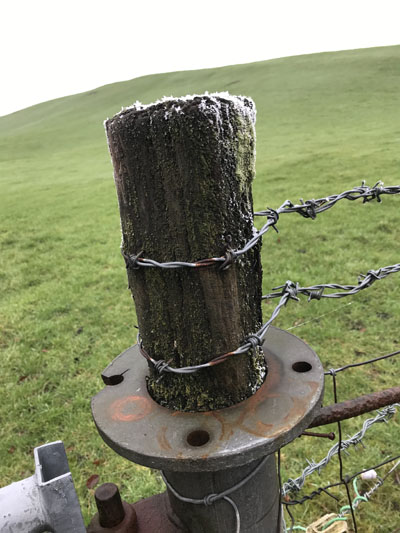
For this series of posts to make sense – and be spiritually useful in our lives – it must challenge the way we see and therefore ascribe meaning to situations. That challenge must also apply to what we are, as well, since how we used to see, in innocence and wonder, lies, now, below the surface of our active adult consciousness, yet comprises its foundations. Everything we perceive has a human process of perception to it, shared by us all, but differently configured within our individual psychologies. This happens so fast and so automatically that we are not aware of it, but the child is still within us.
There were four of us in the small conference room, high in the executive suite of one of the corporate buildings belonging to the giant telecommunications (telco) company. We were a small but important supplier of complex management software to the giant company.
And we’d had enough…
The four people around the table were present to discuss the legal case that was brought by ourselves and due to enter its court stages in a few days’ time. We were not bluffing. We never had been. As the principle of the business, I was there to demonstrate this stance; and that we were not being intimidated by their size. My opposite number was a senior sector head and a very decent man. The legal crisis had been passed to him to resolve. As always, it was sad that the proceedings had taken so long to get to the attention of a reasonable person, but that’s often how it goes. We knew we were burning our bridges and we knew that we would never work with that Telco, again. It was, potentially, as confrontational as it gets…
The two people with us were lawyers. One of our own and the other acting for the Telco. Our lawyer sat to my right around the small table. The Telco lawyer was at the side of the corporate exec. Together, we formed a cross, just like in our previous post.

If we grow up in a commercial world, we come to expect that our ‘betters’ will sit across that desk or table when they are ‘dealing’ with us. The face to face, 180 degrees position is one we learn very early in our lives. We do it because it is only face to face that we get the full range of signals that tell us what we need to survive, to communicate and to love… It has always been said that love is close to its opposite…
The lawyers were there to advise, they were not able to affect the primary axis between me and the Telco manager, but they could suggest mediation.

If we consider another, and familiar example of a ‘four’ diagram, we can immediately relate to another aspect of this fourness. In the above diagram, we recognise the compass directions from typical map, or even – these days – a smart phone. We know from our reading of maps that we can move along the north-south axis without changing where we are in the East-West direction. The one does not affect the other, yet has great potential to mediate. If it is late and we are hiking to our safe destination, the other axis will play a crucial role.

One of the finest examples – given by Arthur Young, himself, is that of the story of the wise King Solomon mediating between the two wives over the ownership of a baby. We all know the story of how the king asked whose baby it was; and both women replied it was theirs. This is represented by the vertical axis of ‘Possession’ – they were each pulling to get the child. One of them was lying but Solomon could not know which without invoking the other axis, which, in this case, was Love. So, he did so, and deliberately suggested that he cut the infant in two, so that each wife could have half. The real mother was horrified at the proposed loss of life of her son and offered to let the other woman have the child rather than see it killed. The movement along the other axis, Love, resolved the situation, and the cleverness of the solution has come down to us through legend.
Or did the story always contain a pointer to the architecture of real meaning?
Arthur Young’s passion was to unite the worlds of science and mysticism. In this research, he was beginning to see way to do it. In the next part, we will consider how he invoked the different aspects of space and time to assist him.
To be continued…
©️Stephen Tanham
Stephen Tanham is a director of the Silent Eye School of Consciousness, a not-for-profit organisation that helps people find a personal path to a deeper place within their internal and external lives.
The Silent Eye provides home-based, practical courses which are low-cost and personally supervised. The course materials and corresponding supervision are provided month by month without further commitment.
Steve’s personal blog, Sun in Gemini, is at stevetanham.wordpress.com.
You’ll find friends, poetry, literature and photography there…and some great guest posts on related topics.
Share this:

From Sue…


The day was bitterly cold. Icy winds and heavy skies meant that it was definitely not the weather for tramping the moors on search of ancient stones. Instead, we had a run out to Tissington, knowing that one of the windows in the little Norman church there would be perfect to illustrate the post we were putting together for the Silent Eye’s April event.
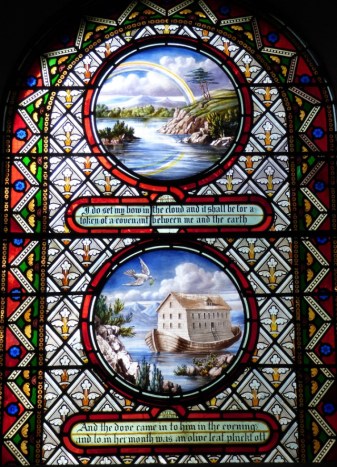
The village is tiny… just a few old streets clustered around Tissington Hall in Derbyshire. The Hall has been the home of a single family, the FitzHerberts, for centuries and the ghosts that walk there, from cellar to landing, are their own. Orbs and lights, tobacco smoke and footsteps may follow you in the cellars… and a man dressed in black. In the Library, the temperature is prone to drop rapidly, while lamps move and vibrate and a spectral cat is a prowling presence whose…
View original post 1,014 more words
Share this:


The grey dawn was breaking around the huge ship. It’s not a boat, Captain Thassos had explained. A ship is much bigger than a boat… you can fit several boats into a ship. Later on in the cruise he would provide a wonderful illustration of this. For now we were about to have an experience of a lifetime, and it was ironic that the very landscape dawning around us was very similar to the one on the other side of the planet that we were supposed to have visited…

Two years prior, we had booked our first ever cruise as an experimental holiday. We love landscapes – especially dramatic ones – and thought that a week’s trip to see the Norwegian fjords (from the inside) would be a wonderful holiday. We had never been cruising, and, frankly, I was doubtful that being kept prisoner on even a well-fed ship was going to be my cup of tea. With a week to go, our cruise was cancelled – due to overbooking. At first we were enraged; but the compensation package offered by Celebrity Cruises was so good that we accepted their sincere apology and, banking the voucher for a free cruise of the same value (plus our money back and all expenses), we looked at the forward calendar…. and wondered…

My eldest son and our daughter-in-law; plus our two grandchildren, live in Australia. Once every two years, we try to get out to see them. So, we thought, why not combine the two and spend November – one of the dreariest English months – having a combined Australia/New Zealand trip, with the replacement cruise being the first part of the experience. We are retired from a long life in IT, and happily, we can do this sort of thing – but not too often, as cruising of any form is expensive.

We had left Sydney two days before. It was such a beautiful experience that I blogged about it at the time – from my iPhone. But Milford Sound, the most primeval landscape on the whole of New Zealand’s South Island, was now up ahead, and Captain Thassos was waking the whole ship, early, to allow us time to get ready for this very special experience. ‘Once in a lifetime experience’ is overused but in this case we had reason to believe it would be so. Much depends on the weather… You can travel to this, one of the most southerly places on the planet, and see nothing because of the mist. New Zealand is a beautifully misty place…

But, as our luck with the Norwegian cruise had been bad, so this was was good – more than good, because, as my first sprint to the upper deck showed, we had the perfect combination of wispy mist and a clear morning – not always present in Milford Sound.

It was still before seven in the morning, yet just about every able-bodied person was on one of the upper decks. The Solstice is one of the largest vessels on the seas. It dwarfed the other tourist boats going past us, as can be seen from the above photographs.

Milford Sound is a misnomer. A sound is an outlet to the sea formed by a river system. Milford was created by a glacial system – the mountains all around give the clue. Because of this the ‘lip’ of Milford Sound is quite shallow; something that would have produced problems for large vessels until the latest generation of low-draught ships (such as the Solstice) came into service.

The highlight of the experience came when we had penetrated Milford Sound to the end of its navigable depth. The Solstice is equipped with twin giant propellors that can be rotated through 360 degrees. This enables complete turns to be made within the length of the ship: the vessel simply rotates in the water on its horizontal axis. Captain Thassos made a point of stressing how much control it gave the crew in tight or difficult situations.

The ‘doughnut’ turn complete, it was time to visit the last of the vast waterfalls that tumble from the highland peaks into Milford Sound. Then we made one last turn before heading back into the open waters of the ocean. There were two more locations to visit on the ‘Fjord Coast’ of New Zealand’s South Island, but none compared to Milford Sound. Visitors from inland face a difficult car journey or many days on foot to get there. We had arrived in the comfort of the huge Solstice, which also offered us her height from which to see the whole of glacial landscape.
The captain took care to explain that the apparent fumes given off by the Solstice-class boats are not polluting. The engines have catalytic processes that convert what would be diesel smoke to harmless vapour – that is what is seen emerging from the giant funnels.
The trip of a lifetime? It most certainly was. There were many other stopping points on our ten-day cruise around New Zealand. I will be writing about the best of them in posts to come.
©️Stephen Tanham
Stephen Tanham is a Director of the Silent Eye School of Consciousness, a not-for-profit organisation that helps people find a personal path to a deeper place within their internal and external lives.
The Silent Eye provides home-based, practical courses which are low-cost and personally supervised. The course materials and corresponding supervision are provided month by month without further commitment.
Steve’s personal blog, Sun in Gemini, is at stevetanham.wordpress.com.
You’ll find friends, poetry, literature and photography there…and some great guest posts on related topics.
Share this:

At the start of this, ourselves. This is one of the best posts I’ve seen on the subject…

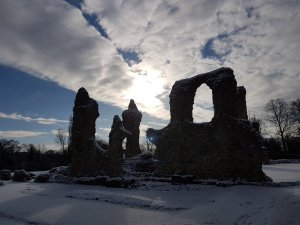 This is a dementia related post I’m afraid, but it’s also, kind of, a warning. As I’ve probably said before, but I’ll say it again, the reason I write the posts about my dad are because most of us have no idea what happens when a person gets Alzheimer’s. Usually, we hear that someone has been diagnosed, they tell people, you meet them around the place and they have memory problems but seem more-or-less OK otherwise, and then they disappear. The next thing that happens is that five years later, you learn they have died. I’ve never known what happened between that point when they stop going out into society and the point at which their death is announced.
Now, I am learning, so I am sharing, as I have done all along, because I hope it might help someone.
Dad tipped suddenly and completely into full on swearing, spitting…
View original post 3,576 more words
Share this:

+ #Silenti, Astrology, Consciousness, esoteric psychology, Mindfulness, Mystery Schools, Spirituality, Stream of Consciousness
The rotating blade of meaning (2)
by Steve Tanham

In Part One, we looked at how Arthur M. Young, a brilliant engineer and inventor, was fascinated by the ‘act of knowing’, and determined that there were four stages to this central part of our consciousness. This can be illustrated by the following search for what might be termed a ‘geometry of meaning’ in the act of seeing something:
- There is a rectangular-shaped object across the room on the wooden floor. That means it belongs to the family (set) of things that share rectangular shapes, even if they turn out to be three-dimensional. This is an objective observation – it can be scientifically proven. Young termed it ‘objective general’ – many things are rectangular…
- The surface of it is not a plain texture. It appears to be a heavy canvas material. Again this can be proved, but this facet of the object is specific. Only one of these actually exists – in this form. Other examples will be slightly different. My powers of knowing allow for this. They scan, rapidly, from the general to the specific. So far, I have a rectangular object made of heavy canvas. It’s an objective, specific thing; or, in Young’s accurate terminology, an objective, particular thing.
- Now, our perception of knowing takes a leap across the observer-observed divide. In reality, our act of partial knowing (so far) has really been observer-based, but the qualities of the observed object are sufficiently studied to allow us to attribute these objective qualities to it. But now we move into a different state of perception: one in which the observer projects qualities of their own onto the object. The object is a faded shade of green. The experience of ‘green’ is entirely subjective, that is, it is projected onto the object by me. Whatever objective qualities it has, they do not include my experience of faded green. This aspect of my object is therefore subjective and particular. Young called this type of subjective ‘projective’.
- Finally, humans like their objects to have a purpose. I can combine the knowledge I now have of this object and know it to be my laptop shoulder bag. In doing this, I have completed the fourfold cycle of knowing this object, whether seeing it for the first time or when I have been trying to locate it.
The table from the last post is included for clarity. These concepts need to be understood before we can move onto the revelations of what Arthur M. Young discovered next.

The above fourfold process is completely inclusive for any act of human knowing. As was said last time, science is only concerned with the first aspect: the objective general, the other three aspects it leaves to the philosophers… But the whole is what happens.
Arthur M. Young was fond of diagrams. In his work, he tried to explain using diagrams, and even actual examples of objects, such as pendulums, whenever he could. He wondered whether the above fourfold ‘map of knowing’ could be more usefully represented as a diagram… and the idea of a simple cross sprang to mind.
The value of such a diagram would be to show more information than was available from the table. For example, it might show what relationship each of the four aspects had to each other – opposite on the cross-diagram could mean that they were opposite in nature…
We have assigned the attributes of general vs specific and projective (subjective) vs objective. Each aspect of our analysis has a unique combination of two of these – and they are all different permutations. We can see, for example, that the formal description of the object (objective, general) is the opposite of the function of the object (projective, particular). In like fashion, the Sense Data are the opposite of the Projected Values. Putting these into the cross diagram begins to show us the hidden relationships in our perception and knowing.

Because the diagram is logically true, we can deduce certain results from it. The first is that the above opposites are true; the second is that those values that are not opposite have a different relationship with each other. Since we are searching, ultimately, for a geometry of meaning, the angles are important to what follows: 180 degrees conveys opposition, whereas 90 degrees means that the aspects do not affect each other.
The deeper implications of this will be discussed in the next post.
Other posts in this series:
To be continued…
©️Stephen Tanham
Stephen Tanham is a director of the Silent Eye School of Consciousness, a not-for-profit organisation that helps people find a personal path to a deeper place within their internal and external lives.
The Silent Eye provides home-based, practical courses which are low-cost and personally supervised. The course materials and corresponding supervision are provided month by month without further commitment.
Steve’s personal blog, Sun in Gemini, is at stevetanham.wordpress.com.
You’ll find friends, poetry, literature and photography there…and some great guest posts on related topics.
Share this:

From Stuart…
Share this:

+ #Silenti, Ancient Landscapes, Ancient Sacred Sites, Australia, Silent Eye School, Soul, Spirituality
The Wolf and the Setting Sun
by Steve Tanham
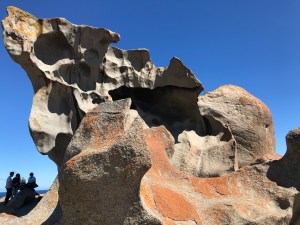
Like knowing thought inclined to action
Creates ‘me’ when the job is done
So must I trust the light
That pulls me where the photos are
To stand beneath the ancient wolf
And howl at the setting sun
©Stephen Tanham
Share this:

From Sue…

Six a.m. on a Sunday… I groaned and turned off the alarm clock. I hadn’t been sleeping well, or enough, and did not want to obey the imperative summons… especially not on a day when, historically, most folks get to sleep later. As I clawed my way through the fleeing remnants of a dream in which I had been dreaming about dreaming, I wondered about the whole sleep thing. We are supposed to spend about a third of our lives in slumber. Is that a design flaw, a superb bit of physical engineering or a gift? Maybe it is all three, or perhaps that depends on where you are standing.
There has been a huge amount of research done on the need for and benefits of sleep, from both the physical and psychological perspectives. We have identified the stages of sleep, the way the mind solves problems and the body…
View original post 714 more words
Share this:

+ #Silenti, Astrology, Consciousness, esoteric psychology, Mindfulness, Mystery Schools, Spirituality, Stream of Consciousness
The rotating blade of meaning (1)
by Steve Tanham

You have probably never heard of him. He was an engineer by training. He was the primary inventor and developer of the Bell helicopter, which made the promise of point to point flight a reality – though it had been discussed for centuries beforehand. This inventor, engineer and scientist was from an age when a few scientists could still challenge the overall approach of modern science – with its focus on the smaller and smaller, and lack of vision of the ‘whole’. They are almost gone as a species, so, in this series of posts, I’d like to pay tribute to Arthur M. Young and explain in non-technical language how important his work was… and is.
He was also, and unusually for a scientist, a master astrologer…
Despite being skilled in engineering and mathematics, Arthur Young returned to university as an adult to study Quantum Physics, recognising that here was something that completely altered the way we should visualise the world. He was fascinated by the consciousness potential of the relationship between the ‘observer’ and the ‘observed’, something that science had tried to ignore for centuries. This dismissal was brought up, sharply, by Quantum Theory, which proved that only the presence of the observer allowed the presence of the object to be ‘measured’. In other words, proved it was there… but not alone.
Helicopters make people nervous. They are heavy objects, oddly shaped and dangerous looking. When flying, they would plunge to the ground if the massive rotor, above, stopped working or broke. We can think of a plane as being safer because it has fixed wings that give it the theoretical capability of gliding back to Earth. Most of them don’t. For both planes and helicopters, the focus is on making sure that they are reliable and controllable in a failsafe way, and, for helicopters, that controllability is a very complex thing…
Given Arthur Young’s involvement in the development of the small, commercial helicopter, it’s not surprising that he was focussed on this central aspect of control. We will see, later, how this led to startling revelations that bridged physics and philosophy.
Consider the opening photograph. It shows an Art Deco style wall lamp, caught in a beautiful moment of rainbow colour coming into the living room from a clear winter’s day, outside. It has its own beauty, and that is what draws us to it. It has a complex shape that can be considered at differing levels of detail. Some of these details (properties) are objective – they can be measured by science and classified into such properties as material and shape.
Some of the properties are subjective – they only mean something to us – the observer. If I wanted to break down the ‘stages’ of knowing the wall-light lit by the rainbow, I might deliberately ignore the feeling of beauty and its minutely shifting colour, and examine only the overall form of the object. Its fundamental shape is an inverted triangle. I know enough about the delicate glass from which the ‘saucer-shaped’ leaves are made to be concerned that they are easily broken. With that small set of information, I feel I know the material content of the object; I could describe it to someone else and they would get a good picture in their minds.
The world of science is concerned only with this latter description: the inverted triangle – the form of the object, and the chemical material from which it is made. Arthur Young called this the formal description. Science is focussed on this level of knowing because is the only one that is objective: that is, not dependent on how we see something (bad mood, poor eyesight, colour-blindness, etc.) Using this formal description, science can categorise the object, and make it part of a common set of things – a very important process.
But the human, awakened to the form and beauty (or not) of the world around them, has a much richer experience. I understand the objective nature of the inverted triangle and the delicate chemical composition of the fragile leaves, but I’m staring in wonder at the texture of the glass and how it is reflecting the rainbow. I lean closer and find that the glass has a faint but definite smell to it. It’s clinical but not unpleasant.
These are subjective impressions. Science could never reproduce them because they belong to me, to you, to anyone with sense organs. We all experience these things differently, but we can try, with language, with photography, writing, art or poetry to convey that this is not simply an inverted triangle made of fine glass; it is a rich experience and unique in the entire history of the universe… You could experience something similar, but the fine details would belong only to each of us, differently–and they would change the event. We seldom consider this power we have – be a unique observer of the universal beauty all around us. We, whose bodies are made from the atoms created by ancient exploding stars, must come close to our zenith when we find such beauty and stop our everyday consciousness to ‘be’ with such it.
Science is not deficient in its lack of concern for this; it’s simply that the full experience of the observer cannot be reduced to numbers… The collective mind that created numbers can never be subservient to them.
So far we have encountered the formal description of the object: the inverted triangle and the chemical properties of fine glass. We have also used our sense organs to experience the way the rainbow light shimmers on the petals of the lamp, and we have even smelled the glass. These sense impressions come from the object. They may be slightly different to each of us, but the properties from which they issue belong, also, to the object. Our object therefore possesses a formal description and specific sense impressions. The formal description could be shared, using shared language or mathematics, with anyone. The sense impressions could not, but could be likened to something else in our experience.
Step back and the experience of being an observer has two main aspects. There is a ‘me’ and an ‘it’. The experience of the wall lamp is deemed to be ‘out-there’, but the knowing resides ‘in-here’. I am helped, by the formal description, to recognise or locate the object, even if I’ve never been in that room.
Young said that, to realise the process and the power of knowing it is vital to (initially) separate our aspects of experience in this way. When we consider the received information and the sense data from the object, two more things happen in our perceptive mind. The first is that we place a value judgement on the experience – perhaps I am in awe of the beauty of the rainbow on the lamp. Without rationally considering it, I feel moved by an emotion, a kind of joy that this rare impression of living perfection is present.
The second ‘in-here’ aspect is the purpose of the object. In this case it’s not to show off rainbows, but to give light when evening comes. In other circumstances, my knowing of the lamp would have been part of the inventory of the capabilities of the room. Arthur Young named this the function. These two ‘in-here’ aspects belong to the observer, not to the object. We project them onto the experience based on our learning. Young called this kind of aspect projective, and the aspects belonging to the object, alone, he called objective. Where something in an aspect was specific, he used the term particular; where it had a shared nature, he named it general.
If we unravel the above example, there emerges a process of incremental perception which, conceptually, looks a lot like the opening of the famous Russian dolls:
- Aspect one, which is an inverted triangle shape, made of a chemical structure of fragile glass.
- Aspect two is the contents of the above plus the sense impressions belonging only to the objective nature of the inverted triangular shape (its colours, shades and smells)
- Aspect three is the subjective experience of all the above plus the feeling of beauty and awe I have when my attention and perception is captured by the occasion.
- Aspect four would be all the above plus the function of the wall-lamp, which, in this case, has been subverted by the unexpected rainbow… exactly what happens when we open ourselves to the possible in real life!
These four aspects therefore comprise: formal description, sense data, value and function. The first two are objective (‘out-there’), the second two (‘in-here’) are projective (subjective).
We can put these into a table for easier reference:
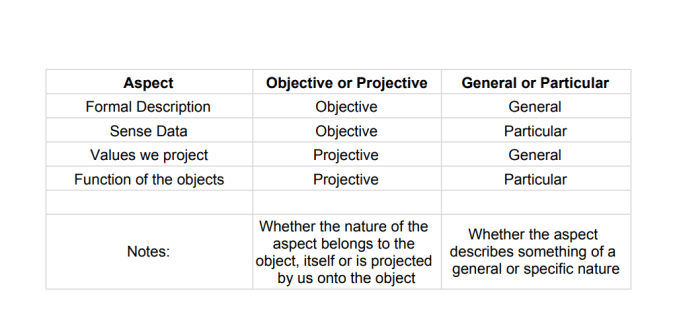
The creation of this was not a casual work. Arthur Young tested it against all the situations he knew of, in both a scientific and philosophical sense. He determined that it was a universal description, an ‘anatomy’ of how we perceive and how we ‘know’. These four stages – aspects – of knowing were at the heart of being human, they were not only the containers of what we learned, they were how we learned.
Four was an interesting number and features predominantly in the ancient mysteries. ‘Fourness’ is a key part of how mankind has conceived of the universal divisions of experience. Fourness is one of the keys to Astrology, in the form of the ‘Elements’ of Earth, Air, Fire and Water. For Arthur M. Young, an astrologer as well as a scientist, the notion of fourness at the centre of human experience was about to take him on a mind-expanding journey…
To be continued…
©️Stephen Tanham
Stephen Tanham is a director of the Silent Eye School of Consciousness, a not-for-profit organisation that helps people find a personal path to a deeper place within their internal and external lives.
The Silent Eye provides home-based, practical courses which are low-cost and personally supervised. The course materials and corresponding supervision are provided month by month without further commitment.
Steve’s personal blog, Sun in Gemini, is at stevetanham.wordpress.com.
You’ll find friends, poetry, literature and photography there…and some great guest posts on related topics.


 Sun in Gemini
You must be logged in to post a comment.