
I’ve often thought what a testimonial to the speed of the modern mind a motorway is.
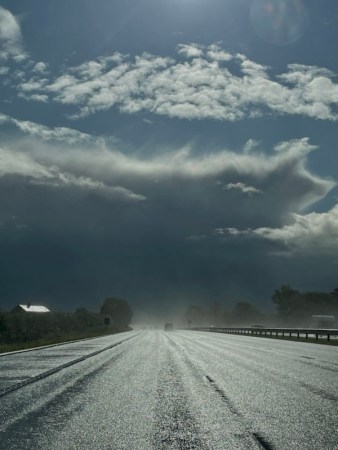
As our principal driver (though my wife is just as competent), I seldom get chance to take photographs. But when this deluge hit the M6, just south of Kendal, she was driving us to meet with her sister in Morecambe.
I already had the phone camera in my hands, reviewing some of the morning’s shots from Grange.
The sky darkened in seconds. Everyone slowed down as the world went quiet… For once – and probably more to do with it being Saturday than any newly absorbed wisdom concerning wet motorways – the phalanx of cars in front of us behaved impeccably as we all slid into the darkening, watery curtain.
The sunshine was the last thing to go; a dynamic and thankfully present ally as the gloom sucked us in.
Then the heavens opened, and all I had to do was rest the phone on the dash and press the camera’s shutter.
©Stephen Tanham 2023
Stephen Tanham is a writer, mystical teacher and Director of the Silent Eye, a correspondence-based journey through the forest of personality to the dawn of Being.
http://www.thesilenteye.co.uk and http://www.suningemini.blog
Share this:


This Sunday is the third of the month, and we have our SE-Explorations talk over Zoom; linking a growing group of people across the world in friendly yet deep explorations of key topics in modern mysticism.
This month’s topic is the mystery of identity.
We begin by asking. ‘What is identity?’ We will all have answers unique to our journeys…
When I was a boy, I loved comics. Over the years I took on the roles of Dennis the Menace, Billy the Whizz and the famous Dan Dare of Eagle comics.

Dan Dare was much more sophisticated and reflected my growing sense that certain things in the world were beyond just having fun, and took you into a world of higher purpose.

(And later, the more sophisticated Dan Dare, all round decent chap and Pilot of the Future! Image: Wikipedia))
Dan Dare’s mission was to protect the Earth from the evil Mekon – a mental giant but an emotional and moral monster… Looking back, there was much of the morality story about the nature of these protagonists. Joseph Campbell, author of The Hero with a Thousand Faceswould have recognised both characters and the plots in the Dan Dare story.

Fun at the time, these absorbing identifications were far from just a game; they were ways of seeing yourself in a form that had an inner life and a different sort of energy – a kind of sophistication not available to a young boy in his native environment. A fantasy? Certainly… But one that had interesting elements of egoic development that made even more sense from an adult perspective – though the author may not have consciously included that element. Stories have a habit of repeating ageless plots.
The young child is simply fascinated and lost in the characters of a story. The older one typically has a sense of boredom with the person they are, feeling it limited, where the comic or fantasy character is not.
Children naturally escape into fantasy, and love playing games with others where they take on roles. In that sense, they are very ‘plastic’ about their identities. At first they have little idea that they even have a character. Later – typically around the age of seven – they being to realise that the ‘me’ they take for granted is developing, and that the result is a new sense of self.
As teens, we may find ourselves identifying – though more quietly, as we are now deeply self-conscious – with heroic figures from cinema. The great psychologist Carl Jung had much to say about archetypal forces that underlie all mankind’s experiences. These may be seen as heroic figures when brought to life in the human consciousness and the life it lives, though they do not have that representation in their native realm, which is below our consciousness – Jung’s concept of the subconscious.
Figures such as warrior, lover, trickster, child, king or queen, that appear strongly in the stories of our inner lives often seem at odds with our reality and circumstances, if not our intentions. They come from colourful worlds, whereas our is grey.
Alongside this is a growing sense of who we are; largely in terms of our society. Teen years are full of the gap between the expectations of the adult world we are expected to join and the actual state of our self-opinion, stripped of fantasy images we realise hold no power, outside of the imagination.
But we should not rush to diminish the power of the imagination – nor its ‘fantasy archetypes’. Imagination can be made active rather than passive and trivial. It holds great creative power in moulding our future – if we have the will to create or call forth an enduring model of how we wish to develop – more importantly, how we wish to be.
The cinemas would not be so full of people if the latest 007 James Bond films did not strike an essential chord within us. We do not wholly let go the inner attachments of resolve, bravery and brilliance, even if our prowess as liver and lover falls short of fictional proportions…

What grows, quietly in those moments of recognition of the whole cycle, is the certainty that there is something at our core which is truly us, but which is strong – in the sense that it can be not only cultivated but given free reign to develop itself and us in our ‘outer’ lives.
We may call it soul, or self or many other terms, but its essential character is that of a ‘rightness of me’ that has alway abided in our truthful depths.
What has been lacking is power…
So now we come to one of the great battles of our lives: the war between unrealistic societal expectations and what we can harvest from the ‘inner self’ which is now revealed.
Somewhere along that challenging road is a moment when we realise that living the life of a James Bond (substitute your own archetype here) is not actually what we want; that we have tasted far warmer and kinder worlds of the creative self than this. Moreover, when we explore these worlds with our new ‘body of truth’, we find that the actual pleasure of the experience of truth in action is greater – and more personal – than any fiction we could have acted out.
Metaphorically, a great and familiar stallion draws up alongside us, inviting us to adventure, not war. Everything we truly are becomes aligned, and a quieter and much more real energy now flows in our lives. It has a continuous freshness, precisely because it belongs to the realm of Being and is not made by the mind from dulled and repetitive representations of memory.
We see what is true and false about our outer picture of ‘me’. But we also see that the inner reality of our true identity and its emotional and ‘felt’ presence within us is more potent, in a life seen honestly, than any fantasy could ever be.
In that quiet dawn of the true identity, we climb on the waiting horse … and ride. And smile a lot…
———-
The Silent Eye Explorations talks, held over Zoom on the third Sunday of each month at 8:00 pm, UK time, are open to all. Send an email to Rivingtide@gmail.com.
———-
©Stephen Tanham 2023
Stephen Tanham is a writer, mystical teacher and Director of the Silent Eye, a correspondence-based journey through the forest of personality to the dawn of Being.
http://www.thesilenteye.co.uk and http://www.suningemini.blog
Share this:

That feeling of being behind a time-travelling invisible ‘camera’, the result of a compelling narrative that plays you as witness to the action – or misdemeanour – that’s just taken place.
Crime writers know it well. It’s one of the tools of their trade. The proverbial smoking gun, borrowed by just about everyone else who wants to invoke that sense of vivid event a moment prior.
Only this event happened a long time ago. And there was a crime, rather, one crime and vast series of errors; recorded at the time in a set of conclusions that changed the maritime world.
It was an inevitable process of learning at the edges of the science of materials. Directly related to what was was to happen decades later, when the De Havilland Comet airliner pushed the boundaries of passenger aviation to find out that metal at high rates of speed and vibration suffered ‘fatigue’ … and disintegrating planes fell out of the sky.
No sky, here…
Only the chill, dark waters of the North Atlantic on the night of 14th April 1912.
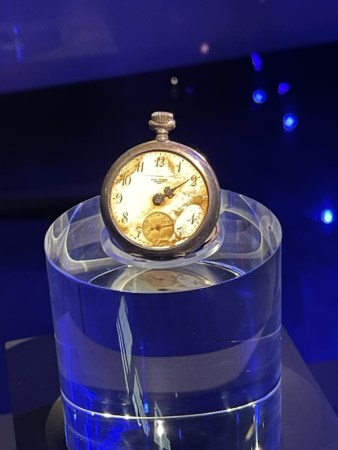
Not smoking, perhaps, since the deep sea would have long extinguished the cigarette that perhaps accompanied the final moments of Malcolm’s life: a life whose cessation was exactly marked by the coming to rest of the mechanism in his pocket watch… found later when his body was recovered from the sea.
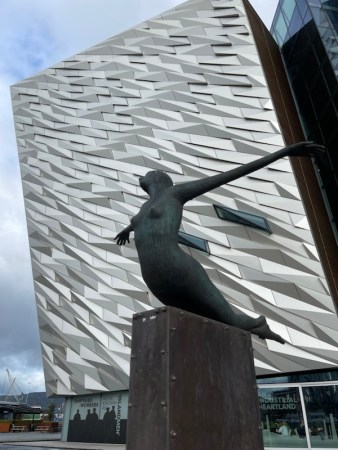

We’re in the Titanic District of Belfast … And at the end of a self-paced tour of the Titanic Ship set in the context of a proud city that built it; only to see it sink during her maiden voyage, after striking an iceberg in the middle of the ocean, four days after leaving from Southampton en-route to New York.

Despite being viewed as ‘unsinkable’, the giant liner took only two hours and forty minutes to slide into the dark depths. .
The Omega pocket watch belonged to Malcolm Johansson, a third-class passenger onboard Titanic. He was 33-years old when the icy waters of the North Atlantic claimed the ship and his life.
Although he was born in Sweden, he lived and worked in Minneapolis, USA where he owned and ran a successful construction business.
In early 1912, he decided to return home to Sweden where he planned to purchase the farm he grew up on as a boy in Bjorkaryd. However, his attempt to recover the property was unsuccessful and so he decided to return to the USA.
It is believed that Malcolm travelled from Sweden to England onboard SS Calypso before booking his passage on Titanic for £7, 15 shillings. He boarded her at Southampton on 10th April 1912.
The Titanic hadn’t been his first choice. Like so many others at the time he was due to travel to America on board the White Star Line’s RMS Adriatic but as a result of the 1912 coal strike in Britain, the Adriatic was unable to sail, and her coals stocks were transferred to the Titanic.
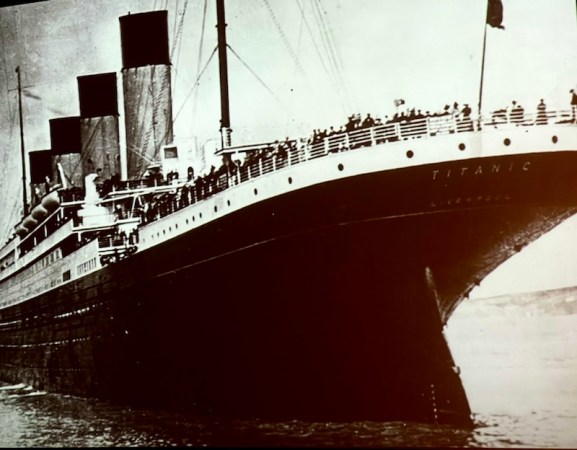
Malcolm died in the sinking of the famous ocean liner, and his body, No.37, was picked up by the Mackay-Bennett crew.
According to the official records, when his body was recovered he was still wearing his boots, but his socks were missing … the socks that contained the money he had taken to buy back his childhood home. The money was never recovered by his family, despite repeated attempts.
‘A shroud needs no pockets’ comes to mind. We can’t help speculating on the route and destination of the theft…
Malcolm was buried in Fairview Cemetery, Halifax, Nova Scotia, Canada on 10th May 1912.
The hands of his Omega pocket watch were frozen in time at 01.37 in the morning of 11th May. It may have been the only witness to his passing.
Calculating the time difference reveals that it stopped just four minutes after Titanic began her final journey to the bottom of the Atlantic Ocean.
At auction, decades later, ‘Malcolm’s’ archive sold for £155,000, the luggage ticket leading the way at £59,000 closely followed by his pocket watch at £58,000.
Malcolm purchased the watch in Sweden on 9th June 1910. It was a Lepine Omega of Grade A quality and is the only documented example of an Omega watch to have survived the Titantic disaster.
In addition to the pocket watch there was also a rare Manifest Ticket for Titanic stamped “10th April 1912.” This particular ticket was initially to be used by Malcolm for his journey to the USA on board the Adriatic. It would have been very important to Malcolm as he would have needed to present it to the US Immigration Authorities at Ellis Island after Titanic docked in New York.
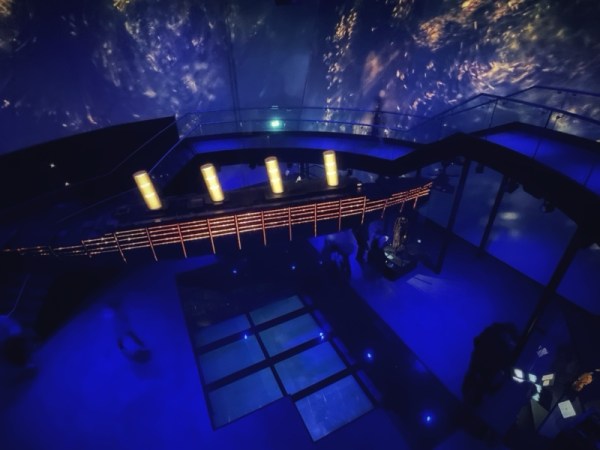
Titanic Belfast is too vast a subject to write a single, encompassing blog about. Instead, I will try to create a series of ‘slices’ through the story of this fine city and its troubled great liner told in this breathtaking ‘experience’.
This is the first of those…
©Stephen Tanham 2023
Stephen Tanham is a writer, mystical teacher and Director of the Silent Eye, a correspondence-based journey through the forest of personality to the dawn of Being.
http://www.thesilenteye.co.uk and http://www.suningemini.blog
Share this:

+ #Phoetry, #Poetry, #Silenti, #TravelwithaMysticalEye, Ancient Landscapes, Photographic techniques, Photography, Places and Prose
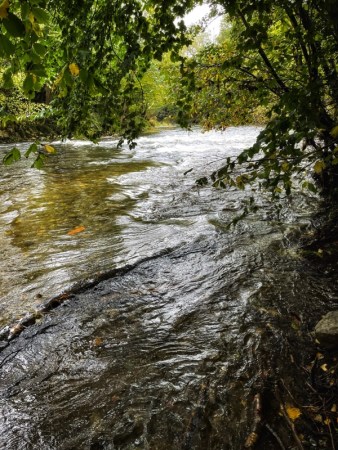
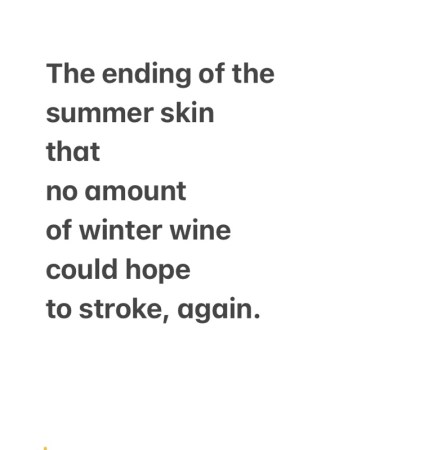
Summer skin
by Steve Tanham
©Stephen Tanham 2023
Stephen Tanham is a writer, mystical teacher and Director of the Silent Eye, a correspondence-based journey through the forest of personality to the dawn of Being.
http://www.thesilenteye.co.uk and http://www.suningemini.blog
Share this:

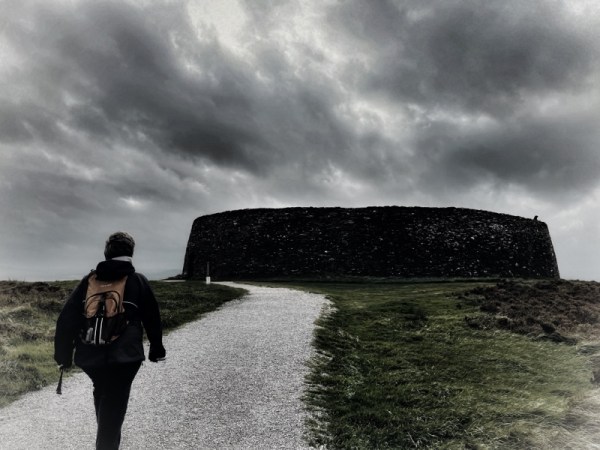
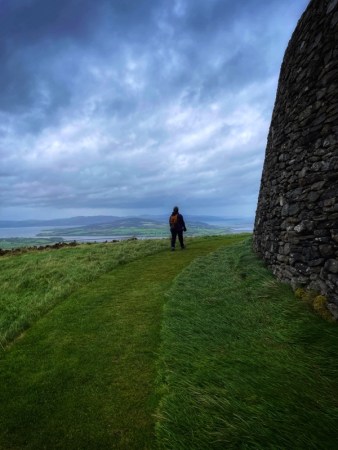
The wind howled at us as we left the car park to climb the hill to the strange stone ring on its summit. It’s in the Republic of Ireland, near the border with Northern Ireland; all of it within the ancient province of Ulster.
Bernie had seen it in a guide book and we wanted to take a look while we were in the area.
By the time we approached the large stone structure, the gale was actively trying to blow us back down… Donegal weather is not boring!
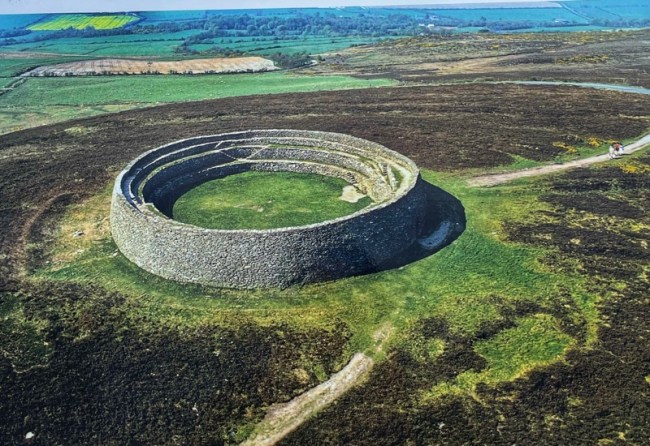
This dark and – on this day – forbidding destination is named Grianan of Aileach, and it has an illustrious history that is believed to have begun in the 6th century, CE.
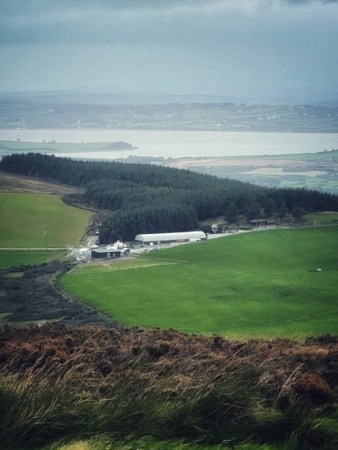
From the site of the ring, you can see practically everything in the neighbouring landscape of sister hills and a vast amount of water.
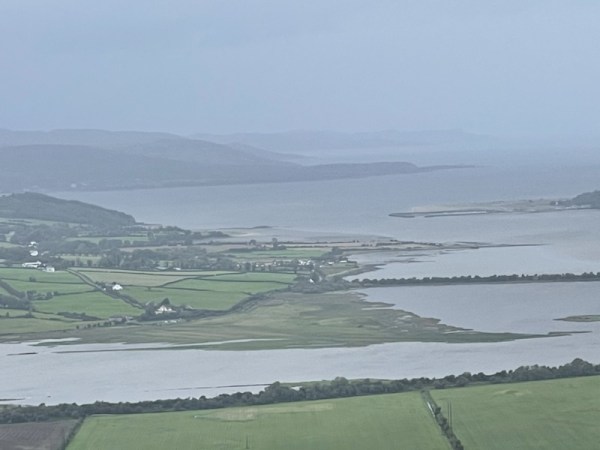
My immediate impression was of a similarity to Glastonbury Tor, which is much more celebrated, but has a similar (to me) ‘self-contained’ feel..
In an emotional sense – and there was a lot of it up there – you can feel the hill’s suitability for seeing what lies below it – and, I suspect, above it, too. This has a dimension that is not simply physical.
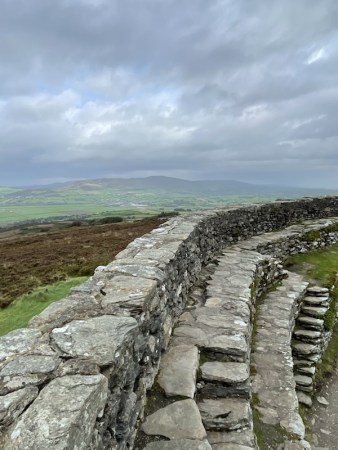
The wall is about 4.5 metres (15 ft) thick and 5 metres (16 ft) high. Inside it has three terraces, which are linked by steps, and two long passages within that. Originally, there would have been buildings inside the ringfort. Just outside it are the remains of a well and a tumulus.
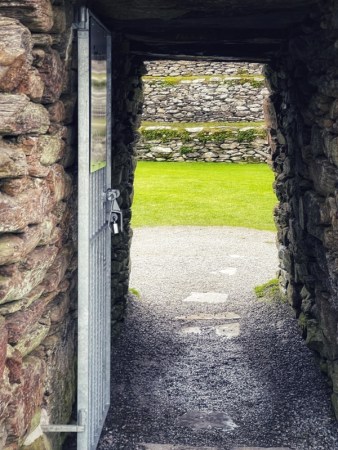
The main structure of the stone ring is five metres high and visible for miles around.
It is undoubtedly ancient. There is evidence that the site had been in use before the fort was built. It has been identified as the seat of the Kingdom of Ailech and one of the royal sites of Gaelic Ireland.
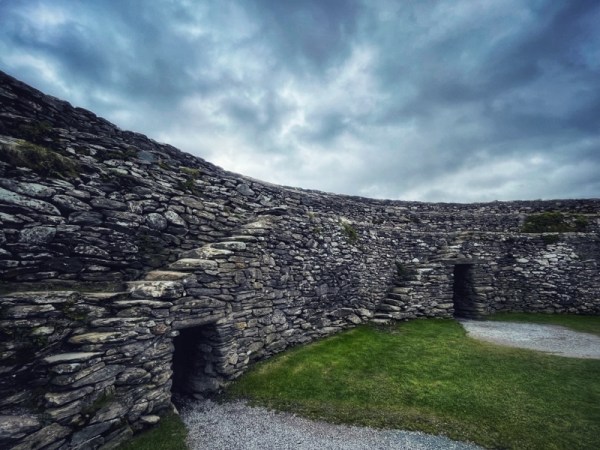
The place-name Aileach means a rocky place. The amount of rock used in its construction becomes apparent from the multiple layers of the interior. This was created with a huge amount of effort.
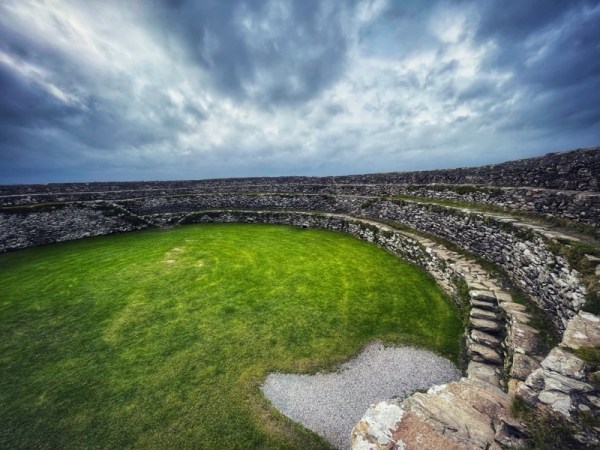
Ancient History:
Evidence for an earlier prehistoric hillfort survives at the site in the form of three, low banks or ramparts and ditches which enclose the stone fort.
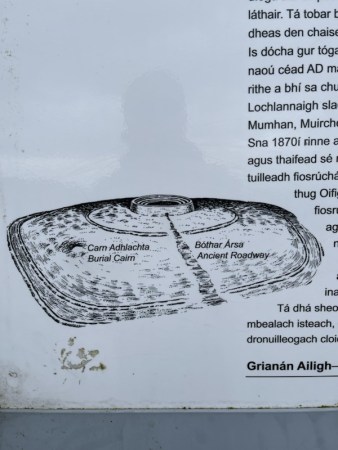
An ancient roadway ran up to the site (see above). There is a holy well, dedicated to St Patrick to the south of the stone fort and the site of a burial cairn to the east.
The stone fort (also known as a cashel) as we see it today was probably constructed in the late eighth or early ninth century CE as the capital of the Cenel n Eogain, the Kings of this part of Ulster.
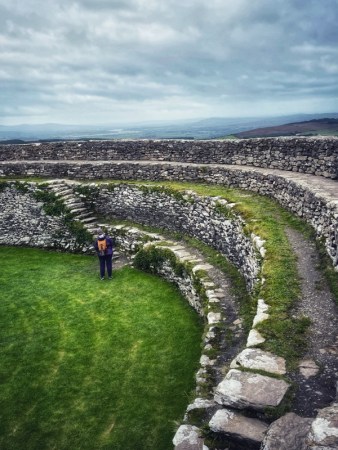
In 904 and 939 Aileach was plundered by the Vikings. The final destruction of the original fort was carried out in 1101 by the army of Jar Muirchertach Ua Briain, King of Munster.
By the 12th century, the Kingdom of Ailech had become embattled and had lost substantial territory to the invading Normans. According to Irish literature, the ring-fort was mostly destroyed by the then King of Münster, Muirchertach Ua Briain. Substantial restoration work was undertaken in 1870. Today, the site is protected as an Irish National Monument.
In the 1870’s the cashel was restored by Dr Walter Bernard of Derry who recorded the finding of stone objects. In 2001 there were further archaeological and engineering investigations prior to an intensive conservation project.
These uncovered glass, pottery and clay pipe fragments dating from the nineteenth century works, but no other remains.
The lintel-covered entrance in the cashel leads into an interior enclosed by a wall that rises in three terraces and is accessible by inset stairways.
Within the wall are two wall chambers which stop short of the entrance. In 1935 the archeologist George Petrie recorded a rectangular stone building in the centre which is no longer standing.
A social history?
I’m no expert in hill-forts. I do, though, have a keen sense of ‘feel’ for a place. When we were walking up the hill towards what was simply a ‘ring of stone’ on the summit, I felt a mix of impressions.
There was ‘security’ here, but upon entering, there was a sense of ‘meeting and community’. One could imagine a gathering of tribes, perhaps? Maybe even some commerce in the form of a market outside the walls.
Such sites are seldom without ritual significance. The top of a hill opens up the sky and the parade of seasonal events, including the all -important equinoxes and solstices by which the cycles of all life were calibrated and ‘seen-felt’ to have their different living qualities.
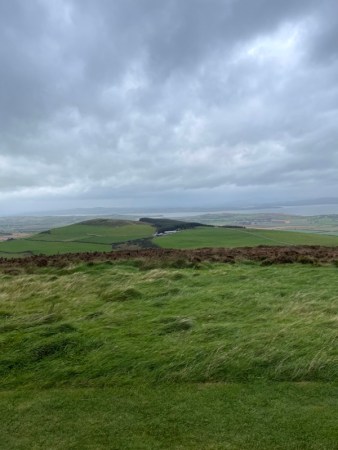
The ancients extended their sense of ‘self’ deeply into the landscape. What we view dispassionately as objects were seen to have qualities derived from life, and attributed, in modified form, to all of the ‘world’ around them. To use other language, the ‘out-there’ was not seen as a separate domain to their ‘in-here’.
When they did gather, they carried this openness to the ‘out there’ with them, which makes places of ancient ritual so rich in potential for our own communion with the natural world.
None of this takes away from our rational and scientific skills; they are simply different perspectives on the same world. They lived in an age of qualities; we inhabit an age of quantity.
Source Notes: Grianán of Aileach. Abandoned. 12th century CE. Periods. Iron Age–Middle Ages. Cultures. Gaelic. Associated with. Kings of Ailech. Site notes Excavation dates. 1830s; 1870s. Archaeologists George Petrie; Walter Bernard
———-
©Stephen Tanham 2023
Stephen Tanham is a writer, mystical teacher and Director of the Silent Eye, a correspondence-based journey through the forest of personality to the dawn of Being.
http://www.thesilenteye.co.uk and http://www.suningemini.blog
Share this:

+ #Silenti, #TravelwithaMysticalEye, Ancient Landscapes, Consciousness, landscapes, Photographic techniques, Photography
A Donegal Journey (3) The Last Inch
by Steve Tanham
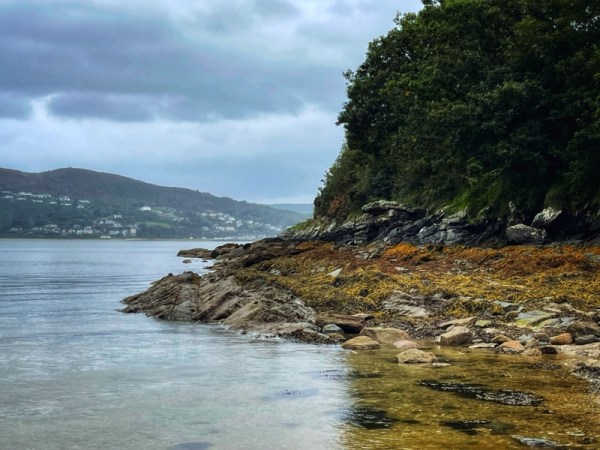
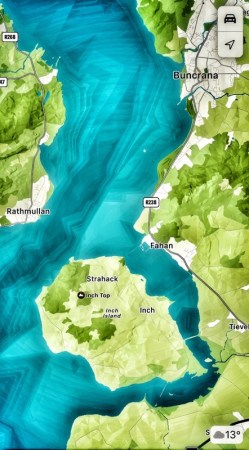
We thought we’d save it for the final day of our time in Co. Donegal but then – on the way back from visiting a nearby hilltop ring fort and surviving a gale that tried to hurl us off the elevated walkways – we felt in need of a gentler experience.
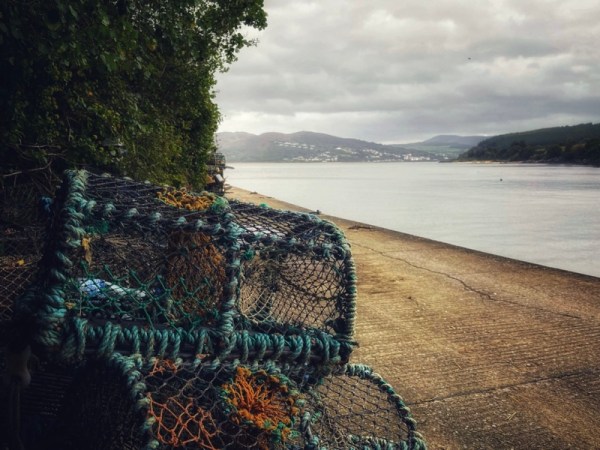
Driving back to our rented cottage, we passed the Inch Banks causeway that connects the island of Inch to the mainland on the Buncrana side of Lough Swilly … and looked at each other.
‘Perfect end to the day,” said Bernie, still looking flushed from the wind’s battering and glad to be dry and driving a now-warm car.
We turned the car onto Inch Banks. My wife groaned slightly, looking at her watch.
“You realise we’ve only got thirty minutes…”
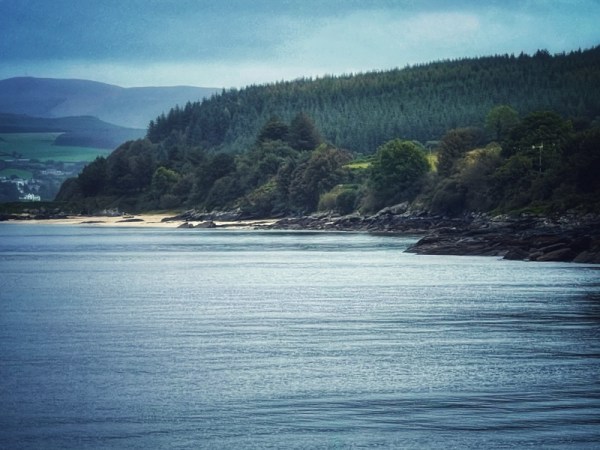
We had arranged to meet up for a drink with an old friend who was also on holiday in Donegal.
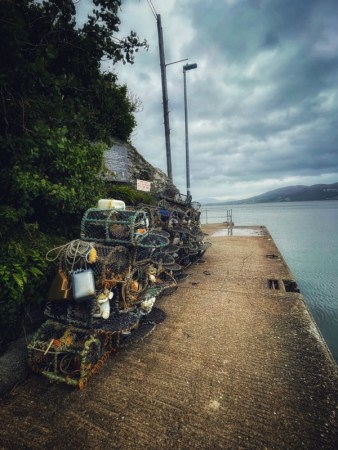
“What can we do in thirty minutes?” she said.
“We can photograph… and try to capture the essence of the place.” I was having none of this negative stuff … thirty minutes was plenty!
The heavens opened at the news. This was not a new phenomenon. It had been happening to us (and everyone else in Buncrana) on a several-times-a- day basis.
I looked back into her mischievous expression. “Rain-soaked photography is its own art-form. “
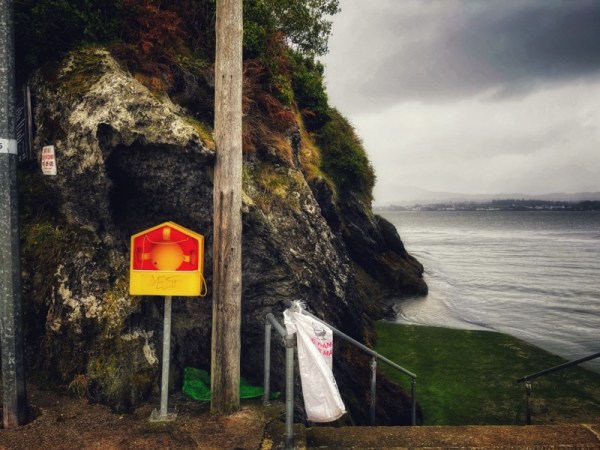
I’d made it up on the spot. But it would do as a pretext, and I was keen to try this distinctive ‘time trial’.
We’d crossed half the island at this point in our conversation, and were arriving at a deserted cove with a harbour wall.
“I’m staying in the car,” she said, parking as close to the beach line as she dared.
With the moments ticking away, I took stock and ran from point to point to get as many shots as I thought worthy – and knowing I could dismiss most of them, later.
About halfway through, I realised that the rain had stopped. I couldn’t suppress a smirk … and kept on snapping.
The survivors are here in the post.
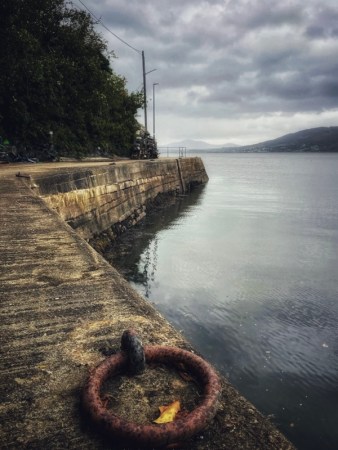
Inch island is approximately five square miles in area. It lies at the southern end of the 21 mile stretch of Atlantic water that is the beautiful Lough Swilly.
Inch Island’s highest hill – Inch Top, is just over 200 metres high, which gives the place an appealing curvature when viewed from the mainland.
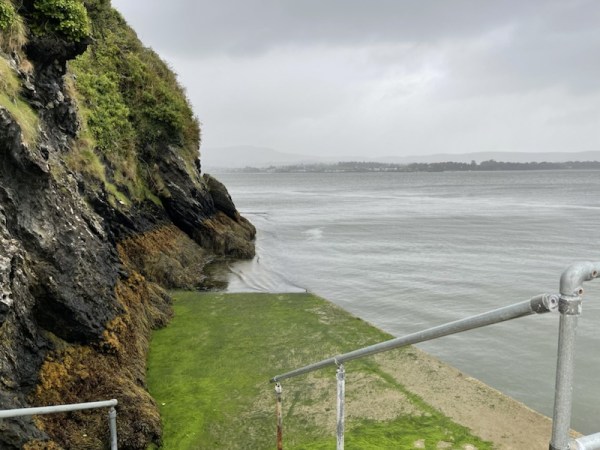
In the Irish language, Inch is known as Inis na nOsirí, meaning ‘Island of the Oysters’.
According to the latest survey, 396 (lucky) people live here.
A blog post on the intriguing Ringfort will be published, soon.
©Stephen Tanham 2023
Stephen Tanham is a writer, mystical teacher and Director of the Silent Eye, a correspondence-based journey through the forest of personality to the dawn of Being.
http://www.thesilenteye.co.uk and http://www.suningemini.blog
Share this:

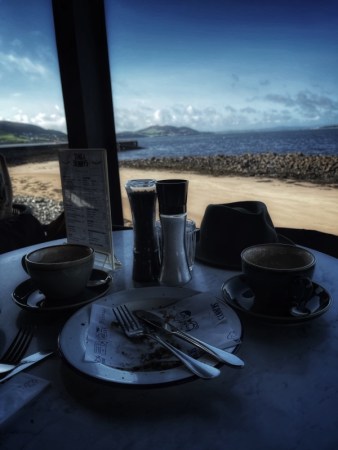
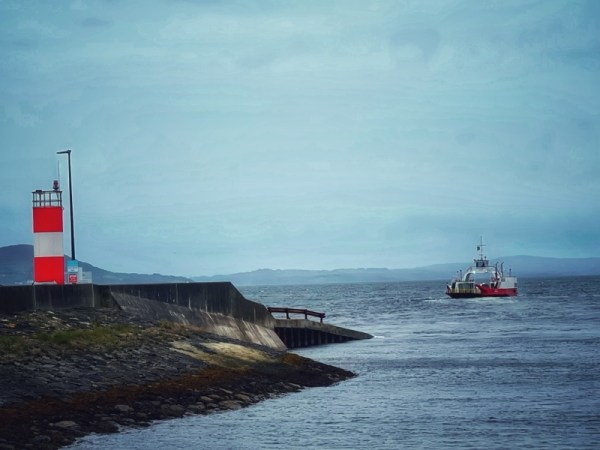
There’s a ferry across this largest of Donegal’s Lochs. It takes you, with car, from Bruncrana to Rathmulan, on the far shore. It departs from the end of the pier, as in the shot above, which is how we first encountered it.
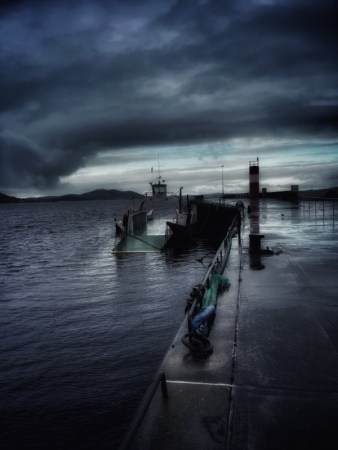
If it’s not raining, that is, or too blowy … or if it’s not September, when the summer timetable is replaced by a less formal approach.
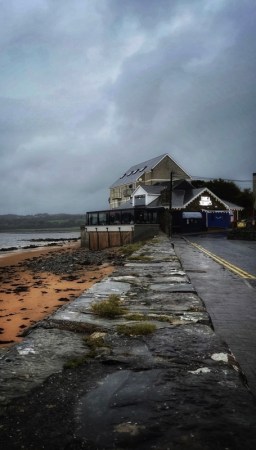
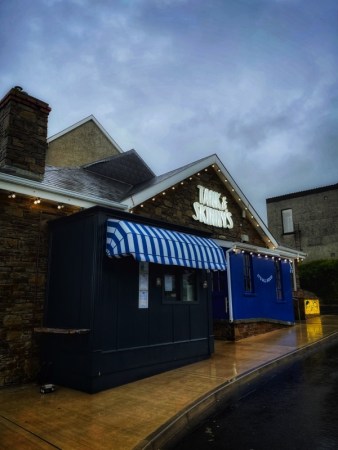
The good news about turning up for your much-anticipated crossing and finding the boat tied up on the side of the jetty that doesn’t have the slipway, and looking as empty of crew as the Marie Celeste, is that you can turn round and make your way back through the downpour to the start of the jetty.
where the excellent Tank and Skinny’s cafe awaits to cushion the disappointment.
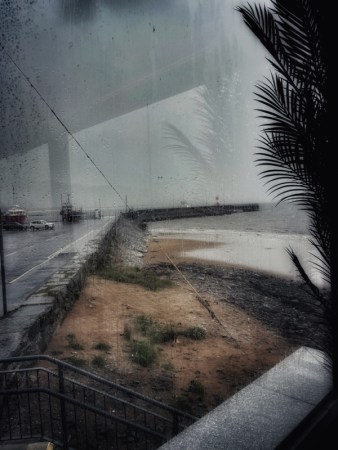
Later, when the mood is soft and satisfied, you can watch the arrival of your second latté, and gaze out over the scant remains of a bacon pancake-stack drizzled, liberally, with maple syrup.
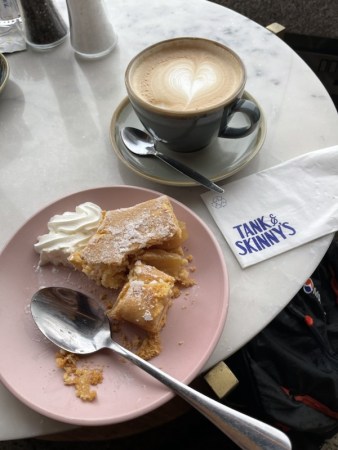
And wonder about trivial things like the origin of the name ‘Tank and Skinny’s’, while staring at the driving rain that now obscures even the end of the jetty, let alone the far shore at Rathmullan – normally a thin line of white harbour-houses in the far distance but now beyond even imagination.
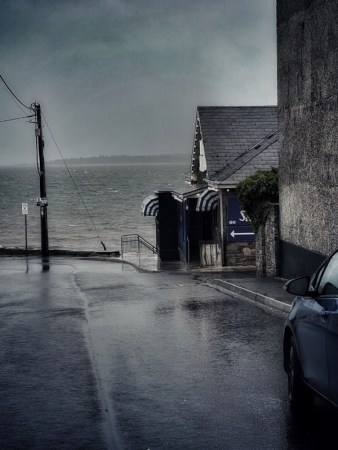
It’s a place to visit if you like weather … and wildness; which we do. The ferry can wait for another day. The coffee is calling.
©Stephen Tanham 2023
Stephen Tanham is a writer, mystical teacher and Director of the Silent Eye, a correspondence-based journey through the forest of personality to the dawn of Being.
http://www.thesilenteye.co.uk and http://www.suningemini.blog
Share this:

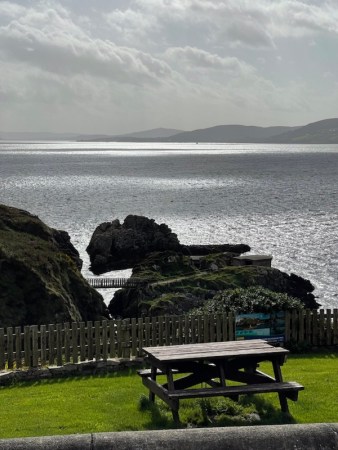
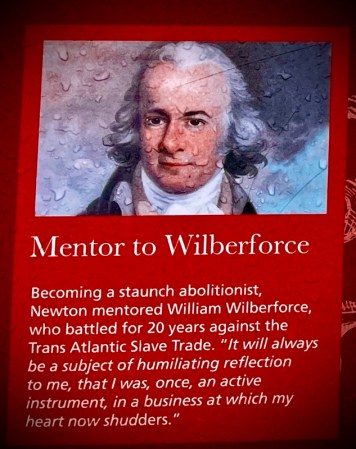
I’d never heard of John Newton, until, walking along the gardens that front the beach at Buncrana, County Donegal, we came across an information board describing his links to the town via the hymn ‘Amazing Grace’.
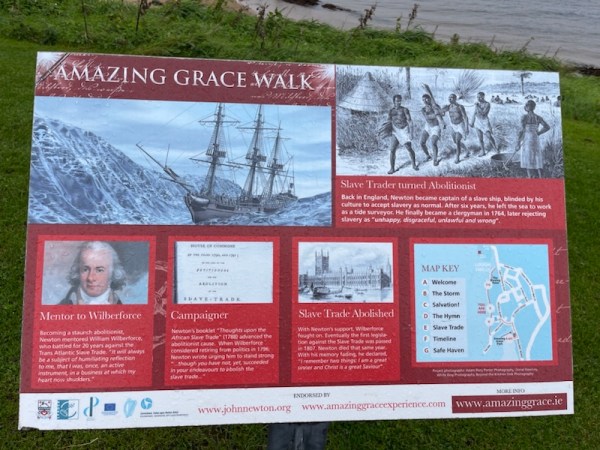
You may already have heard of this man, who could be described – at different times of his life – as both despicable and courageous.
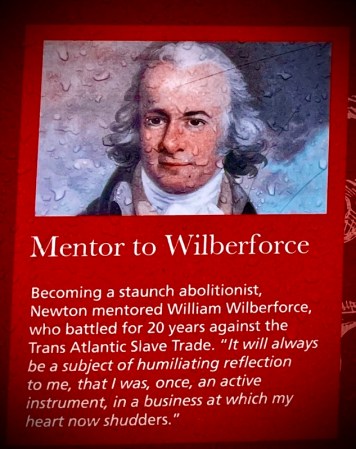
Glancing at the tourist information, my immediate assumption was that Newton was a native of Donegal, and therefore celebrated, here, for his (eventual) dedication to the abolition of slavery. The latter was true, but he was born in Wapping in London, in 1725, the son of John Newton the elder, a shipmaster.
So what was Newton’s connection to this part of Donegal, one of the most beautiful and varied coastlines you could wish to experience? It takes a summary of his fascinating and eventful life to explain…
Following his mother’s death just before his seventh birthday, Newton was sent to spend two years at boarding school. At age eleven he went to sea for the first time with his father; subsequently sharing six voyages before his father retired in 1742.
Acting against his father’s wishes, he signed on with a merchant ship sailing to the Mediterranean.
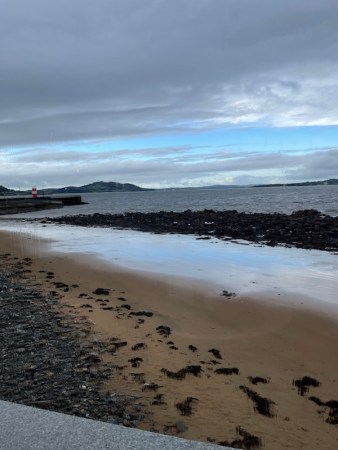
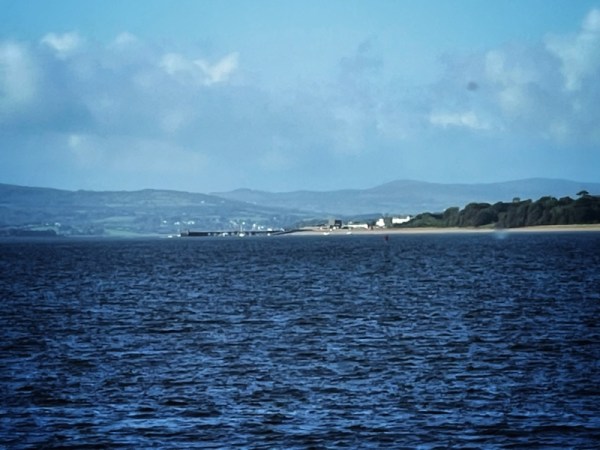
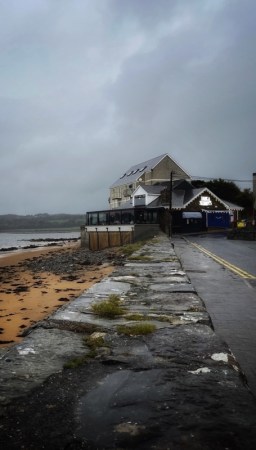
In 1743, adrift from his father’s care, he was press-ganged into the Royal Navy, becoming a midshipman aboard HMS Horwich. He hated it, tried to desert and was publicly flogged, stripped to the waist and tied to a grating. He was reduced to the rank of common seaman.
He recovered, both physically and mentally, but his journal recalls how it hardened his nature…
Newton was introduced to the infamous ‘slave trade triangle’ of West Africa, America and Britain. Glimpsing a path to personal fortune, he rose to become a captain of several slave ships and, later, a substantial investor in the slave trade. At this stage of life, he seems to have accepted and embraced the ‘normality’ of the upper classes imposing slavery on ‘lesser beings’.
Later, and possibly part of this learning curve, he transferred to the Pegasus – a slave ship bound for West Africa. He had already established a reputation as outspoken, and was unpopular with the crew of the ship. In 1745 they left him in West Africa with a notorious slave trader – Amos Clowe. Clowe promptly gave him as a ‘slave’ to his native wife, Princess Paye, a woman who already owned many native slaves.
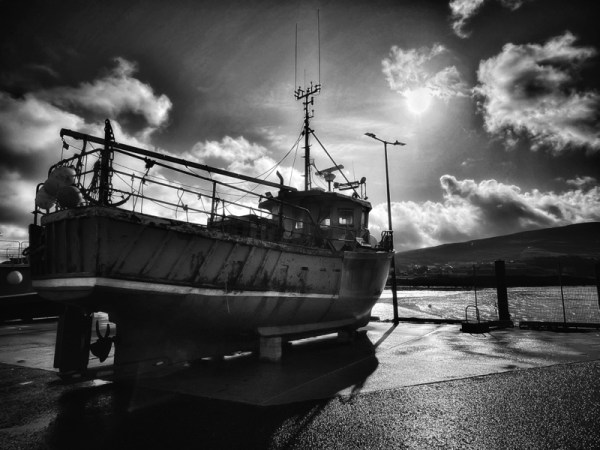
Newton later said of this period that he was ‘At once an infidel and libertine, a servant of of slaves in West Africa’. He refused to say much else about his incarceration.
‘At once an infidel and libertine, a servant of slaves in West Africa’.
John Newton
Early in 1748, he was rescued by a sea captain who had been commissioned to find him by Newton’s father. He was returning to England on the merchant ship Greyhound, when it was caught in a terrible storm off the coast of Ireland. He awoke in his cabin to find the ship in distress and listing. In one report, he lashed himself to the untended wheel and stayed there through the days of storm that followed. During this, Newton began to pray and called out for ‘God’s mercy’. After a total of four weeks at sea, the Greyhound limped into Lough Swilly and came into dock at Bruncrana for repairs by a local shipwright.
It was the 10th March, 1748, a date he would mark as the start of his duty to God and fellow men and woman; a path he followed for the rest of his life as an evangelical Christian. He swore an oath to refrain from either gambling or profanity. He renounced alcohol, but continued to work in the slave trade, later saying that his conversion ‘to being a true believer took a number of years.’
Applying modern ‘standards’ of another age is problematic. But it struck me there was a degree of hypocrisy, here.

He returned to the sea and eventually captained three more ships before a stroke put an end to his seafaring career. By then his investments in slavery were considerable and he was secure. Since ‘being spared’ in the storm, he had longed to become a church minister, but found it difficult to gain sponsorship.
Moving to London in 1754, he took up the position of rector of St Mary’s Woolnoth Church and later contributed to the work of the Committee for the Abolition of the Slave Trade, formed in 1787. He was one of only two evangelical clergymen in the whole of London, and, as good orator, was sought out by young and aspiring minds to develop their own arguments – often about the moral issues of slavery. He was a prolific writer, and published pamphlets espousing his causes.
He wrote: ‘So much light has been thrown upon the subject by many able pens, and so many respectable persons who have already engaged to use their utmost influence for the suppression of a traffic which contradicts the feelings of humanity, that it is hoped this stain of our national character will be wiped out’
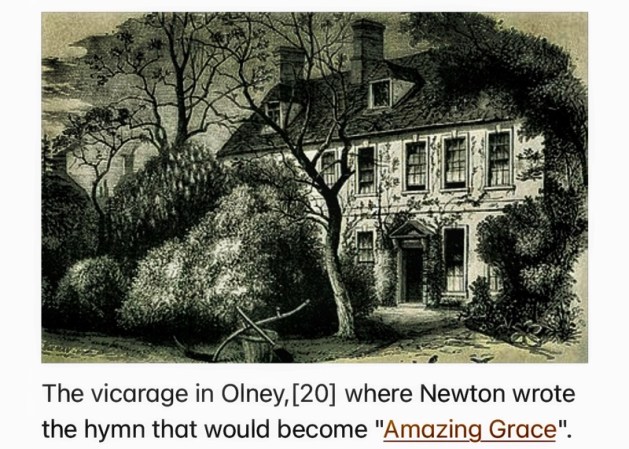
It took many years for him to be ordained as a priest for the parish of Olney, Buckinghamshire. There, in June 1764, he wrote the hymn that would become Amazing Grace. Later, the celebrated poet, William Cowper, worked with Newton on a volume of hymns published as Olney Hymns.
In London, the young William Wilberforce had become one of Newton’s intellectual circle. The now-clergyman and ex-ships’ master was able to give first-hand accounts of the appalling conditions in which slaves were transported and kept.
Newton saw in Wilberforce the presence in politics that he could not hope to attain. He supported the rising career of his new friend, and helped his resolve when the politician’s efforts seemed to be failing.
With Newton’s support, Wilberforce redoubled his political efforts, and the first legislation against the Slave Trade was passed in 1807. It would be decades before the full legislation was enacted, and only then because parliament agreed to recompense every slave-holder for their losses – a national debt that was only fully discharged in recent decades. But Wilberforce began the process, urged on by the ex-slaver who ‘found his living God’ in the waters of Co. Donegal.
Newton died that same year. With his memory fading, he declared “I remember two things; I am a great sinner and Christ is a great Saviour”
Is there a mystical perspective to such a vivid life? I believe so. We need to set aside the instant judgement that we tend to apply, based on modern moral consensus, and look at the ‘long curve’ of a person’s lifetime to see what their overall effect was. Newton, profiteer from the miseries of others’ suffering, became the informed strength that kept Wilberforce constant to his goal.
‘God moves in mysterious ways’ … and over long timescales. Our own existence is filled with opportunity; and that process may span the lives of many people joined in a unity of improvement for mankind. But the path of each will be unique and only found in the personal ‘now’.
We walked past the memorial to Newton on the next day. Knowing more about the man, and having begun this post, I could sense in the calm waters of Lough Swilly how he must have felt arriving, snatched from what seemed certain death, on this calm shore. We don’t often have monuments to ‘moments’, but this is a good one. Perhaps ‘moments’ more than men and women are what really power history; those times when something from a more causal dimension powers through the fabric of our space, time and event to ignite the waiting threads.
———-
Note: the photos of the environs of Lough Swilly are the work of the author.
———-
©Stephen Tanham 2023
Stephen Tanham is a writer, mystical teacher and Director of the Silent Eye, a correspondence-based journey through the forest of personality to the dawn of Being.
http://www.thesilenteye.co.uk and http://www.suningemini.blog
Share this:

+ #Silenti, mystical travel, Photography, Places and Prose, Travel and people, Travel and Photography
A Donegal Journey (1)
by Steve Tanham
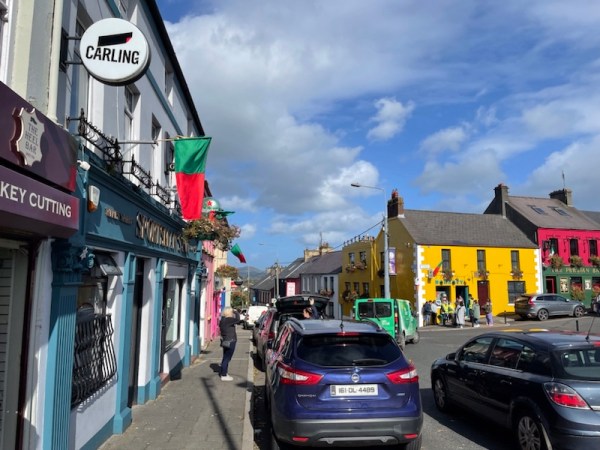
The town of Buncrana lies in the far north-west of Ireland, in County Donegal: that part of the country that is on a line with Northern Ireland, yet is in the Republic.
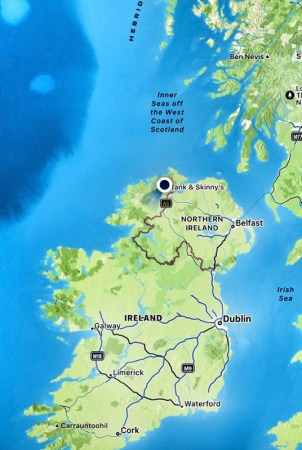
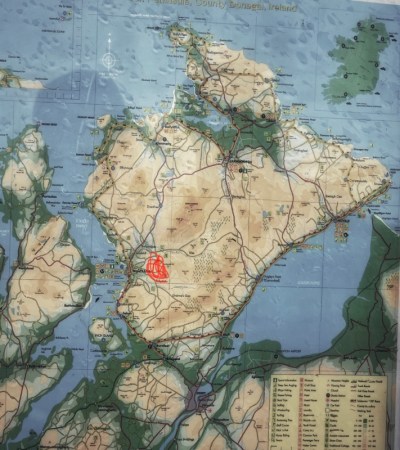
It’s long been our intention to visit this beautiful part of the ‘Emerald Isle’. Green it certainly is, and currently living up to its rainy reputation… But hailing from Cumbria, we’re no strangers to the element that makes it so.
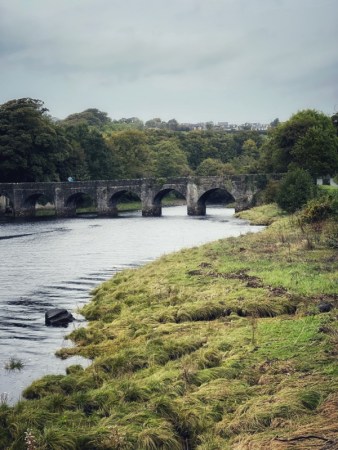
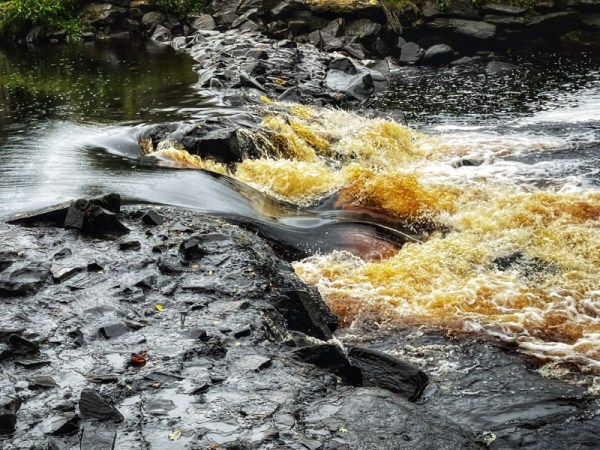
Water is everywhere here, and the twisty and often exposed coast road is part of Ireland’s celebrated WAW – Wild Atlantic Way, a coastal journey of over 1200 miles. We’re at the northern end of that and happily doing a lot fewer…
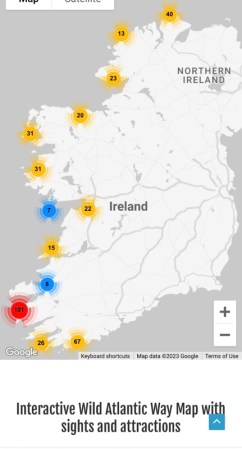
Our stay here is for a week, so I’ll be doing a few mainly-photographic posts. After that, we’ll be moving to County Cavan in the middle of the country to meet up with the family and help look after our 18-month old grandson for a few days.
We’ll finish up by visiting the Antrim coast and a day trip into Belfast and – hopefully, a visit to the Titanic museum.
For now, we’re enjoying the gentle style and pace of Buncrana and its coastal parks. It has some famous sons and daughters, one of whom – following a life-changing journey of survival at sea – wrote the words to the song ‘Amazing Grace’.
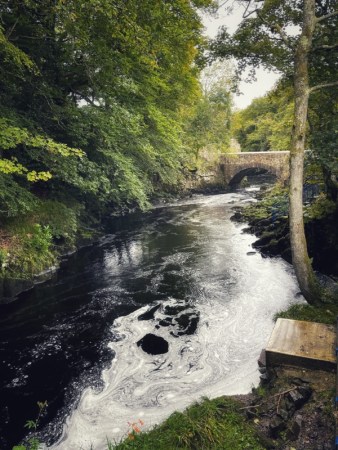
For now, we’ve a plan to try some of the WAW, and, the day after, take a ferry trip across Loch Swilly to Rathmullan, probably a day trip in itself.
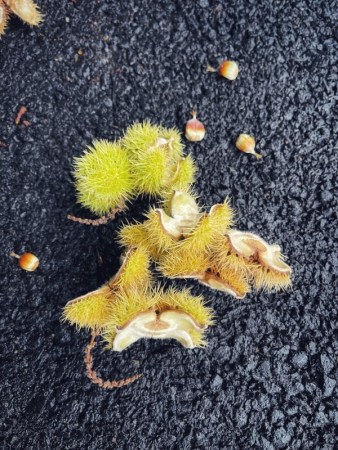
Here’s a few photos to close out this first post from Buncrana..
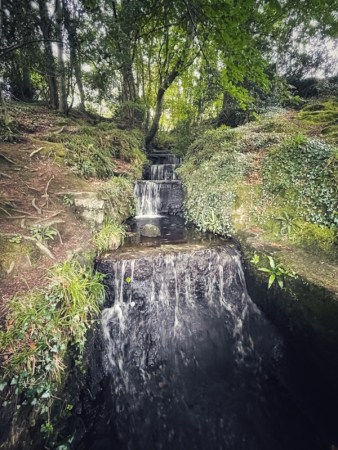
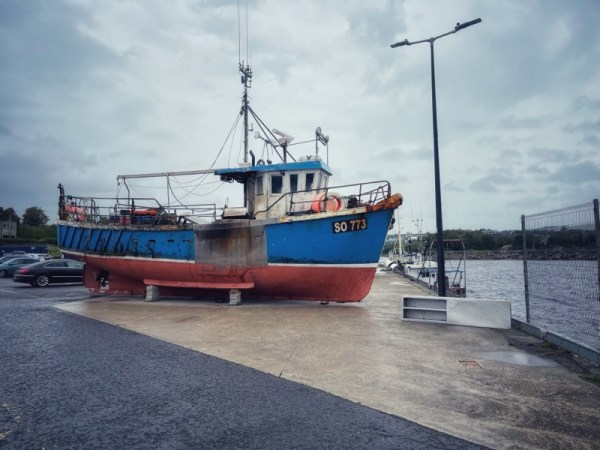
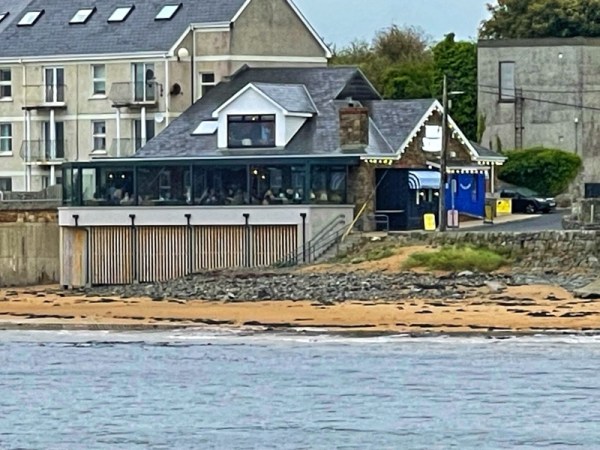
And Guinnesss – my favourite beer – did I mention that every bar and cafe seems to sell its creamy pints!
©Stephen Tanham 2023
Stephen Tanham is a writer, mystical teacher and Director of the Silent Eye, a correspondence-based journey through the forest of personality to the dawn of Being.
http://www.thesilenteye.co.uk and http://www.suningemini.blog
Share this:


The clothes he wears are not his own
They dressed the flesh to suit the dead
With colours picked from nature’s prime
And perfumes rare that round his head
Entwine a crown of rule and law
In broken pieces whispering of a thread
——-
The white ones came and spun the rope
That covered tailored blood and green
And in his eyes they painted death
To cover tracks of life unseen
Protecting deep and final rest
And shielding paths where none had been
——-
And down this thread his life was passed
To draw all those whose time conveyed
That he might witness love or lack
And, bloodless till all life was weighed
Become the place to which we pass
His breath the stone on which our life’s displayed
——-
Each day our footsteps nearer tread
Unto that chamber where he dwells
In perfect silence now – his inner garb
Awaiting time when scales meet shells
And there will hold and cherish hearts
One life not death revealed in deepest wells
—
©Copyright Stephen Tanham.
Base Osiris image from Wikipedia
Originally published in 2015.
Share this:

On the third Sunday of every month, the Silent Eye hosts a Zoom-based discussion to explore one of the core topics of modern mysticism.
This series of ongoing posts will feature a summary of each monthly discussion; of which this is the first. The talks are open to all, and we welcome new visitors to the group – whether you drop in to take a look, or decide to stay and join our work. There is link at the end of the post to enable you to join one of our sessions.

The SE-Exploration talk for Sunday 17 September 2023 was : The Nature and Function of the Soul.

No-one wants a dry set of ‘minutes’ of such meetings. We’ll tell the story of these special events as informally as possible.
This one began with a story of a ten-year old boy who fell in love in the golden-ness of a village autumn. The girl he fell in love with was in the same class at primary school, but she had no time for this junior suitor.
But that didn’t stop him; he was richly experiencing the inner glow of love…but mixed with the deep greens and golds of the season. He had no reason to question this mix. He was too busy enjoying the rapture.
We’ll come back to his story… For now, let’s get to know the subject.
Any group discussion about ‘the soul’ is usefully begun by an exploration of what those attending feel and know about their own. All of us felt we ‘had’ a soul, but the definitions varied: is the soul something deeply ‘within’ us, psychologically, or does it have a separate ‘being-ness’ independent of our our self – the egoic personality?
Does the soul form a key part of our identity, or is that something that we can, perhaps, work towards as we understand its reality – perhaps the most important reality we can know?
Previous discussions had considered the importance of the feeling of presence that we all understood to be with us at key moments. This is felt by many who venture into an exploration of their inner state, and is most commonly felt as a ‘glow’ over the chest region, which, when encouraged with sympathetic and gentle breathing, will spread over the whole body.
As a species, we are suspicious of simple truths, but this is one of the most powerful and accessible ‘inner’ experiences we can have. It is wholly positive and has no risks, generating a composite sense of wellness in the entire body … and beyond.
There was intense curiosity about whether the soul has a structure and components. One lady, deeply experienced in these matters, suggested that we should consider the soul as ‘connecting’ the essential Self with the ‘surface level’ of our life: the personality.
Some discussion ensured as to whether the personality – psychology’s egoic self – was identical with what we know as character. It was suggested that character was deeper than the event-generated egoic personality whose unfolding – often via reaction to ‘vivid’ events in childhood – dominates the early years of our lives, forming fixed structures of mental response that pattern our lives from then on.
It is at this level that modern developmental psychology and object-relations (how we see all relationships, whether people or physical objects) meet, each potentially providing the other with missing keys vital to the soul’s expression in the world.
We talked about the development of the self (egoic – personality) and how much of it is a result of the stages of exploration and development undertaken by the infant within the confines of a family – hopefully a loving and supportive one, but we all know the consequences of that not be being true. How fragile the road to maturity can be…
To ‘schools of the soul’ like the Silent Eye, there is a deeper self – usually written with a capital ‘S’ as Self. This inner being – belonging wholly to the world of Being and not the physical, is our essential self – Essence, whose goal is to manifest itself in the denser world to ennoble existence. This is a demanding task; an undertaking which, itself, is the journey to ‘enlightenment’.
The lady who shared the idea that the soul connects the Self and the ‘person’ cautioned us that the deep Self was not subject to the laws of organic life…nor to the idea of a lifetime, at all. The implications of this being that elements of character might be inherited by the infant or even the unborn child due to the equivalent of a ‘magnetic’ effect from the powerful presence of the unseen Essence (Self or Spirit in other descriptions)
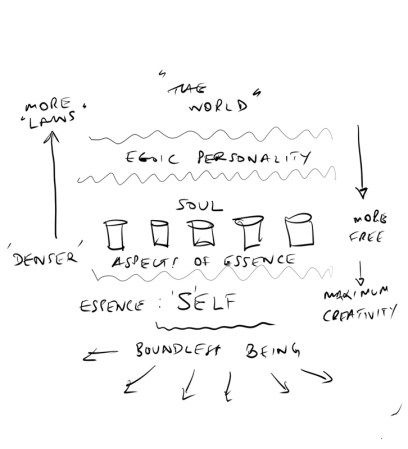
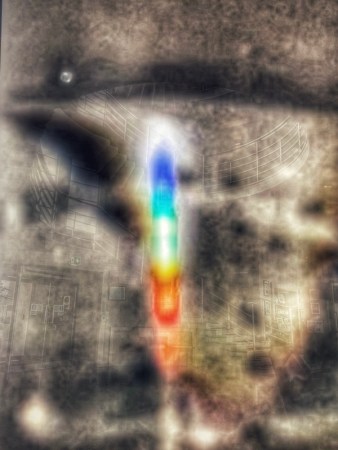
We mentally drew a map of the relationship between the outermost levels of mankind – our personalities, and the spiritually higher domains of the soul. This has been transposed, above.
We concluded that the soul is simply (and wonderfully) the ‘organ’ of experience – and therefore the underlying and ‘non-physical’ Self. The Self was also referred to as the Christ nature, an idea showing that Self, Soul and Personality have the potential to unite all the vehicles of consciousness that span Being to Matter in the expanding cycles of creation.
Such discussions necessarily touch on deep emotions. We encountered the difficulty of refining the personality in line with the energising radiance from the inner presence of the Self, in order to counter the enervating effects of a life of struggle.
And the boy in love? What became of him? Decades later, he was still puzzling the intensity of that episode. Then he began to understand the nature of the soul, and the essential Self that is its deepest foundation. One of the properties of the deep Self is a quality of ‘merging, golden love’ – exactly the qualities of his juvenile adoration… And yes, I was that lad…
Why not join us for our October chat? The details are below:

The SE-Exploration talk for Sunday 15 October 2023 will be : The Magic and Mystery of Identity.
Identity is so deeply rooted in our characters, it’s often impossible to tease out and study; and yet doing so is essential if we are to understand how we ended up where and how we are…
In this talk we will examine what identity is and why it is so important to the flowering of our self in life, and provides us with a faithful pointer to the depths of our being.
Join us for 90 mins of friendship and amicable sharing of views and experiences … not forgetting fun. Bringing a glass of wine with you is perfectly acceptable.

If you’re not on our contact list and would like a Zoom invitation to join us at the next SE-Explore meeting (see above), send an email to rivingtide@gmail.com.
©Stephen Tanham 2023
Stephen Tanham is a writer, mystical teacher and Director of the Silent Eye, a correspondence-based journey through the forest of personality to the dawn of Being.
http://www.thesilenteye.co.uk and http://www.suningemini.blog
Share this:

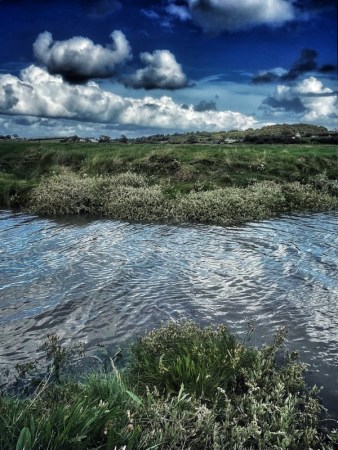
The tidal salt marshes at Bolton-le-Sands – between Morecambe and Carnforth, on the Lancashire coast – are both beautiful and treacherous…
The sea races in and fills the narrow channels, sometimes overspilling onto what seemed safe walking paths only a short time before.
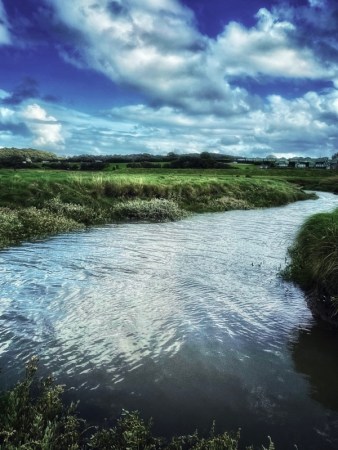
It’s easy to work your way to the sea through the maze of possible paths, only to find the tide has turned and you have to navigate a now unfamiliar, watery landscape in reverse…
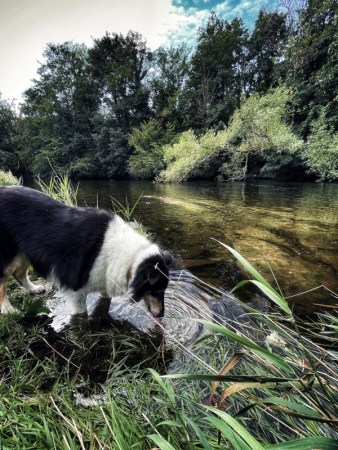
Walkers beware! But the collie and I made it back.
©Stephen Tanham 2023
Stephen Tanham is a writer, mystical teacher and Director of the Silent Eye, a correspondence-based journey through the forest of personality to the dawn of Being.
http://www.thesilenteye.co.uk and http://www.suningemini.blog


 Sun in Gemini
You must be logged in to post a comment.