+ #Silenti, Consciousness, English Lake District, Esoteric Meaning of Myth, Journey of the hero, Mystery Schools, Mystical ritual drama, myths and spirituality, Neolithic, Silent Eye Workshops
Emerging from the Mist…
by Steve Tanham

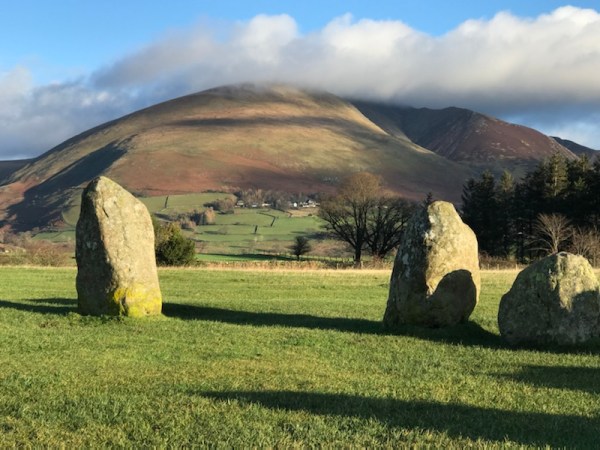
There’s a certain amount of ‘fighting back’ in this. The long period of Covid restrictions, followed by a summer in which we all got a taste of gentle freedom again; the sad death of the ‘third musketeer’, Sue Vincent, in March of this year; the inability to hold our regular workshops in the mystical landscapes of Britain…
But then there were positive things: learning – and continuing to learn – the techniques that make Zoom a powerful tool for holding get-togethers across the planet in a way that eliminates cost and distance – though not time; the emergence of new people, in particular a lady from Canada who we will be introducing as part of the team in the next few months. Caroline is already at work updating the three-year course with which we literally accompany those willing to work on themselves and their relationships to ‘the world’, in order to enter a new land of the mind and heart.
And finally, the sheer sense of determination and creative energy that we all feel, the flush of new ideas, and an absolute conviction that we need to not just carry on, but expand the work of the Silent Eye.
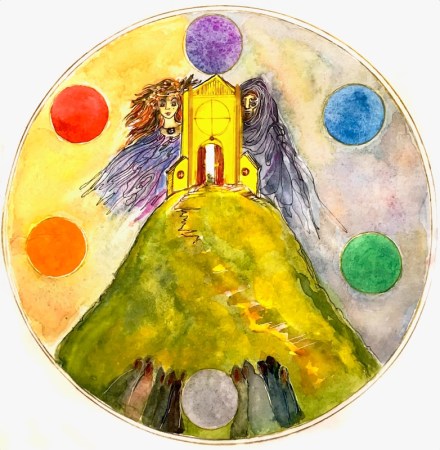
The first of these was the Healing Circle, a combination of group meditation and focus, and the mental and emotional creation of a place of working. We had the help of a lovely artist and friend, Giselle Bolotin, who lives in Australia, to paint a beautiful motif for the endeavour, reproduced below. Our own Barbara Walsh stands guard and guide as our high priestess of a beautiful and gentle place that does not physically exist in this realm, but is a solid reality in another – as many who have received its healing assistance will testify.
And then Stuart returned from many years working in South Yorkshire to his native Lancashire, meaning that, with me just over the northern edge of that fine county, the two of us could meet on a much more regular basis, and perhaps over the odd glass of Guinness or two…
These more regular meetings have enabled us to focus on the immediate needs of the School, particularly in dovetailing what we do on our monthly Silent Eye Explorations evening, held over Zoom, on the third Saturday of each month. It’s a coming together of interested people – not all from the Silent Eye’s world – but people who understand the importance of such a gathering, regardless of time or place. It builds an ‘egregore of the mind and heart’ as an old mentor and friend once said… The Zoom meetings – Silent Eye Explorations (a Facebook Group) is open to all. We welcome new visitors.
The third is the return of the workshop. We cannot predict what the currently increasing Covid rates will do to restrictions in the coming winter, where Zoom meetings may again be the only way of meeting, but we can look forward to the spring and the potential for having a completely new style of workshop; one that does not rely on the use of a hall, or conference location. We dearly miss our visits to the heart of Derbyshire, and the Nightingale Centre, but Covid and understandable inability to travel has forced us to look at a different formula. That ‘old style’ of hands-on workshop may have become a luxury that few can take advantage of. It’s our duty to explore the alternatives.
Our landscape weekends, which did not rely on a certain number of attendees to play the dramatic roles we had scripted, have always been popular and financially viable. So, we thought, let’s combine the two ideas and have a big one, where people don’t take on dramatic personas but play… themselves. Our last Zoom meeting was inspired by the work of Joseph Campbell, who used the word ‘monomyth’ to show that the world’s myths and legends had a commons meta-story at their heart. This generic ‘journey of the hero’ will be the basis for next May’s journeys in the landscape in the northern Lake District. Each person will become their own hero, during several experiences over the weekend of 6-8 May 2022,
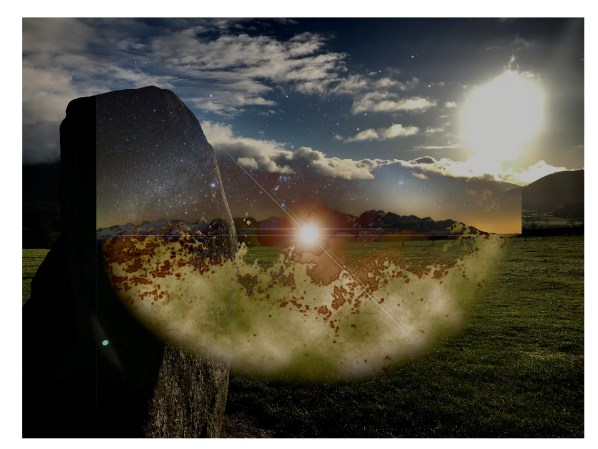
Viruses willing, we will emerge from next winter to a bright May morning where an international gathering of spiritually inclined people will follow a mysterious trail through lakes, mountains, waterfalls and, most of all, a silent language of ‘movements’, each one building on the previous until we culminate the power of this in a final visit to the magical stone circle of Castlerigg, high in a natural ring of mountains and surrounded by nature’s grandeur.
Our final project is in honour of our departed Director, Sue Vincent. The three of us often discussed the power of the traditional Tarot images to convey many of the deeper aspects of the mystical journey towards the deeper Self. We wondered if we had the capacity to create a set of ‘oracle cards’ for use by ourselves and our student/companions. The Silent Eye uses the enneagram, rather than the Kabbalistic Tree of Life as its teaching basis. Any such project would have to reflect the unique and circular basis of the enneagram, rather than the vertical down-up structure of the Tree of Life.

At the time, we parked it. Sue was uncertain that she had the artistic skills to do it, and we decided that we would be better equipped to scope it when we had a generation of companions who had made the three-year journey with us. We are in discussions with an artist of great skill, whose work has often been this type of vivid depiction. By the time of the spring workshop in the northern Lake District, we should be well on with the project and ready to give an update. Who knows, we might even be able to use some of the prototypes oracle cards for the weekend…
The mist is certainly clearing. It appears there is a lot to do… wish us luck!
The associated links are at the end of the post.
©Stephen Tanham 2021
Stephen Tanham is a Director of the Silent Eye, a journey through the forest of personality to the dawn of Being.
http://www.thesilenteye.co.uk and http://www.suningemini.blog
Links:
Contact points and web addresses for the Silent Eye’s work:
Click the link below to visit the Healing Circle meditation. Contact us on the link at the end of the page for more information or assistance.
Silent Eye monthly Zoom meetings
The monthly Silent Eye Explorations Zoom meetings are open to all. The documentation for this is on the Facebook Group ‘Silent Eye Explorations’. As Facebook is a closed environment, you will need to click the link requesting to join the group. We will then authorise you, and you will be able to see the previous meetings and join us in meetings to come. These are held on the third Saturday of the month at 8:00 pm.
For more information on any of the above, email us at rivingtide@gmail.com
Share this:

+ #Collie dogs, #Silenti, Consciousness, English Lake District, guided mystical walks, Lake District, landscapes, Mystery Schools, Photographic techniques, Photography, Travel and Photography
Arnside and Autumn Pastels
by Steve Tanham
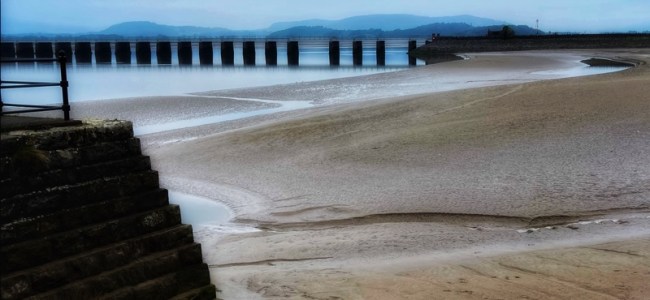
At first glance, it has something of the ziggurat about it. In reality it’s the final bit of Arnside’s Victorian pier, taken from a short distance back in order to include part of the famous viaduct – nearly 1600 ft – that links Arnside with Grange-over-Sands.
Arnside has the kind of beaches that you’d rather photograph than paddle from. The sands around here share Morecambe Bay’s treacherous reputation. The danger comes from two directions: the estuary is the outflow of the rivers Kent and Bela. The Kent being so powerful that it has carved deep gorges in the limestone rock in its approach to the sea – this over rather a long time, admittedly…
The other is the strength of the incoming tide, which crosses Morecambe Bay with a speed faster than a galloping horse.
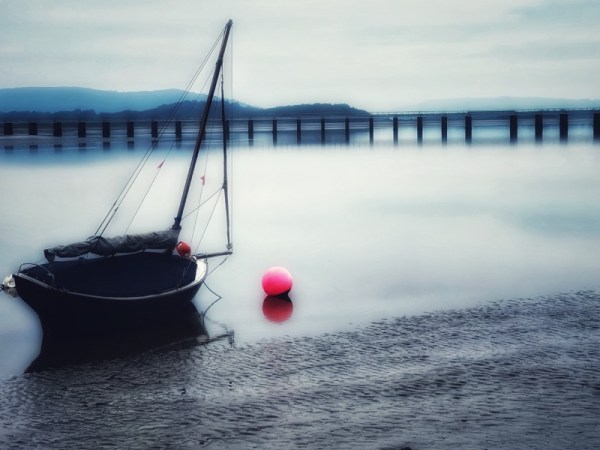
Frequent trains cross the Arnside viaduct, linking it, south, to Manchester and northwards to Barrow in Furness.
I love it, as you can probably tell… The whole landscape of estuary, cascading village, station and viaduct reminds me of an boy’s ideal model train set! Not that I’ve had one of those for a very long time…
It’s also a great source of good photographs – in particular sunsets, of which I must have hundreds in my iCloud online storage. Today, while taking the collie for her morning walk, the pastel colours of the October sky reflecting in the calm waters of low tide were the epitome of autumnal stillness.
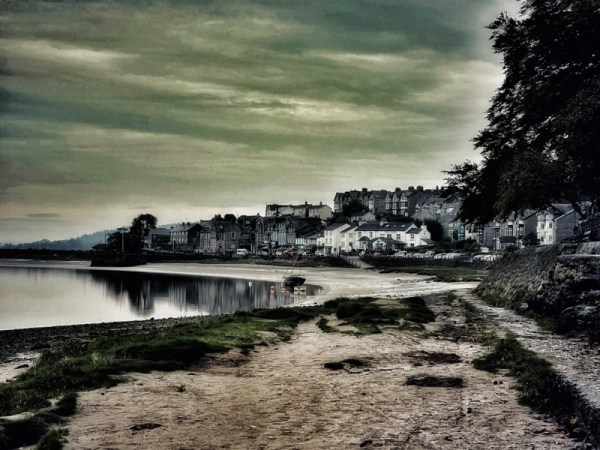
Not that it’s always quiet… During daylight hours, the peace of Arnside village is disturbed by a series of very loud klaxon noises. These mark the turning of the tide – fed by the powerful currents in nearby Morecambe Bay. At very high tides, the klaxon is also used to signal the approach of the estuary’s own ‘bore’ – a single wave that travels inland, often for miles. It’s not as dramatic as that of the river Severn, but is a fascinating sight, and people travel to Arnside specially to see it.
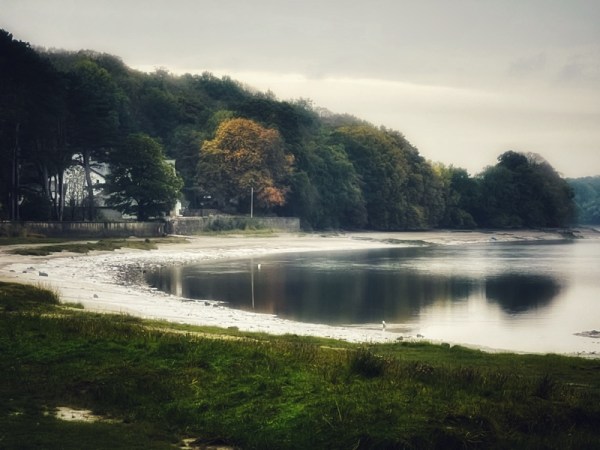
There is a safe place for the collie to chase her ball; it’s near the entrance to the village and forms a kind of wild park on the foreshore. When she’s exhausted with that, we walk though the town and along the shore path to a newly-opened tiny cafe set back in the rock in a steep path that takes you into the posh residential part of Arnside. It’s run by two young women who do their own baking. It offers some of the best coffee for miles around… and they sell home-made Cornish pasties… I admit it’s not your usual breakfast…but I always make sure I am hungry when we go.
The cafe is take-away only. It is too small to do much else. Clutching what we have come to call our ‘Arnside brekkie’, we walk a little way down the estuary to a favourite block of limestone which boasts an accidental cup-holder, and I spread out my walker’s padded mat to get a degree of comfort.
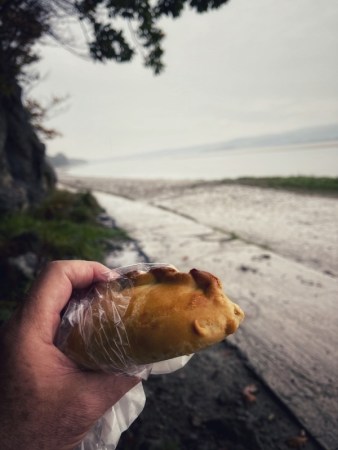
And then it’s back to the village with a wistful glance at the rapidly filling estuary. The drive home can wait a few more minutes while I finish the last of that coffee, and reminisce about the pasty…
©Stephen Tanham 2021
Stephen Tanham is a Director of the Silent Eye, a journey through the forest of personality to the dawn of Being.
http://www.thesilenteye.co.uk and http://www.suningemini.blog
Share this:


We walk from the car park in the centre of Grange-over-Sands to get to the ‘high corner’ that looks down to the park – the collie’s favourite grass area – and, beyond, the fabulous lone tree that shapes and defines the vastness of Morecambe bay, seen from the north, whereas most shots are from the south…
And the bay was shining. Literally shining, in a way that’s unusual in October. So I just flicked the iPhone out of my pocket and snapped a dozen shots off before the freak light died, knowing that I was way too far above the park for the photo to be crisp.
And I was right… however, some shots are amendable to post processing with a kind of ‘soft treatment’. Half an hour of experimenting and there it was. The glow protected – even enhanced – by the clever digital effects.
Nothing to do with me. I just pressed the right buttons in the right sequence. Sometimes, you get the breaks…
©Stephen Tanham 2021
Stephen Tanham is a Director of the Silent Eye, a journey through the forest of personality to the dawn of Being.
http://www.thesilenteye.co.uk and http://www.suningemini.blog
Share this:

+ #Poetry, #Silenti, Alchemical Poetry, Mystery Schools, Mystical poetry, nature, Photographic techniques, Photography, Seasons of the year
Blood, gold and silver
by Steve Tanham
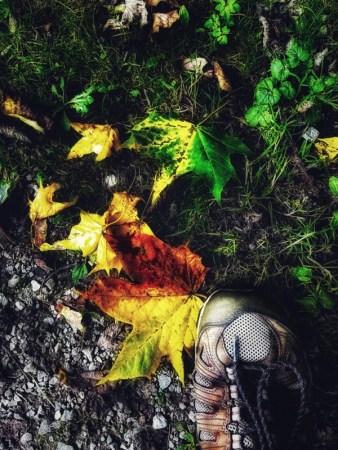
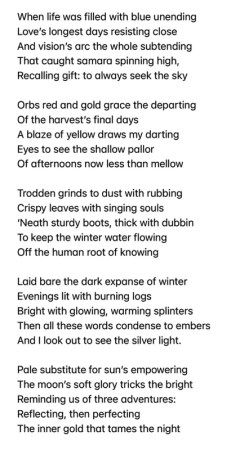
©Stephen Tanham 2021
Stephen Tanham is a Director of the Silent Eye, a journey through the forest of personality to the dawn of Being.
http://www.thesilenteye.co.uk and http://www.suningemini.blog
Share this:

+ #Silenti, Biology and mysticism, Consciousness, Lake District, nature, Photographic techniques, Photography, Seasons, Four Seasons, Spring, Summer, Autumn, Winter,
Web over Cumbria
by Steve Tanham
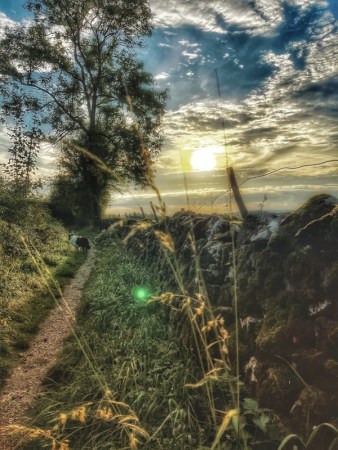
It was late Friday afternoon – two days ago. I set off with Tess for our usual evening walk; now getting earlier each day to capture that last bit of, hopefully, sunlight.
Over the stone wall, something shimmered in the golden light. Something silver.
It took me back several hours. I hadn’t paid it much attention at the time. Two tradesmen loading their tools into the back of a transit van on Morecambe’s seafront. One had said: “Look, there’s snow on the mountains!”
I had smiled… the iPhone had earlier revealed it to be 19 degrees. Not likely there would be any snow on the Howgill Hills at which the man was pointing. But I looked, anyway.
He was certainly right to draw attention to it. The brightness reflecting off the far-away hills looked like exposed limestone; only I’d never seen such a reflection on the usually verdant Howgills, before. Strange…
I filed it away under ‘unsolved’ and we continued with our journey to collect Bernie’s sister. That had been several hours ago.
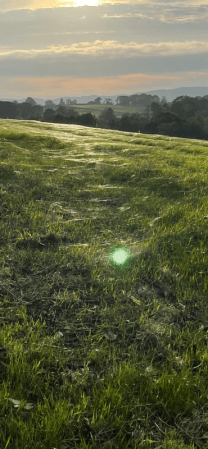
Our dog-walk takes us along the old canal path and out into a broad field that the 19th century boatmen described as offering the best view of the whole length of the Preston-Kendal waterway.
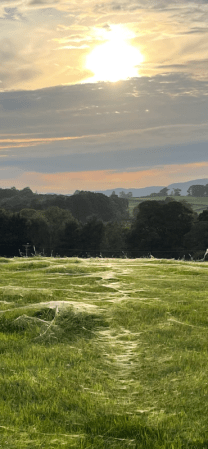
The silver shimmering glimpsed over the fence was revealed to be an entire covering of what looked like a spider’s ‘sheet-web’.
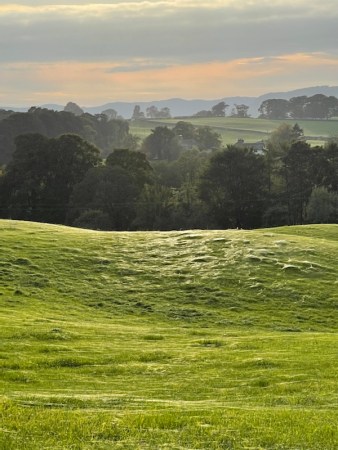
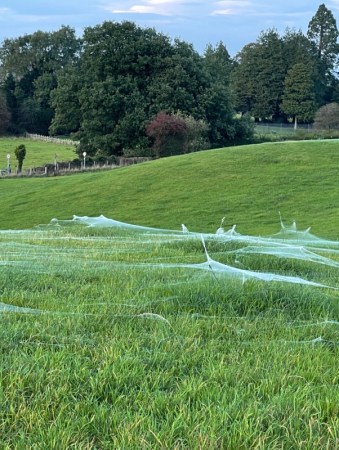
I’ve never seen anything like it. I’ve researched it on the internet and the only match is a spider the size of a thumbnail called Darwin’s Bark Spider. It can shoot it’s web strands for up to 30 metres.
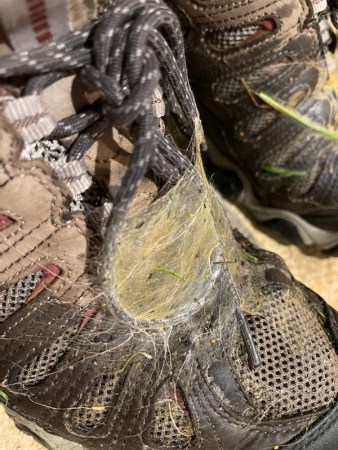
Back home, I put the photos on FaceBook, and asked for advice on the origin of the webs. Most if my friends had never seen anything like them, either. Then someone suggested consulting a specialist ‘spider-Ident’ site, which I was able to join, immediately. Within tow hours, I had the answer…
The webs were ‘sheet-webs’ and created by thousands of tiny money-spiders. The season has been mild and so this is happening later than normal.
The spiders are so tiny, they are very difficult to see, which adds to the exotic mystery!
©Stephen Tanham 2021
Stephen Tanham is a Director of the Silent Eye, a journey through the forest of personality to the dawn of Being.
http://www.thesilenteye.co.uk and http://www.suningemini.blog
Share this:

+ #Silenti, Consciousness, Esoteric Meaning of Myth, esoteric psychology, Fear, Fiction, imprisonment
Midnight Mask
by Steve Tanham

I’m not a fan of horror films. Many are simply exploitative, and the genre in general has normalised extreme violence.
But once in a while I come across something that, to me, is exceptional, and only in the genre of ‘horror’ out of misunderstanding; or even better, because the ‘film’ has two layers of meaning… and if you stick with it, you get to the second, deeper one.
Stanley Kubrick’s masterpiece ‘2001: A Space Odyssey’, although sci-fi and not horror, was a case in point. It was really about the ultimate evolution of the human race – in the face of its imminent extinction, though that was much easier to ‘get’ if you’d read Arthur C. Clarke’s book – which came after the film, which was jointly produced by Kubrick and Clark. Many people who watched the film had no idea what was really going on…
We’ve recently finished watching the Netflix series of ‘Midnight Mass’, and, though this is classified as a horror/mystery film, it’s really something a lot deeper.
A charismatic young priest arrives on an island some miles off the coast of Maine on the eastern seaboard of the USA. The small Crockett Island is much diminished from its former days of being a fishing haven. Spillage from an oil tanker several years prior has reduced the standard of life to general poverty.
The Catholic Church on the island used to be the centre of its life, but is now sparsely populated. Drugs have found their way into the lives of the younger people; ‘pushed’ into their meagre existence by a couple of low-life types who masquerade as fishing boat mechanics.
As if that wasn’t enough, all the cats on the island are disappearing.
The film’s opening takes place in a quite different location: New York. We later find that the man siting in handcuffs on the pavement between his wrecked sports car and the police vehicle is the emigrated son of one of the fishermen on Crockett Island. Across the glass and metal strewn street, we see the dead body of the girl he’s just killed in the crash – caused by his being drunk. The image of the newly-dead girl, her face encrusted with fragments of shimmering glass, reflecting like jewels, is to haunt him for the rest of the film.
Later, we discover that he’s a successful investment banker on Wall Street… was a successful banker, because he’s sent to jail for several years for causing the death of the girl whose image now follows him.
We fast-forward to the day of his release from prison, when he arrives on Crockett Island on the mainland ferry, to return to life with his ‘only friends’ – his parents. His arrival coincides with that of the sudden appearance of a charismatic young priest, whose mission is to revitalise Crockett Island’s small church, and restore the once-vibrant spiritual life of the remote community.
The banker is now reduced to living with his family and being a poor fisherman, again. While the priest enjoys enjoys a rise to local fame – and a full church – with the aid of a series of miracles, although his health seems strangely suspect. As the congregation grows, we see the rise of the usual suspects – the zealot (a woman Deacon) who considers the rest are not holy enough; the town mayor, getting in on the act and asserting his temporal importance; the local violent drunk, whose only soft spot is for his beloved dog.
But the priest keeps ahead of this, and, each week, challenges the congregation to increase their efforts to ‘imitate Christ’. Soon, the church is full. Even the disgraced banker attends; at the behest of his father, though he will not take the communion wine.
Gradually, the entire life of the island gets drawn into this new pattern of life and worship; until, one morning after a storm, the beach is found to contain a long line of all the dead cats that had gone missing…
I’ll not spoil the story, whose plot is clever and surprising. But, throughout the film (series) you can feel what’s happening, even if you don’t understand it. The direction is subtle and sinister – while remaining deeply understated.
Sufficient to say its conclusion is shocking in the extreme, but not for the sake of it. It becomes the meeting and clash of two worlds: the vision of the priest for his flock versus the reality of what’s happening behind the scenes.
The dreadful confrontation between what’s been killing the cats and the full congregation is difficult to watch, but has a purpose way beyond violence. In that conflagration is shown all the best and worst of human nature and the crisis results in a condition where most of the island’s people are faced with possible death.
At the centre of this is the relationship between the disgraced banker and his former girlfriend, from when he lived on Crockett Island, There is a beautiful late-night scene where the two of them talk about their respective views on death and the afterlife – a motif repeated at the very end of the film, as the sun rises on the beach, where the remaining islanders are lined up to greet it…
The purpose of this blog is not, generally, to promote films, but the underlying wisdom of ‘Midnight Mass’ is beautifully and bravely crafted, and results in an ending filled with hope and wisdom, rather than the usual ‘vengeance’ aftermath of such scripts.
The film is also about ignorance, and those who follow what they want to hear, rather than seeking the reality – the truth.
You can’t describe it as a ‘feel good’ film, because it’s too shocking. But you can describe it as a brilliantly crafted story – filled with redemption, in the deepest sense.
©Stephen Tanham 2021
Stephen Tanham is a Director of the Silent Eye, a journey through the forest of personality to the dawn of Being.
http://www.thesilenteye.co.uk and http://www.suningemini.blog
Share this:

+ #Poetry, Consciousness, Mindfulness, Mystery Schools, Photographic techniques, Photography, Silent Eye School
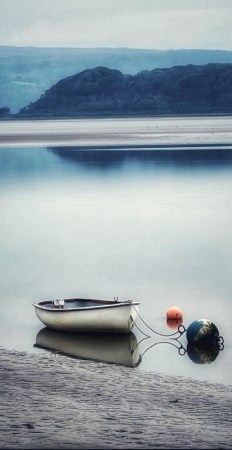
If I could comprehend the sky
by Steve Tanham
©Stephen Tanham 2021
Stephen Tanham is a Director of the Silent Eye, a journey through the forest of personality to the dawn of Being.
http://www.thesilenteye.co.uk and http://www.suningemini.blog
Share this:

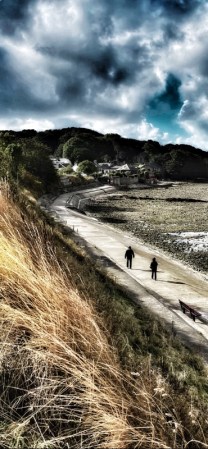
I love finding subjects where there is an inbuilt air of mystery.
The above shot of Heysham Village was taken from the high footpath that links the beach with the village. It’s also possible to take the lower path, directly along the shore, but it can be a much colder place in autumn and winter.
The two figures caught my attention. Although it was only the end of September, the couple were wrapped in seemingly identical warm clothing.
It was very cold, as I found just taking the shot from above, but there was something else about the composition that suggested mystery. It was only when I had my first set of comments on Facebook, that I saw it: the warmly-dressed couple had a certain ‘military’ look about them, and appeared to be marching towards a village that looked darker than usual, as though rushing to an urgent summons.
In reality, it was nothing of the sort; simply two people hurrying to get out of a bitter wind…
©Stephen Tanham 2021
Stephen Tanham is a Director of the Silent Eye, a journey through the forest of personality to the dawn of Being.
http://www.thesilenteye.co.uk and http://www.suningemini.blog
Share this:


I usually do serious posts on this Thursday slot. They are generally aimed at the Silent Eye audience, so involve mystical perspectives on some of life’s challenges.
But sometimes one’s own life drops a ‘corridor’ over you, from which there is no escape, and you have to take a withdrawn and usually humorous view of events… or go completely insane.
She passed me the fragile blue bag, stuffed, now, with second-hand paperbacks, each only a pound. Morecambe market is like that: full of old fashioned value, full of lovely people who care. It’s also one of the sites for the town’s growing network of food banks.
Her eyes had spotted a quite decent pot dog in a glass display case on the next stall. Dementia is like that; constant flitting from one objective to another, small attention span. But at least my mother has some concentration left. That will fade, of course. But we make the best of the present.
“We have to meet Bernie (my wife) and Joanne (her sister) at the Midland, in half an hour,” I said. This bag won’t take any more, it’s already starting to come apart.”
I looked through the display case at the pot dog – a cairn terrier of quite good quality, and was about to speak…
“If I don’t get it now, “ she said. “It will likely have gone next time we are here. It will make the perfect Christmas present for Doreen.”
Doreen is mum’s best friend, still living in Bolton, our old home-town – but largely immobilised after encephalitis. Their relationship is now entirely phone-based: one of the miracles of hope over expectation is the success of that little mobile whose recharging cradle she can still work…
I had to think fast. The pot dog would still be there when we came back. But I didn’t want to upset her spontaneous generosity to the woman she has shared all of her life with – they used to live across the cobbled street from each other in the early 1930s (the place I was born) and have spent most of the intervening years protesting against the obscenity of fox-hunting, even being rounded up and nearly crushed by police horses.
“Well, let’s get you a tougher bag, then we can have that cup of tea at Meg’s Corner Cafe and return to buy the dog before we meet the girls.”

It was, I admit, duplicitous… The tea was much needed, though the alleyway in which the cafe sits was freezing. Lunch at the wonderful Midland’s Rotunda cafe was imminent, she wanted something to eat to go with her two cups of tea from the ancient chrome pot.
Fifteen minutes later, tea and (her) Eccles cake duly consumed, we crossed the road to the Midland. She had been in a new lock-down at the home after an outbreak of Covid on one of the upper floors. Three weeks of the outside world being closed. I wanted to provide a big treat to celebrate her restored freedom. She normally walks a mile or two along the promenade each day. For a ninety-one year old, she’s in remarkable condition…
We left the market cafe. The pot dog forgotten.
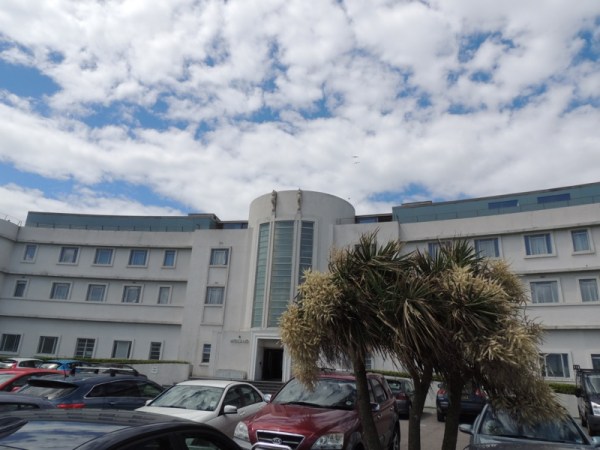
Joanne had nabbed us a circular booth. We sat, smiling at the thought of delicious food to come. The Rotunda cafe shares the same chefs as the more expensive restaurant that is justly famous as the heart of this Art Deco masterpiece.
Mum wasn’t hungry… the Eccles cake had filled her up. We ordered her soup, and Bernie and I chose a chicken club sandwich and some thin chips. We had gone without breakfast to better enjoy the treat.
Mum’s soup arrived – looking and smelling delicious. Butternut squash and honey, plus a few spices to gently enhance. Some chef-made wholemeal bread, still warm from the oven, finished the presentation. I could smell how good it was…
“It’s sweet!” She wailed, dropping her spoon back into the offending liquid. “Soup’s not supposed to be sweet!” I could hear the rumbling of doom, and feel my club sandwich going cold, the chips withering.
I leaned over to extract some soup with my teaspoon. It was heavenly.
“Some of the best soups are sweet,” I ventured. “Spain is famous for its variety of soups, including sweet ones… and this has honey in it – your favourite thing on earth!”
It was never going to work. A passing waiter spotted our agony and offered to help. Before we could say anything, she shouted to him: “Can I have some salt, love. This soup’s not right…”
It results in a kind of paralysis – watching these events unfold; yet wanting to be constructive and see it ‘from above’. I watched her pour two sachets of salt into the sweet soup and stir it. I knew it would be inedible.
Her face when she tried it confirmed my diagnosis.
“Mum, you have my club sandwich and I’ll have your soup… I like…sweet soup…”
I tried it. It was beyond dreadful, but would have made a beautiful meal in its former state.
I watched her smile and tuck into the chicken of my club sandwich. Bernie cut me a piece of chicken from hers and I made an impromptu open sandwich with the still-warm bread.
“You’re not eating your soup,” mother said. Then added “I like it here…”
Somewhere across the road, a pot dog was smiling…
©Stephen Tanham 2021
Stephen Tanham is a Director of the Silent Eye, a journey through the forest of personality to the dawn of Being.
http://www.thesilenteye.co.uk and http://www.suningemini.blog
Share this:

+ #Silenti, Consciousness, Higher Mind, Politics and Power, Silent Eye School, Speaking truth to power, Technology, Truth and Esotericism
How connected do we need to be?
by Steve Tanham
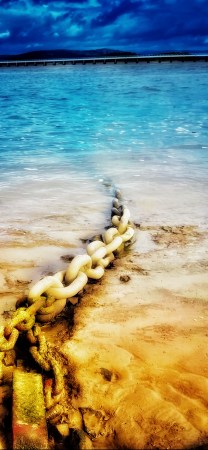
It’s a thought that began after I’d spent a full day writing in various forms: email correspondence, working on journals from our students in the Silent Eye, and preparing blogs for the week.
Each of these involved an intense degree of ‘connection’ – via the internet, of course; that universal highway of data and opinion. It got me wondering at what point ordinary connectedness begins to veer towards overload. I found myself thinking: how would I advise anyone else what the right level of connectedness is?
My question is not about the actual connection technology. The evolution of what was the simple voice-based phone line to become the universal connector to the world within the internet is staggering and wonderful. What it has enabled has changed the way we live our lives, and the way we work.
As with any such fast-moving development, the earlier achievements have sunk beneath the layers of today’s user tools, as each type of connection threw up a winner, ensuring it was embedded beneath the consumer’s world. We might say each was a classic example of a different type of evolution at work.
The web-browser is a good example: our window on the digital world, one whose coming ensured that everything we wanted to see could be presented in the same way so that it was capable of being unbundled by the browser into not just text (which used to be be only option), but into graphics and sounds, as well. An everyday thing, now, yet when it was launched, it replaced thirty years of previous technology at a stroke…
Back in the bad old days, every industry seemed to have its own means of connecting; and not to an overall source, but just to the other members of that type of business. This peer-to-peer type of connection even became the basis for the first versions of e-commerce.
I’ve found, talking to others, that there is a growing sense that we are drowning in information. There’s also the feeling that we’ve lost the ‘honesty’ of the original internet; that it’s a free-for-all and the one that shouts loudest wins the argument. It’s much easier to understand opinion than facts. The truth is more complex than the slick lie, designed and packaged to fit into our prejudices by the populist press whose real interest is manipulation of politics.
It is reckoned that a well-read quality newspaper conveys many times the information we currently get from our pre-selected interest in the online equivalent. The downside of being able to select what we want to know is that we don’t expand what we might need to know.
Is there any reasonableness in asking how connected we should be?
If we work via computers, we have little choice in their use for the purposes of our employment. Many young people come home from work to eat a meal, then sit down to play online games, connected to thousands of their companions across the globe. To me, that’s way too much screen time, but their loyalty to this pastime can be fanatical. I think it’s vital that we surround ourselves ourselves with the ‘real’. I believe one of the main reasons we are seeing such an assault on the truth is that too many people live in an online fantasy world, surrounded only by those of like opinion.
On the other hand, we might even do the opposite; becoming so concerned with a particular humanitarian issue, that we lose sight of anything else.
We can learn much from nature and evolution. Our brains have developed to feed us the truth via some very clever consolidation. If we had to ‘listen’ to the vast amount of raw information coming at us from our senses, we would literally go insane. At the same time, evolution has gifted us some amazing ‘algorithms’ with which to evaluate the truth. If we have an arrow flying towards us, it’s no use arguing with some fanatic who says arrows don’t exist…
If the arrow is flying towards him and we’ve tried to issue a warning… well, evolution takes care of that, too…
It serves us well, I think, to value the truth so highly that we select a set of well-respected sources and be prepared to pay a small fee for their continued presence in the world. I do this with my online newspaper – The Guardian. Using such a source – and there are many – I can make a start in understanding the complexity of what I need to know. Were I to begin at the beginning, I’d never get there, alongside everything else I need to do in a day.
My online newspaper – my source of the truth – only works because there is another consolidation mechanism at work within its ranks: the journalist. Persecuted in many so-called societies across the world, these people, in ‘print’ and online news, bring a vast store of experience to their dedicated work, each contributing a deeply considered view that becomes a small part of an overall mechanism of transmitted truth – something seen as a continually refined goal, not a fixed object.
The truth is complex, but, so long as we have such people, we have one of human-nature’s mechanisms on our side. Let us treasure them wherever they are found; and make their assistance our starting point for our own knowledge of complex things.
©Stephen Tanham 2021
Stephen Tanham is a Director of the Silent Eye, a journey through the forest of personality to the dawn of Being.
http://www.thesilenteye.co.uk and http://www.suningemini.blog
Share this:

Pictures telling very short stories…
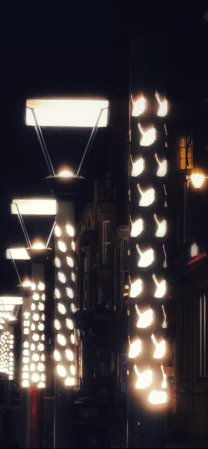
Unseen, Craven surveyed the street from the single window of his temporary dwelling. They wouldn’t find him here…
Or, rather, there was only one person who would; and she would be warmly expected. Only she would be able to align the pattern of lights to form a visual ladder to him.
The others would have tried to kill him. And, from their perspective, rightly…
(Image by the author)
©Stephen Tanham 2021
Stephen Tanham is a Director of the Silent Eye, a journey through the forest of personality to the dawn of Being.
http://www.thesilenteye.co.uk and http://www.suningemini.blog
Share this:

+ #Collie dogs, #Silenti, Anger management, Consciousness, esoteric psychology, Higher Mind, landscapes, Mindfulness, Pet Heaven, Psychology, Silent Eye School, Travel and people, Travel and Photography
The Second before the Shutter of Life
by Steve Tanham
We were spending a few days in Alnmouth, a tiny Northumberland village with one of the best beaches in the country. I rarely get to swim in the sea these days, but such things are of vital importance to our Collie dog, Tess, who loves to chase a ball down a beach and into the waves.
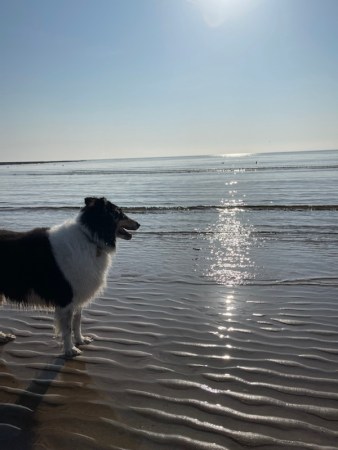
It was early morning. I was enjoying our walk. Tess was already wet through and dripping with morning-sun happiness. There were only four of us on the entire beach: a middle-aged couple were walking towards us, along the line of the sea.
I looked at them, then looked again. The woman was carrying two large-lensed cameras, and slightly stooped with the weight. Such heroism demands recognition, so I laughed across at them as they drew level.
“Those are mighty-looking lenses!’
At first, they looked troubled, as though I were some English football hooligan, about to rob them. Then the man said something in broken English and I realised they were Dutch… and I had spoken rather quickly and in a quick-fire humorous way, typical of the English in that situation. The cameras straps were wrapped across and beneath the lady’s breasts, and I realised with horror that my gesticulations might have been horribly misinterpreted.
I back-tracked quickly and explained my admiration for the camera gear, and they began to smile, sharing the humour instead of being anxious about it. I took my rather smaller (iPhone) camera from my jacket pocket and laughed about the comparative size of the photo equipment.
They warmed to the stranger, and for the next five minutes we talked and laughed, as I helped them to say what they wanted to. I speak a little German and French which helps with translation, even if I can’t find all the right vocabulary. People from the Netherlands are often able to converse in three or four languages, but these two had little English. Between us, we persevered and had a pleasant and informative exchange. They went on their way smiling at the early morning encounter with the dog and the man who turned out not to be a football yob…
But the initial look on the face of the lady carrying the massive cameras across her shoulders and chest stayed with me for the rest of the day, and caused me to formulate this post.
Had there been no way of breaching the language gap, they would have left with a very negative view of the encounter. And yet they would have been wrong… Like all of us, their lightning-fast perception and conclusions would have determined how those few minutes of conversation were entered into.
In my head, I could play back the encounter and run it in different ways. Reality, in real-time, doesn’t do that. We might say, traditionally, that the ‘now’ comes at us from the future with a content we can’t fully predict, but which is subject to probabilities. If my last footstep was on a beach in Northumberland, my next footfall is unlikely to be in Utrecht. The world around me is stable – to a degree. But nothing is entirely determined.
This is particularly true of our interactions with others…
We can’t go around greeting each new person as though we were a child, bright with life and openness. In an ideal world we might, but maturity and discretion teach us that human manners have a purpose – not least of which is to prevent us getting thumped.
Over the years of our life, we have built a kind of ‘perception wall’ around us. This wall of sensibilities – an extension of our mind, recognises ‘types’ of events – and people – coming at us from the immediate future. Our enemies or likely potential enemies are well identified, and invoke a whole set of protective behaviours. The violent drunk staggering out of the pub and lurching towards us, swearing, is an example of the invoking of avoidance.
Others are not so well defined. We all use different classifications to mark the approach of that near-future. This creates a gradient of relaxation-warmth at one end, and potential violence at the other. One of the most important human conditions is to be able to exchange positive humour with a stranger; based on a shared set of current circumstances; a shared misfortune of a mild nature (like just missing that bus) is an example.
These occasions leave positive feedback and good memories of those well-spent moments, when vocal and non-vocal cues act as a binding framework for a good-natured encounter. They are like good food. We need them, if only to re-assert our level of humanity and our belief in the goodness of others… something that we be starved of.
Could we take it further and suggest that we actually create our future? My footfall is never going to land in Utrecht, but my pre-judgement of the person approaching me along that pavement has enormous control over the approaching ‘now’.
If you can, try this for a few days. Study the facial expressions of people coming at you, with the willed intention of making a new friend – if only for a moment. Don’t pick someone you like the look of; select a person you wouldn’t normally speak to, but, obviously not one who gives you the chills.
As the very last moment before your ‘meeting’, hold the thought that you have something warm in common. Look onto their eyes, smiling and see what fills that brave space you’ve just created to hold ‘the link’.
You might be surprised what happens, and how you can look back on something that could not have come into existence unless you had altered your expectations…thereby changing the probabilities within the approaching ‘now’. In reality, of course, there is no approaching now, there is only now, filled with constant changes. We do not move into the future. What is around us ‘morphs’ into its new form and we call it time. We measure time by the those changes. Clocks are a form of special agreement as to what the changes represent…
The world is really our world, ‘projected on’ by our expectations, fears and joys.
The Dutch lady with the big lenses didn’t allow for this. The ill-spoken potential ‘English yob’ with the ‘big dog’ had, smilingly and sinisterly, said something abusive in a way she didn’t understand. They were set on leaving the scene, as fast as possible.
I had to use intelligence, charm and sincerity to dig back to the words of that moment and show that only warmth and shared humour were intended. Our wonderful minds allow for that – and our astonishing language that can hold and describe concepts as vast as present and future.
That next second in all our lives is coming around that corner, now, and its nature is significantly undetermined… until we act with familiarity or with self-defence. And mind precedes action. In that sense, creating our own future is a very real thing.
©Stephen Tanham 2021
Stephen Tanham is a Director of the Silent Eye, a journey through the forest of personality to the dawn of Being.
http://www.thesilenteye.co.uk and http://www.suningemini.blog


You must be logged in to post a comment.