
Stuart’s ‘spoke of words’ gains momentum…


*
The Norse God, Odin, hangs over all.
His attendant wolves symbolise our lower self,
and both their names can be translated, ‘greed’, which leads us to glut…
*
For most people the plan is simple:
to experience all they can in sensations quest,
and this too can lead to a sort of glut…
*
One cannot have too much of a good thing, can one?
*
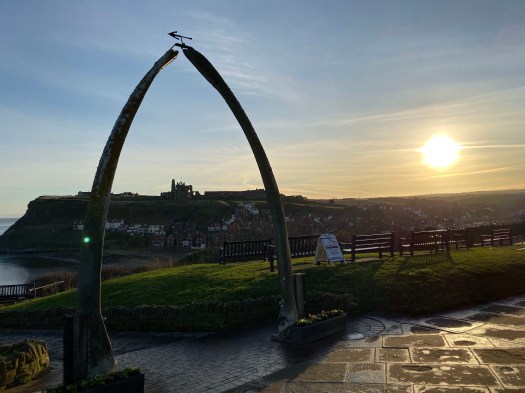
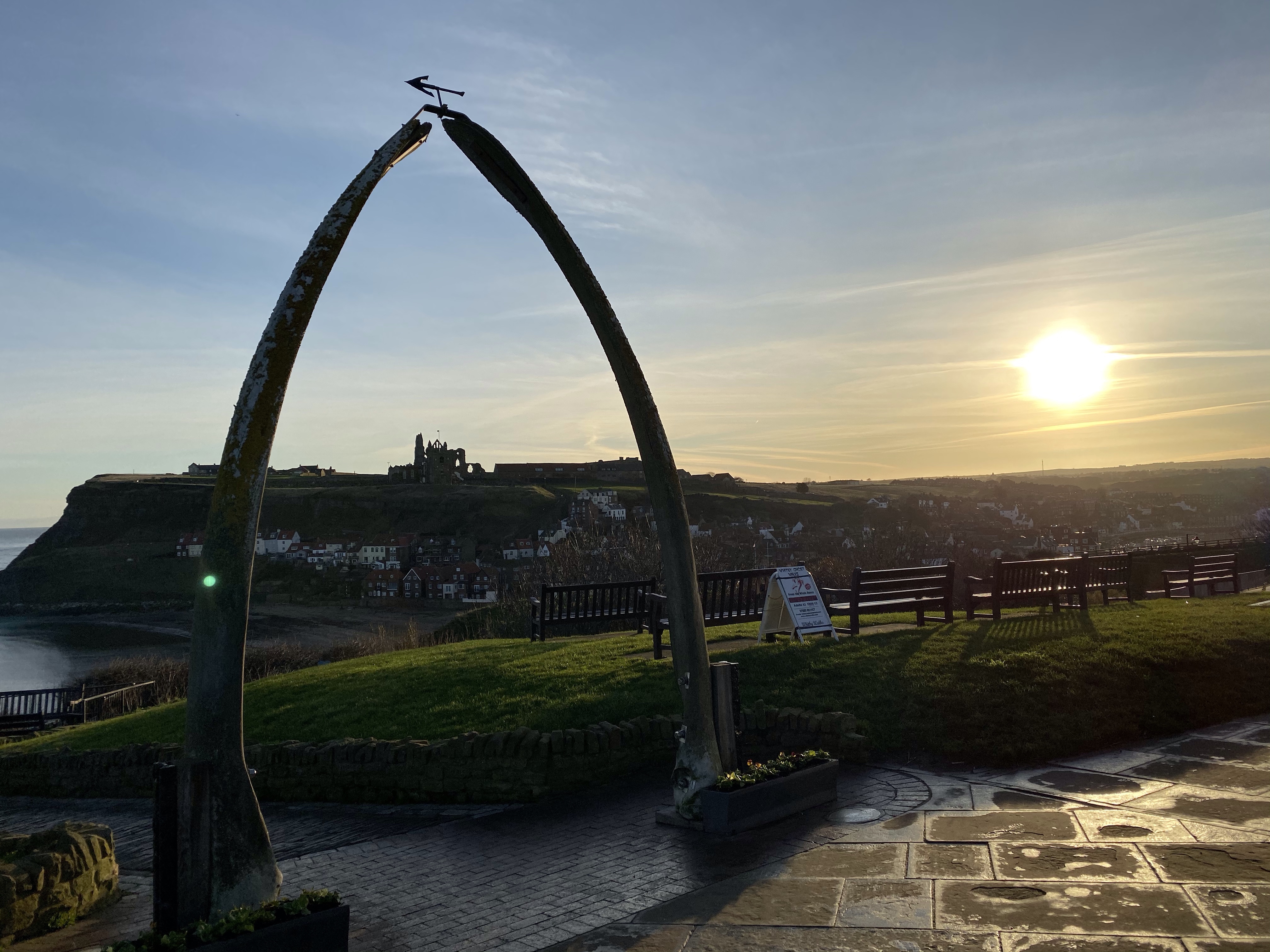
After breakfasting we meet at the Whalebone Arch,
and it is difficult not to wonder how
long it will be before our gluttony
as a species empties the oceans…
*
From here, framed within the jaw bones of the once great sea beast,
we can see the skeletal remains of Whitby Abbey,
where weighty decisions about the religious tenor
of our country were once made.
*
We, though, make our way back into town, and a Cafe…
and from there, eventually, up to…
View original post 208 more words
Share this:

+ #Silenti, Ancient Landscapes, Ancient Sacred Sites, Celtic Christianity, esoteric psychology, Photography, Spirituality
Keys of Heaven (3): the synchronicity of kindness
by Steve Tanham
There’s a certain ‘presence’ about kindness. Like the spiritual – or, more likely, as a part of it – the act of unexpected kindness drops into our lives like a messenger from the ‘Gods’.
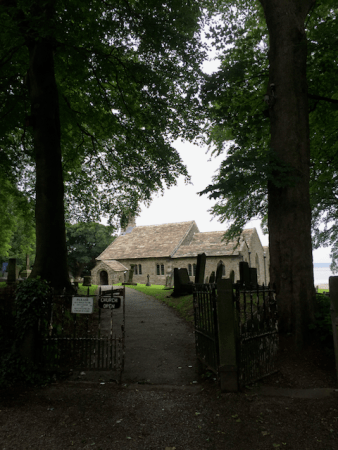
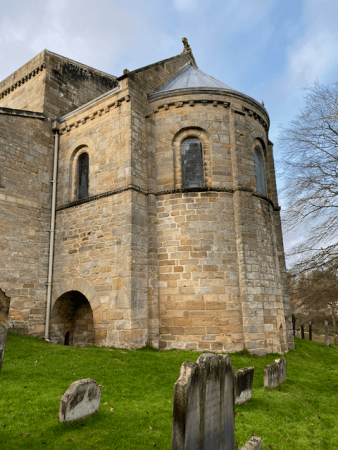
So it was with our visit to the ancient church of Lythe in the middle of the Friday afternoon of the Keys of Heaven workshop. The village of Lythe lies just north of Whitby and marks the the beginning of the towering cliffs which run northwards as far as Saltburn. Within this landscape, Lythe church is set on its own hill and has commanding views all the way to Whitby Abbey in the distance.

The church at Lythe is dedicated to St Oswald – the elder (deceased) brother of the man who was King of Northumbria at the time of the Synod of Whitby (AD 664); an event central to the storytelling basis of our weekend.
Northumbria was the most powerful of the Anglo-Saxon kingdoms, and it was King Oswiu (later Oswald) who presided over the fateful synod which resulted in the death of the Celtic Church in England.

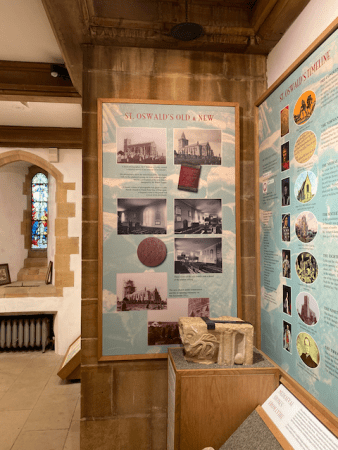
St Oswald’s church is also a museum of what was found on the site – mainly Viking burial stones. The hoard of Viking burial stones was only discovered when the ‘modern’ church of St Oswald’s was extensively restored in 1819 and then again in 1890.
The most famous of the exhibits – and the one you first encounter on entering the church – is the ‘hogback stone’ shown below, which bears the ‘Gingerbread man’ carving. The word ‘hogback’ is misleading – the curved stones represent a large Scandinavian house – the spiritual home to which the deceased Viking would have wished to return…

The museum takes up the whole of the west end of the church. It was a group project, funded with the help of Heritage Lottery and Nortrail funding. A selection of the stones is on permanent (no-charge) display and was opened by the Marquis of Normanby in 2008.
The work took several decades and was led by local historian John Secker, whose detailed work on the Viking funereal relics became its basis. Until recently, it was assumed that the site was solely a Viking burial ground. This was based on its proximity to the sea – a traditional Viking criterion for such a sacred settlement – and the fact that all most of the stone artefacts were of a type known to be of Viking burial origin (10th-12th century).

This cross-head with a modelled human head dates from the mid ninth to tenth century and is very rare in Yorkshire archaeology, though it has some similarity with Irish crosses. There is no nimbus (halo) present so the carving may not have represented Christ.
After further work, a few of the pieces were dated to the 8th century. This suggested that there may have been an earlier Celtic religious building here – high on its own hill, and within clear, if distant sight of the Abbey on the other side of Whitby, then known as Streoneshalh. If so, then Lythe may have played a far more active role in the religious events of of the 7th century than previously thought…
Readers of similar age to me, who remember the Stephen Donaldson novels based on the character ‘Tomas Covenant the Unbeliever‘ may recall the exiled giants and their sad ‘Grieve’. The history of myth shows that people of either conquest or perceived greatness were often depicted as ‘giants’. In the case of the Vikings, there appears to be surprising evidence of their level of homesickness…
Conquerors may not return home in glory, they may find themselves trapped in a new future, having put down roots that bind them far from the home they once had.
Myths may teach that only in death is that reconciled… The image below speaks louder than any words I could write. The idea of ‘house and home’ is one of the deepest sentiments we know. The mystic is constantly challenged to make the entire experienced world his or her home. There lies a powerful alchemy…
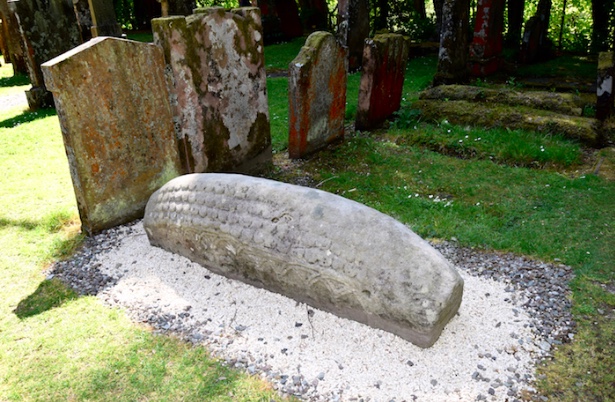
I went internet searching for a hogback stone as it would have looked to cap the ‘body’ section of a grave and came across this blog (and picture above) entitled ‘The Viking Hogback Stone of Luss, Loch Lomond, Scotland’.

A close-up of the Lythe church’s largest hogback stone reveals the ‘Gingerbread Man’. This figure appears to show a human figure being devoured by two beasts. But the outlines of arms and the beast’s mouth are the same dovetailed lines and it could also depict the process of giving birth (by mouth) to a higher form of life, wisdom or simply consciousness. Space here does not permit a deeper examination, but Stuart’s recent blogs touch on this in more detail.
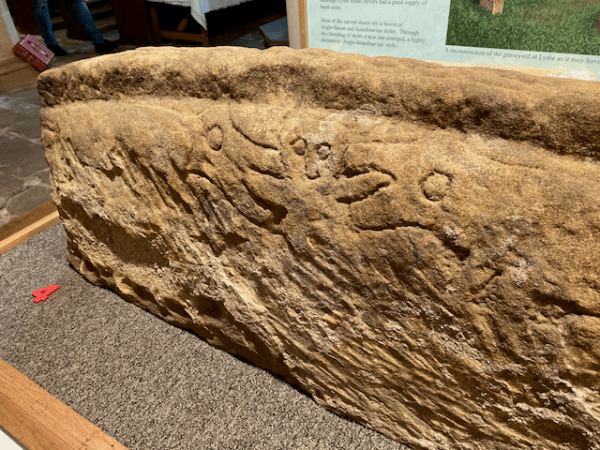
A similar image exists on a hogback (see below) from Sockburn, County Durham. In that representation the figure has only one hand in the mouth of the creature. It is believed that the Sockburn scene represents the Viking god Tyr who had one hand bitten off by the wolf Fenrir.

The Lythe figure, however, has both hands in the mouths of the beasts, and the scene may depict the Norse legend of wolves devouring Odin, the ruler, at Ragnarock, which is the Viking end of the world…
We could only smile, ruefully, at the potential comparison with modern politics on both sides of the Atlantic… The hands were the first basis of number and order, as well as the wielders of weapons. As such, they have often been used to depict the concept of balanced intelligence. The animal mouth may be its opposite: base hunger?
There are many other exhibits in St Oswald’s church. The montage below shows some of them. The set also includes two photos of the ‘Green man’ – a recurring icon in the history of Britain. Sue Vincent’s recent blog discusses some of these in detail.


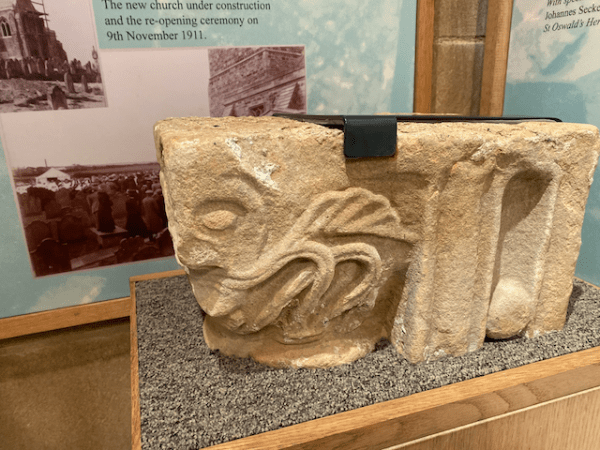

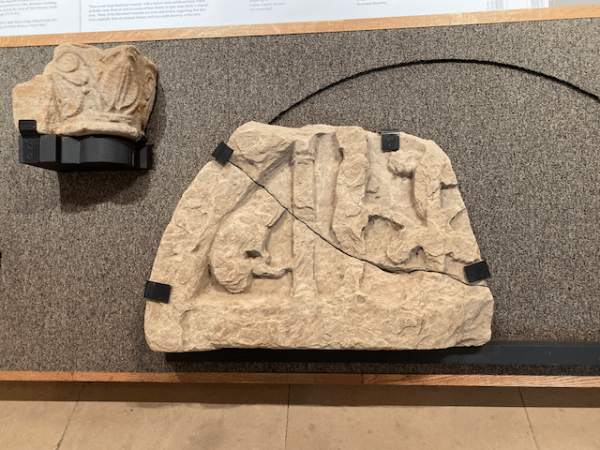
Mention needs to be made of the striking stone coffin that sits among the pews in the main body of St Oswalds.
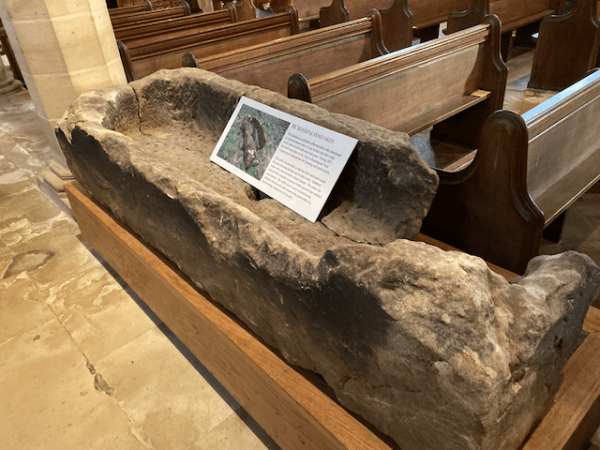
The medieval sandstone coffin was restored in 2007 by York Archaeological Trust laboratories. The coffin was air-dried before cleaning and re-assembly of the three broken pieces using steel dowels and conservation-grade adhesives. The image below, taken at the St Oswald’s museum, shows its original state before restoration. Looking at this, we can glimpse the work the local team have carried out over generations to provide a vehicle for the understanding and retention of the deep history of this part of North Yorkshire.

The museum at St Oswald’s is an astonishing piece of our history, but I want to finish this blog with another of that day’s aspects – one that was invisibly present throughout the weekend and which is related to the title of this post: the synchronicity of kindness.
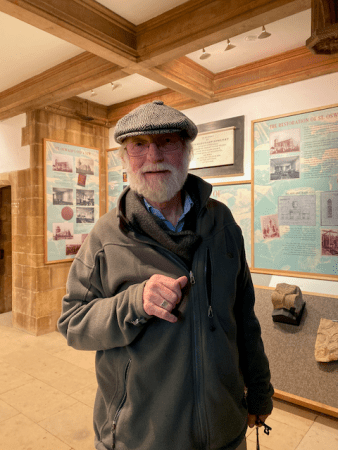
The man in the photo above (taken with permission,) with the kind eyes, is John Secker – the historian mentioned in the introduction. John is also one of the churchwardens of St Oswald’s Church. Two weeks before the workshop, while I was mentally ‘building’ the possible stages of our Keys of Heaven weekend, I left a message on his answerphone asking if we could visit the church and, if possible, whether we could gain access to the locked crypt.
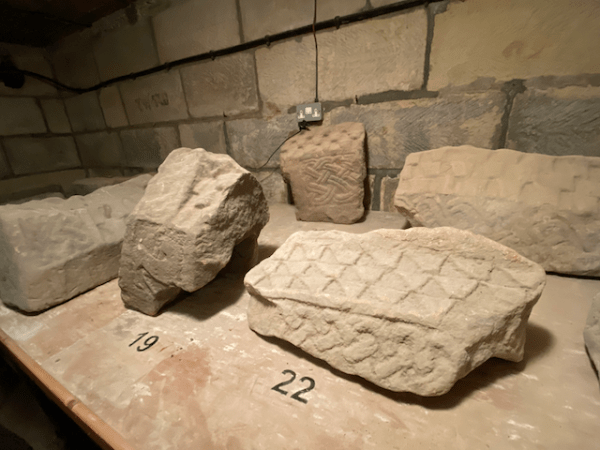
I wouldn’t have known about the crypt at St Oswalds but for Sue, who, with Stuart, had called in at the end of one of their writing trips. It was locked then, too.
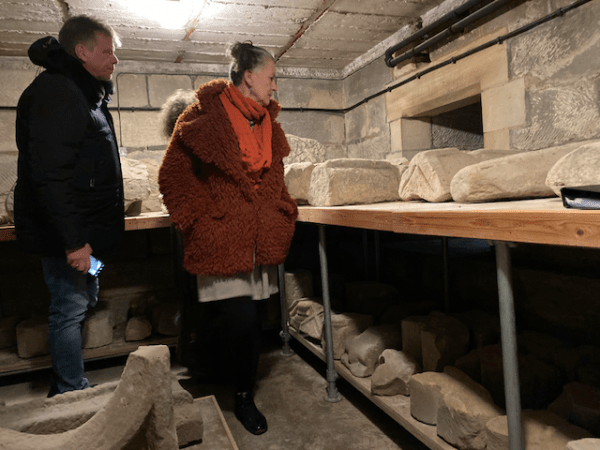
Wonderfully, John Secker returned my call and said he would come down to the church at 14:45 on the Friday afternoon of our visit to open the crypt door and allow us to descend to what is essentially a shelved storeroom for the artefacts not used in the main exhibits.
On the journey across to Whitby, John called my mobile to say that, sadly, he would not be able to be there for our arrival, but wished us well in our visit to the church’s main features. I thanked him for his efforts and said I understood the personal commitment that had prevented the crypt visit he had originally proffered.
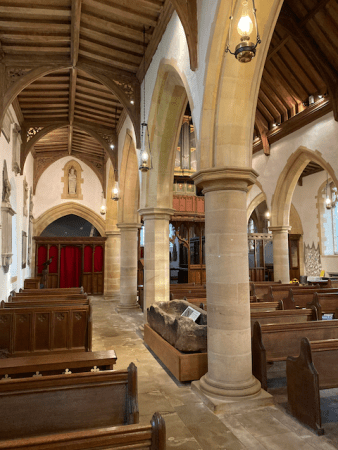
At 14.45 on the Friday, I was standing in the church when I realised I was alone…. the others had seen all that was available on the ground floor and gone outside to study the external views. To my complete surprise, an internal door opened and there stood a man, smiling. It was John Secker… He had carved out a few minutes to come and unlock the door to the crypt for us. Looking at this mystically, we had to be there at the time promised… and he had to make an extraordinary effort to reach ‘down’ to us. When those two conditions were met, the linking of the known and the (as yet) unknown were married together.
My companions returned and we descended the stone steps to the crypt. John had never met us – all he had were the two phone calls – yet he made a heroic effort to make it happen for our band of ‘pilgrims’ in the footsteps of St Cedd.
There was to be another, similar act of kindness at the end of our weekend; but I will leave that for the final post, when that same band of pilgrims were, almost literally, blown off the North York Moors and down into the gentle arms of Lastingham’s magical church and mysterious wells…
The following morning would bring our pivotal visit to Whitby… and the site of the synod where Bishop Cedd was expected to manage a meeting of minds that would destroy everything that had made him what he was….
©Stephen Tanham 2020
Stephen Tanham is a Director of the Silent Eye School of Consciousness, a not-for-profit teaching school of modern mysticism that helps people find a personal path to a deeper place within their internal and external lives.
The Silent Eye provides home-based, practical courses which are low-cost and personally supervised. The course materials and corresponding supervision are provided month by month without further commitment.
Steve’s personal blog, Sun in Gemini, is at stevetanham.wordpress.com.
+ #Cats, #Collie dogs, #FurryFives, #InnerCatPeace, #RagDollCats, #Silenti, humour, Spirituality, Your inner wolf
#FurryFives – winter
by Steve Tanham
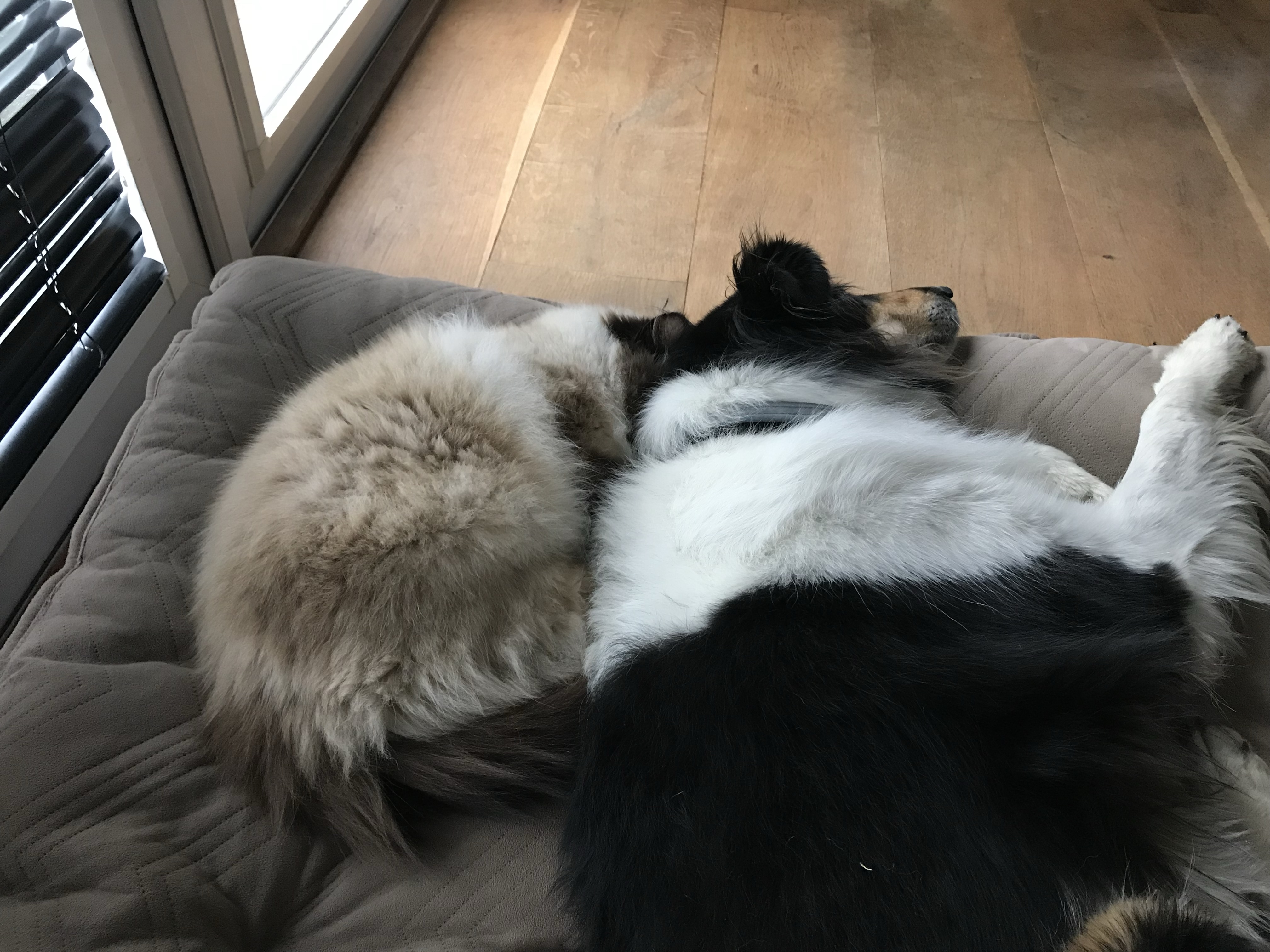
Tess: I’ve told you I can’t…
Misti: but you’re big and fast.. and strong.
Tess: But it’s not about big and fast and strong
Misti: How hard can it be to shorten the winter…?
©Stephen Tanham
Share this:

Gary was with us at the Whitby weekend. Here are some of his experiences…

Gary continues to share his experiences on the recent weekend workshop in North Yorkshire:

The last time I visited Whitby Abbey I was a boy. I recall little of it. Just that I was bored. Of course, I have been to Whitby many times since, often with my father who had business there. He would leave me for an hour or so to wander and once I recall taking my oil paints to paint the harbor. I was last there just a few years ago with my parents, ex-partner and daughter. I do like Whitby!
I must say that the abbey ruins are fairly impressive but I felt no atmosphere or energies. It seemed a dead ruin to me. A stark reminder of other times. As we pondered aspects of the Abbey in the context of the spiritual prompts of the weekend, my sense was of the skeletal remains of…
View original post 126 more words
Share this:

+ #Silenti, Ancient Sacred Sites, Belief and Faith, Celtic Christianity, Christianity and modern mysticism, esoteric psychology, Gurdjieff, Mystical ritual drama, Photography, Spirituality
Keys of Heaven (2): a pocket left open for magic
by Steve Tanham

It’s a winter’s tale, so best told in warm snippets… With a weekend workshop carefully envisaged, there’s always a moment where that mental and emotional picture becomes ‘invested’ with life. These old English words contain a wealth of linguistic depth so easily passed over in modern usage.
After months of refining the stages, and a preparatory visit, the latest of our ‘Landscape’ workshops was beginning in the far north of Yorkshire, to the east of the North York National Park – the coastline from Whitby to Saltburn, inland of the vast and wild hills of the moors.

Whenever possible, we meet for a light lunch and to gather to discuss the purpose and plan for the weekend. This sets the scene for what follows and invites everyone to play their part.
December is cold, especially here, so we had arranged to meet at the Barn Owl Cafe just off the A174 coast road from Whitby. Bernie and I had visited Staithes on our scoping trip in October. We knew that the Barn Owl would be easy to find, and that its renowned warmth and hospitality would be welcome after the long journeys here.
I was early. I’m a stickler for that. But I was delighted to find the last of the companions for the weekend pulling in at the gravel car park with me. We left the cold of the exterior to find the owners had provided us with a large circular table; perfect for the planned soup and sandwiches, and also ideal to lay out the maps and handouts. The rest of the group were already seated, chatting and enjoying hot drinks.

I had managed to condense the weekend’s busy itinerary into a ‘single pager’ which Misti the cat is now sitting on as I write (pic above)… You can see it’s well thumbed and has survived the weekend’s downpours – and frequent origami before being stuffed back into coat pockets.
An hour later, the company had been provided with maps; summary descriptions of the main locations; and an expectation of a busy but fun two and a half days. We were keen to begin. The right level of preparation is important to deliver a robust ‘skeleton’ – lots of coffee stops, for example, to counter the expected freezing temperatures of the Whitby coast.
But it’s also important to leave room for the ‘entry of magic’. These are spiritually focussed weekends, but not in a conventional sense. What we look for is the special quality of experience that can happen when a group of people work together towards a common goal. I think of this as ‘a pocket left open for magic’. It’s not provided consciously by the group; and certainly not by the planning. It’s filled by the ‘spirit of the moment’: a feeling with which many will be familiar. When this happens, the ‘air’ around us changes as though we had stepped into a world that runs parallel to our everyday one.
This kind of magic is very real.
Stuart France, one of my fellow Directors of the Silent Eye, has written a post on his blog about this recently.
Next, we spoke about the ‘heart of the matter’ – the psychological and spiritual basis of the weekend. The selection of Whitby was based upon an event from the distant year AD 664, known as the Synod of Whitby. This took place in an age when British Christianity had two flavours: the older Celtic Christian faith brought over from Ireland via Iona and Lindisfarne, and the newer Roman faith inspired by the work of Augustine.
Our workshop was subtitled: In the footsteps of St Cedd. The central character of our deliberations was the man who became St Cedd. Raised by the Celtic Christian monks on Lindisfarne, Bishop Cedd was a renowned spiritual and intellectual authority in what was then the Kingdom of Northumbria – ruled by the powerful Anglo-Saxon King Oswiu (Anglicised later as Oswald).
Under various pressures, the King hosted the Synod of 664 at the newly established Abbey of Whitby and arrange for the Abbess (later St Hild) to chair the process. Bishop (later Saint) Cedd was appointed to be what we would call today, the ‘Facilitator’. In so doing, Cedd had to use all his personal skills to mediate a solution to two central issues: the way the monks cut their hair (the tonsure); and the way the date of Easter was calculated.
The first sounds trivial to us. The second was profoundly important as Easter was and is the most important date in the Christian calendar.
King Oswiu was a Celtic Christian, his wife a Roman Christian… and thereby lies a familial tale for which there is not sufficient space in this post.
In the end, the King decided for the Roman faith and Cedd had to bear witness to what he knew would be the death of a tradition in which he had been raised and loved. The poignancy and spiritual nature of this task was the backbone of our deliberations for the weekend.
There are obvious parallels to our own times, here…
Just before leaving the Barn Owl Cafe, we asked each person to select a folded piece of paper from a small cloth bag containing nine of them. When unfolded, each had before them four words.
In my case the words were:
- Flattery
- Pride
- Humility
- Will
Mysterious and seemingly contradictory, they contained the personal seed-thoughts of an inner journey that would mirror the outer locations. More will be said on this in future posts.
There are challenges to running this kind of outdoor event in December; chief of which is the shortness of the days. As soon as we’d finished our lunch, it was time to visit a very special local church at Lythe, a village just to the north of Whitby. But to tell that requires a full blog, so I will return to the story of our visit to St Oswald’s church in the next post.
With the light fading on our short December day, we drove back up the A171 to carry out an important task – to construct the movements!

Runswick Bay is one of the most beautiful of the coves between Whitby and Saltburn. The ebbing tide had left us a wide swathe of beach to allow our work. Sadly, the beach cafe was closed for the winter so a coffee would have to wait. What we were about to do would be an important part of our undertakings at each further location…
The idea of a set of movements to accompany the ‘pocket left open for magic’ is not new. One of the giants of the past from whom we derive many of the Silent Eye’s principles is Gurdjieff – a philosopher from the early years of the last century who gave the world a system that became known as the Fourth Way. Gurdjieff was from Armenia and his upbringing had made him a skilled musician and dancer. To assist with the absorption of the spiritual side of his teachings, he developed a set of unusual dances or ‘movements’.
The three of us who run the Silent Eye have been looking at the creation of a set of simple set-movements to be carried out, wordlessly, to establish a place of working in the outdoors. This was our chance to let the moment ‘speak’ and guide us…

Almost as soon as we started, we were blessed with the birth of a set of movements that perfectly reflected not only the nature, but the historical and traditional basis we had selected for our Whitby-centred workshop.
We put it in our pockets and took it with us for the weekend…
Fish and chips beckoned. How could we come to Whitby and not do so! An early night and we were ready for what the morning would bring.
©Stephen Tanham 2020
Stephen Tanham is a Director of the Silent Eye School of Consciousness, a not-for-profit teaching school of modern mysticism that helps people find a personal path to a deeper place within their internal and external lives.
The Silent Eye provides home-based, practical courses which are low-cost and personally supervised. The course materials and corresponding supervision are provided month by month without further commitment.
Steve’s personal blog, Sun in Gemini, is at stevetanham.wordpress.com.
Share this:

+ #Silenti, Ancient Landscapes, Ancient Sacred Sites, Celtic Christianity, Christianity and modern mysticism, Consciousness, Photography, Spirituality, Travel and Photography, Winter Solstice weekend
Keys of Heaven (1): Cod and Lobster
by Steve Tanham
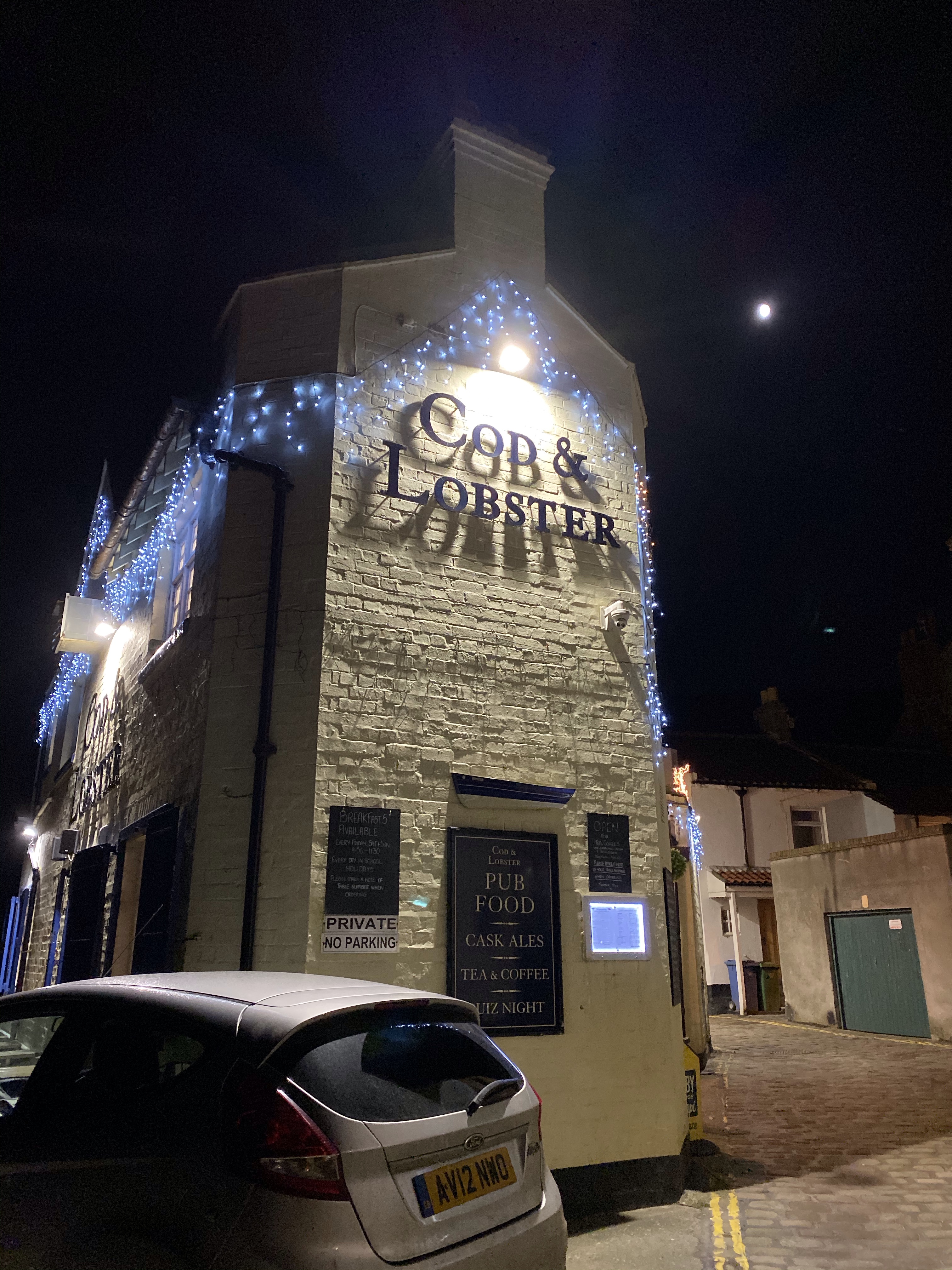
Bright against the icy darkness, the Christmas lights of the Cod and Lobster pub greet the quiet sound of only two sets of winter boots, where, until a few hours ago, there were many…
It’s quite a walk down from the car park above the lovely fishing village of Staithes – pronounced ‘Steas’ – just north of Whitby along the coast of Yorkshire’s beautiful North Yorks National Park. We had all ended up here the day before after our cliff walk along part of the Cleveland Way. It is a wonderful sanctuary in the darkness.
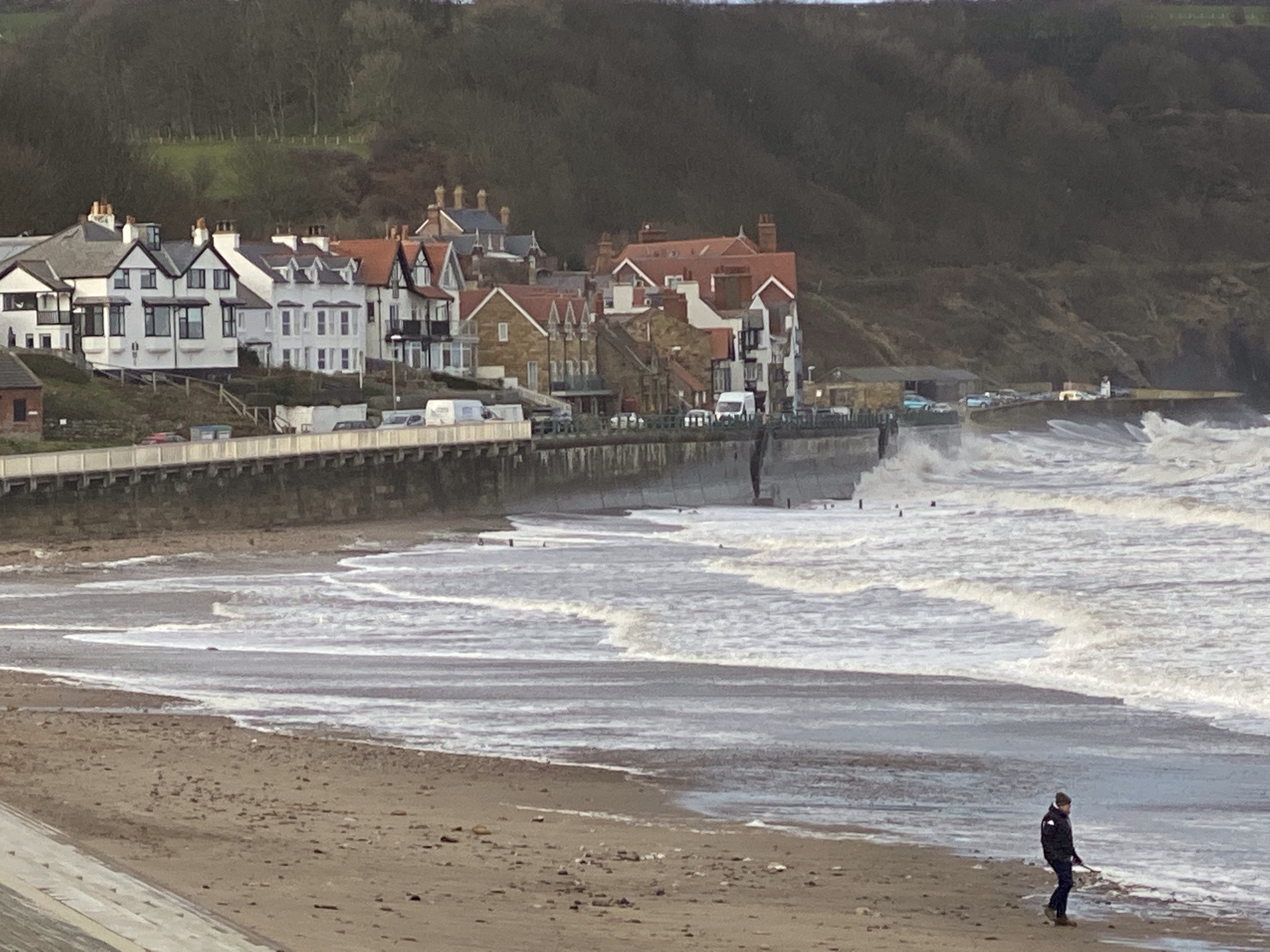
Think cliffs – everywhere you travel. Tall cliffs that make the furious winter seas look less wild than they are when you’re up close. Any journey along this fascinating and history-packed coast involves the constant up and down of roads that have been built into the vast contours of the North Yorks National Park.
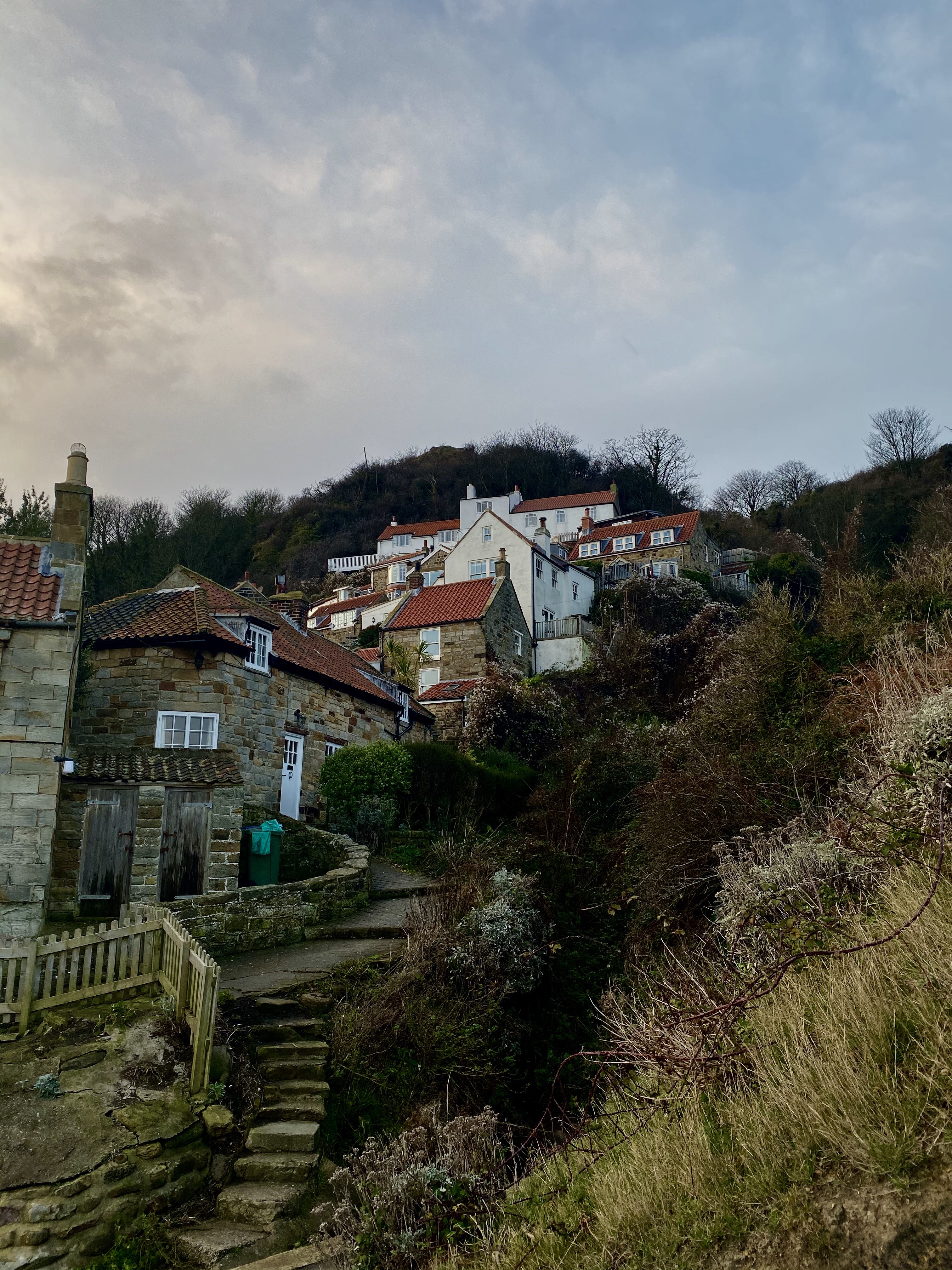
But back to the quiet darkness in the street that leads to the Cod and Lobster. That sense of almost silence is due to the fact that the walking boots of the merry band of us on the Silent Eye’s December workshop are now on their way home – apart from Bernie and me; we’ve booked an extra night’s accommodation to chill out after what has been a wonderful and non-stop exploration of both the real and symbolic history of this area.
Real, because one of the major events in Britain’s spiritual history took place here in the distant year of AD 664. Symbolic, because in a time when the world’s civilisations are in such domestic division, our purpose here is to examine the core of human nature to see its reflection in the world we create… And then look for the mechanisms of reconciliation with what, inevitable is.
Society reflected from human nature. It’s an unusual approach, but then, that’s what the Silent Eye sets out to do… and what makes it a different kind of spiritual school.
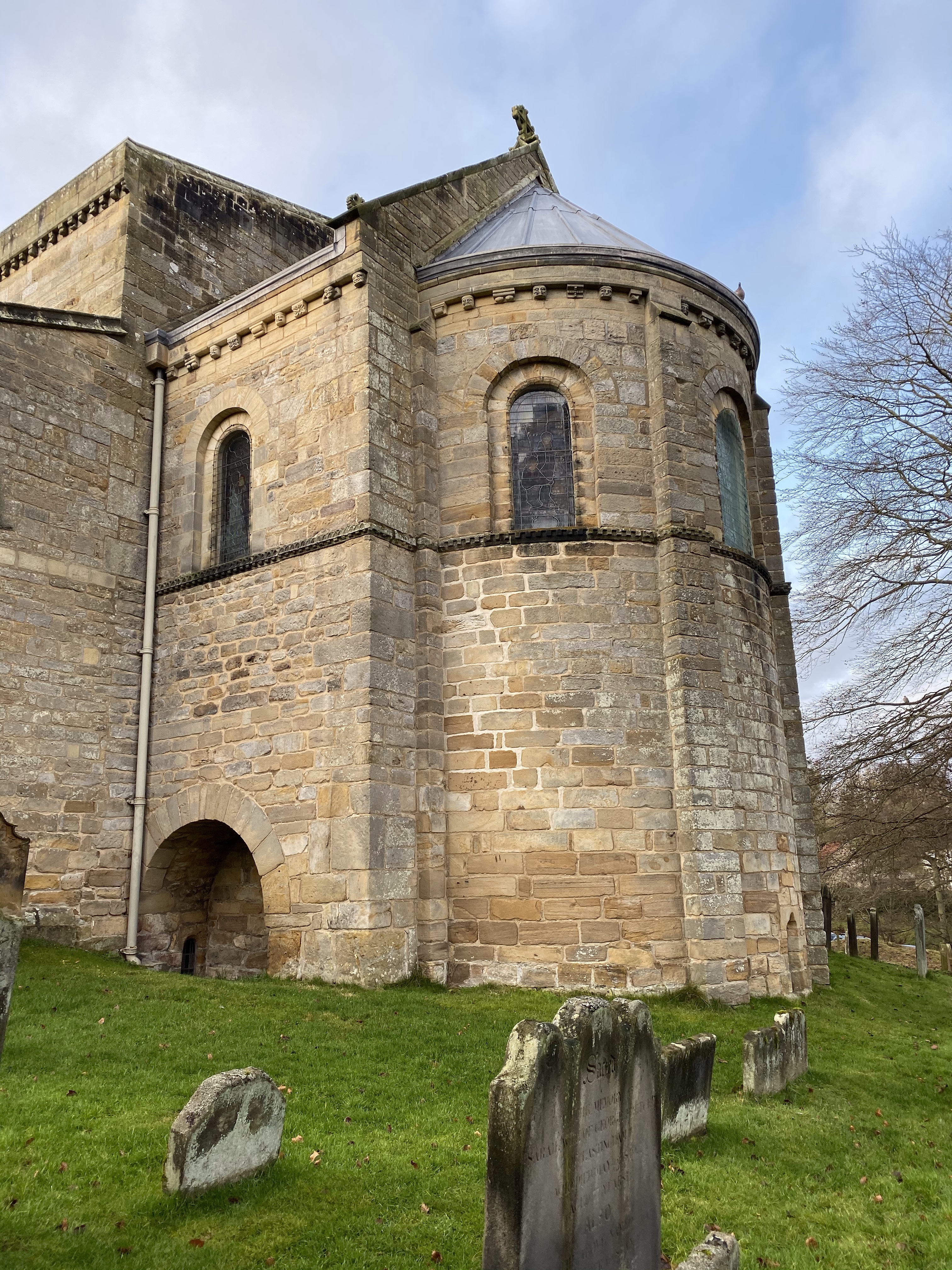
What is ending for the two of us at the Cod and Lobster, ended, formally, a few hours ago at the beautiful church of St Mary’s in the historic village of Lastingham; a village in the heart of the national park that has a special place in St Cedd’s history. The subtext of our weekend is ‘In the footsteps of St Cedd’ and the significance of his presence in the Synod of Whitby – and the deadliness of his ‘political’ exposure during that fateful event – was to be central to our meditations and discussions during the weekend’s journeys.
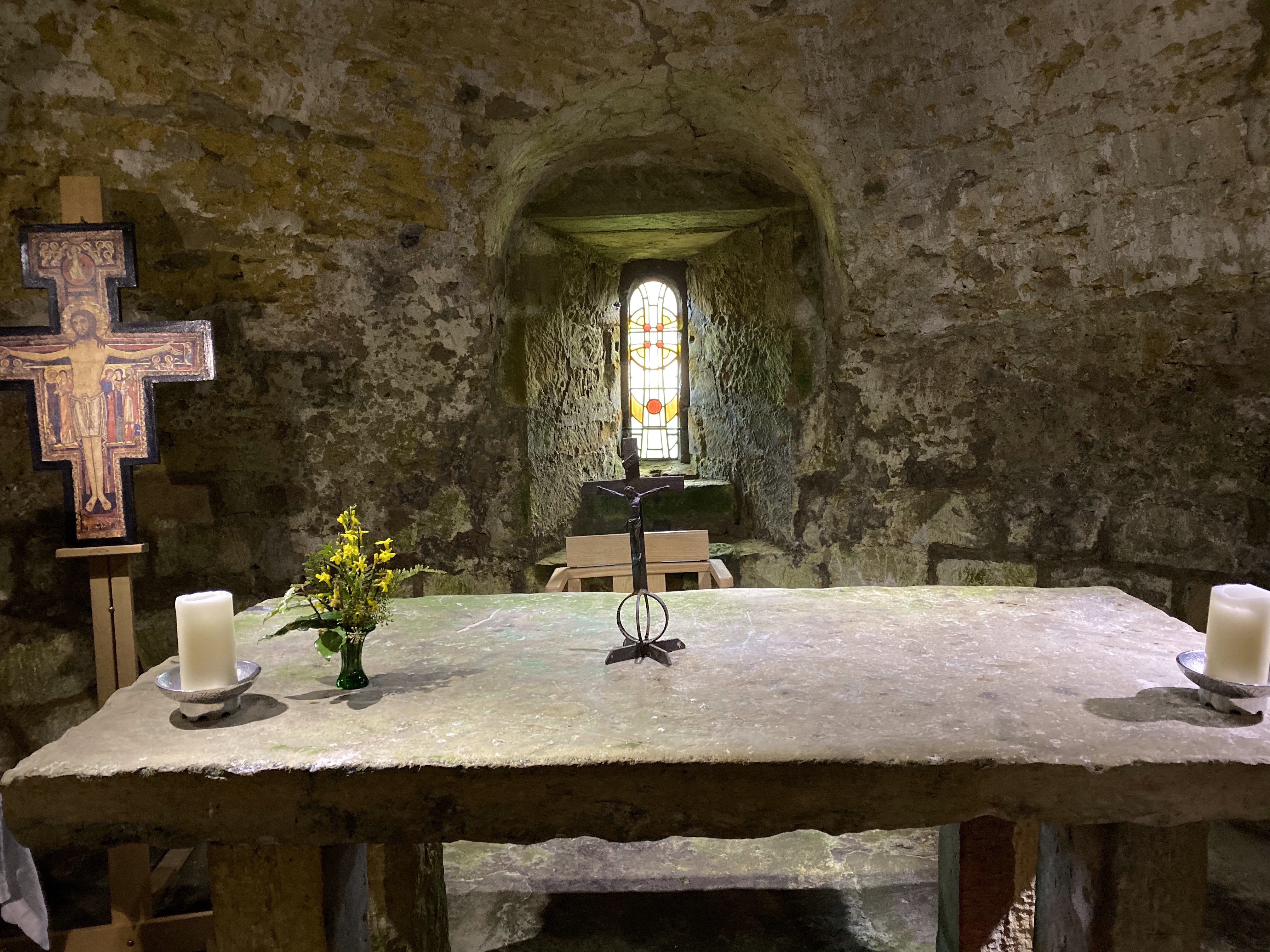
Lastingham is not only famous for its historic church, it is also the home of four mysterious wells.
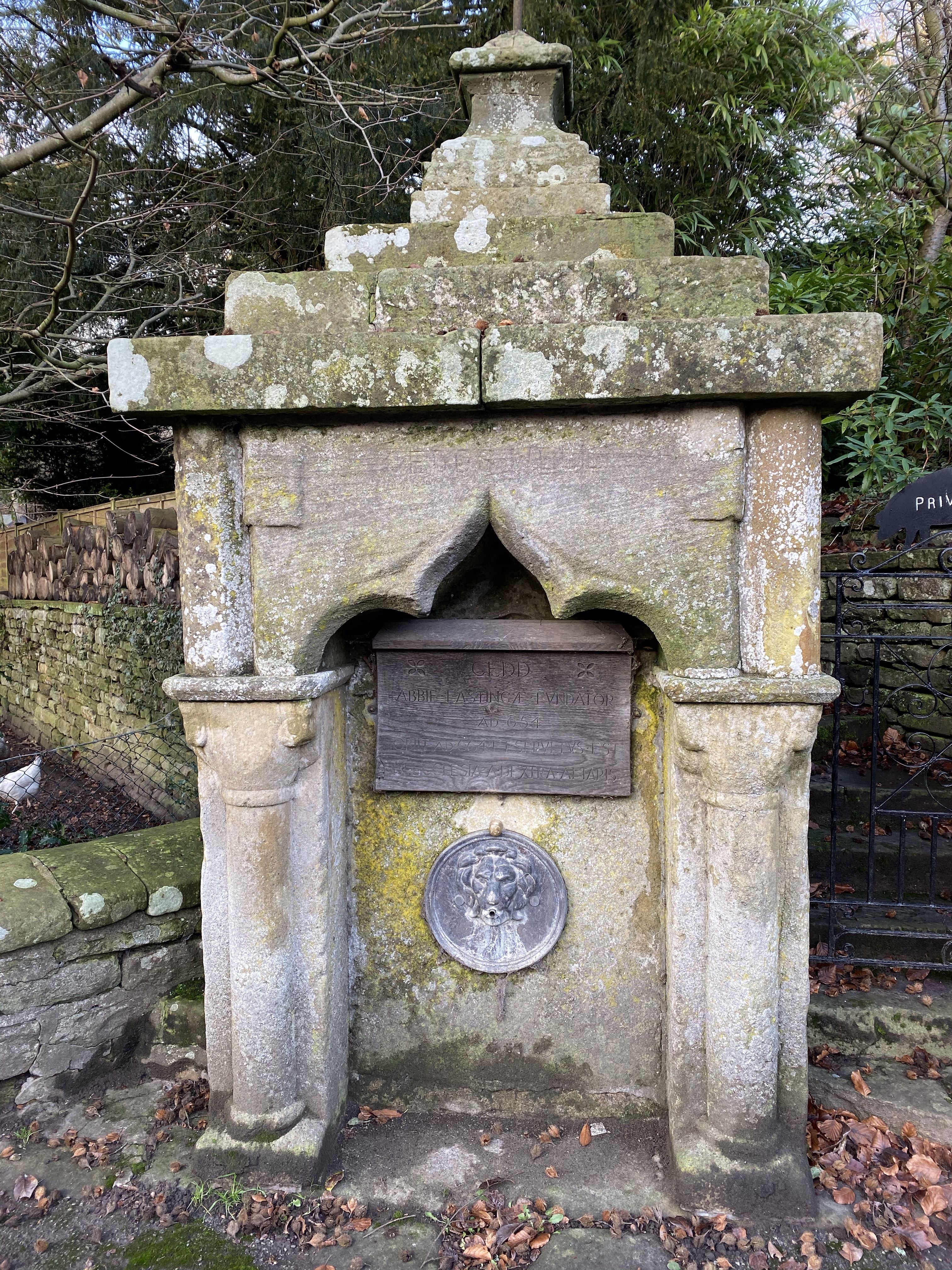
(Above) the mysterious wells of Lastingham.
If you ask about the wells, local folk may well direct you to the two that are easily found. The third has to be viewed across a boundary… the fourth is only spoken of when you demonstrate your knowledge of the others… and the reason for your question. A deeper mystery surrounds it…
More when we get there in the narrative!
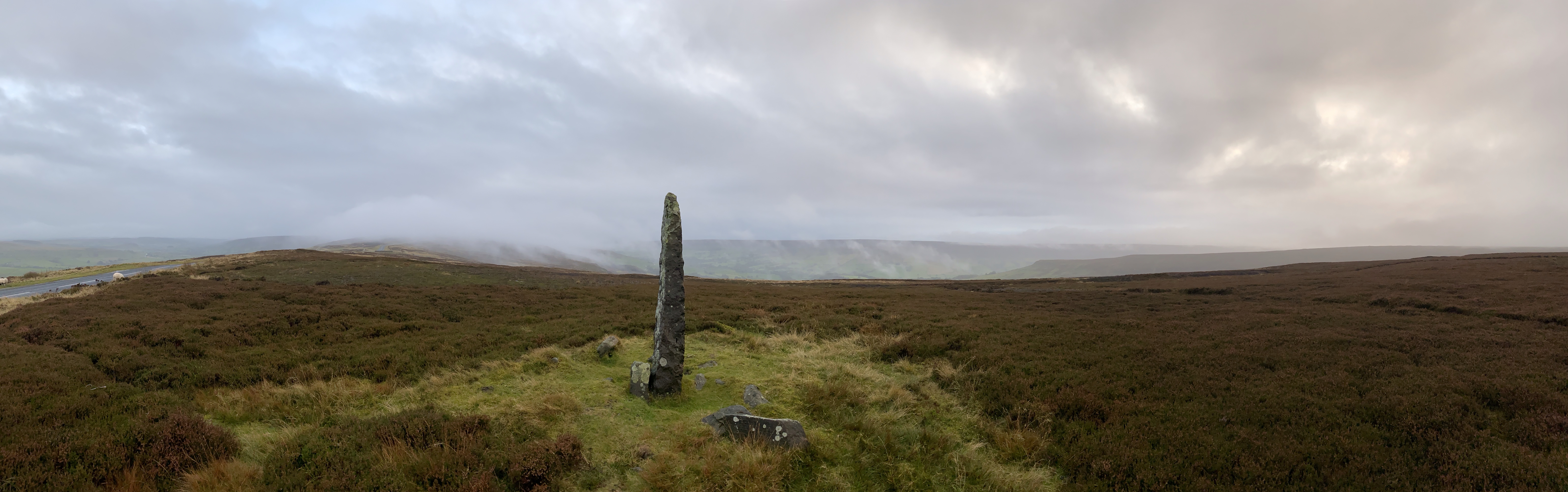
For sheer intensity of experience, it’s hard to beat being on the highest point of the North Yorkshire Moors in early December in a freezing sixty miles per hour gale. But we did…adversity is part of any workshop we run in December. Usually, the weather is kind; and this weekend was no exception… except when we dared to poke our heads above the level of the burial chamber of a Bronze-age chieftain…
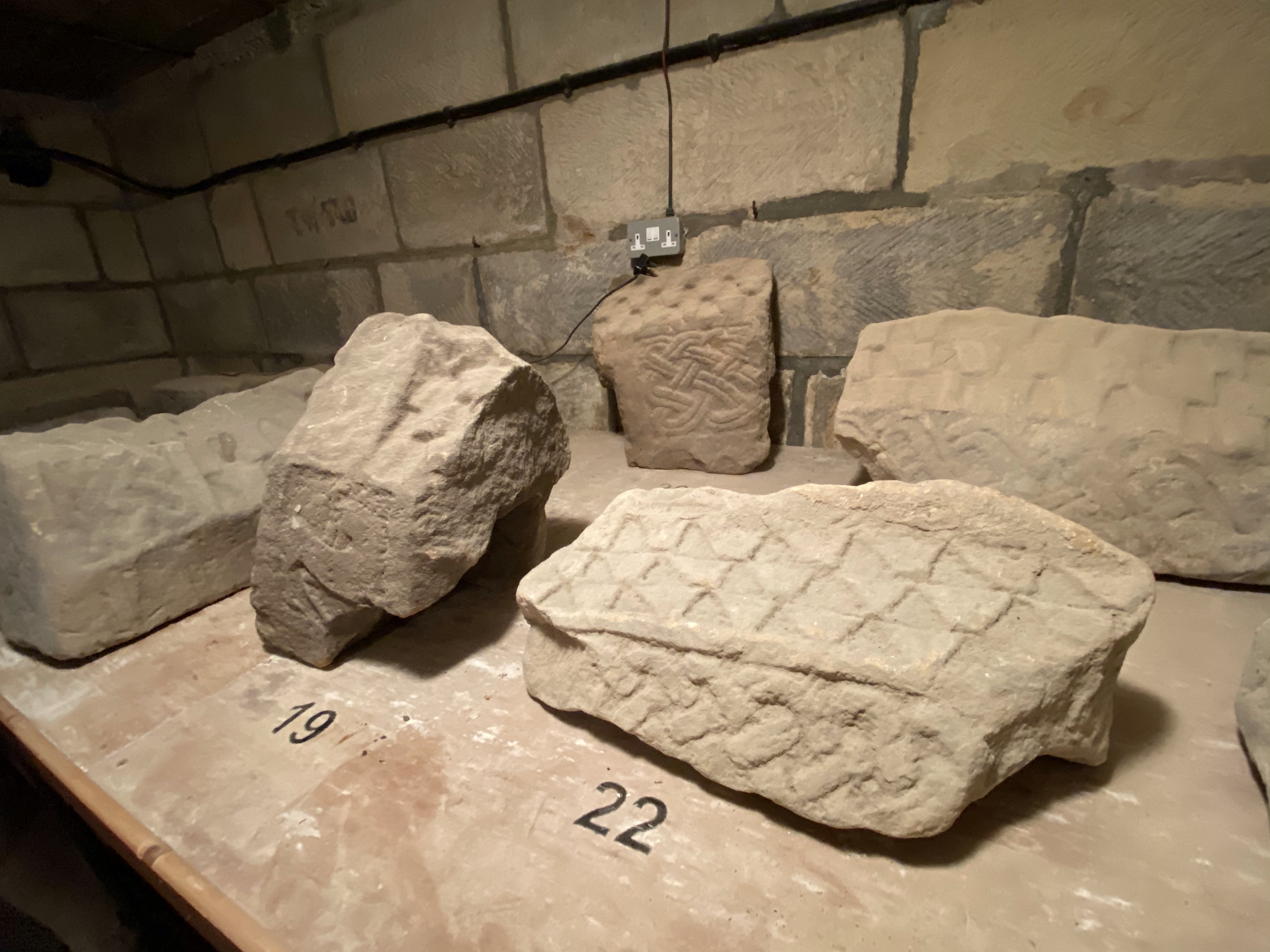
We have much to tell; and will over the next few weeks in this series of posts. The Keys of Heaven has been an involving and exciting event and I look forward to telling its story – as will others of the Silent Eye team.
Hang on tight… December, short days, vicious winds, mud, narrow cliff paths… what could possibly go wrong?
(c) Copyright Stephen Tanham.
Stephen Tanham is a Director of the Silent Eye, a school of esoteric self-transformation that provides an internet-based distance learning course with personal supervision. In the words of our former Companions, our process has ‘changed lives’. Find more about us at http://www.thesilenteye.co.uk or contact us at rivingtide@gmail.com
Share this:

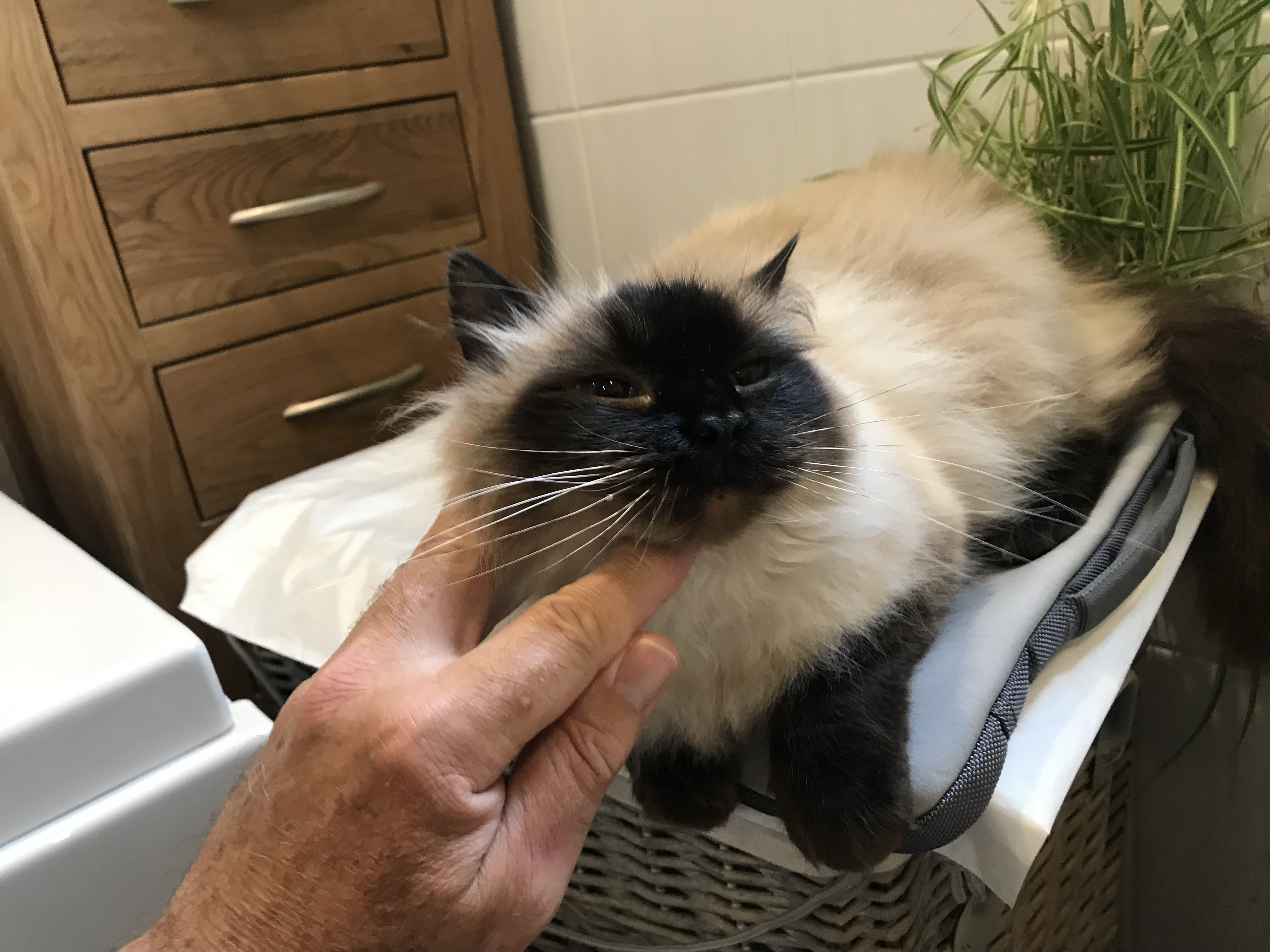
Here?
– Just a bit lower…
Here?
Just a bit under…
Ah, there!
©Stephen Tanham
Share this:

+ #Silenti, Astrology, Astrophysics, Consciousness, esoteric psychology, Mystery Schools, Spirituality
Cycles of Light (2) – Wheels of Fortune
by Steve Tanham

Part two of our investigation into the mysterious mental and emotional construct we call the ‘week’ and its celestial influences… This time we begin to examine the intimate relationship between events on Earth and the map of the ancient heavens.
©Stephen Tanham 2020
Stephen Tanham is a Director of the Silent Eye School of Consciousness, a not-for-profit teaching school of modern mysticism that helps people find a personal path to a deeper place within their internal and external lives.
The Silent Eye provides home-based, practical courses which are low-cost and personally supervised. The course materials and corresponding supervision are provided month by month without further commitment.
Steve’s personal blog, Sun in Gemini, is at stevetanham.wordpress.com.
+ #Poetry, #Silenti, Belief and Faith, Christianity and modern mysticism, Consciousness, esoteric psychology, Mystical poetry, Spirituality
End of the Line
by Steve Tanham
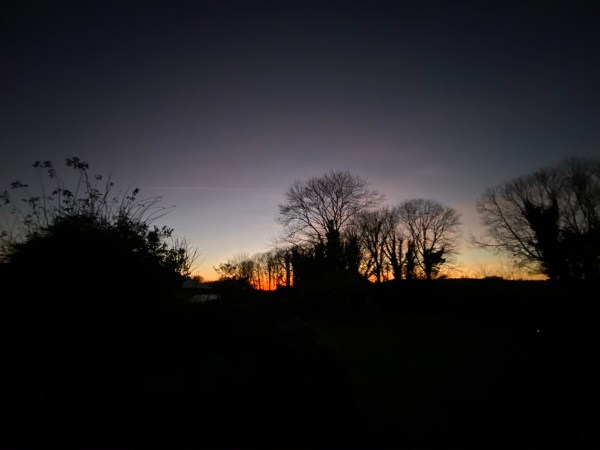
Take me out in darkness
Where the only light is black
Like a railway platform leading
To the forms that end the track
⦿
Let endless trains of thinking
Pass, ghostly, through the night
And cease their whistling thunder
In a silence turning bright
⦿
Let what I am-not die there
On the empty, singing rails
As sleepers are run over
As tickets blown in gales
⦿
Within St Stephen’s radiance
Let me feel the tingling dawn
And pay my all to face it
At the station of St John
⦿
©Stephen Tanham 2020
Stephen Tanham is a Director of the Silent Eye School of Consciousness, a not-for-profit teaching school of modern mysticism that helps people find a personal path to a deeper place within their internal and external lives.
The Silent Eye provides home-based, practical courses which are low-cost and personally supervised. The course materials and corresponding supervision are provided month by month without further commitment.
Steve’s personal blog, Sun in Gemini, is at stevetanham.wordpress.com.
Share this:

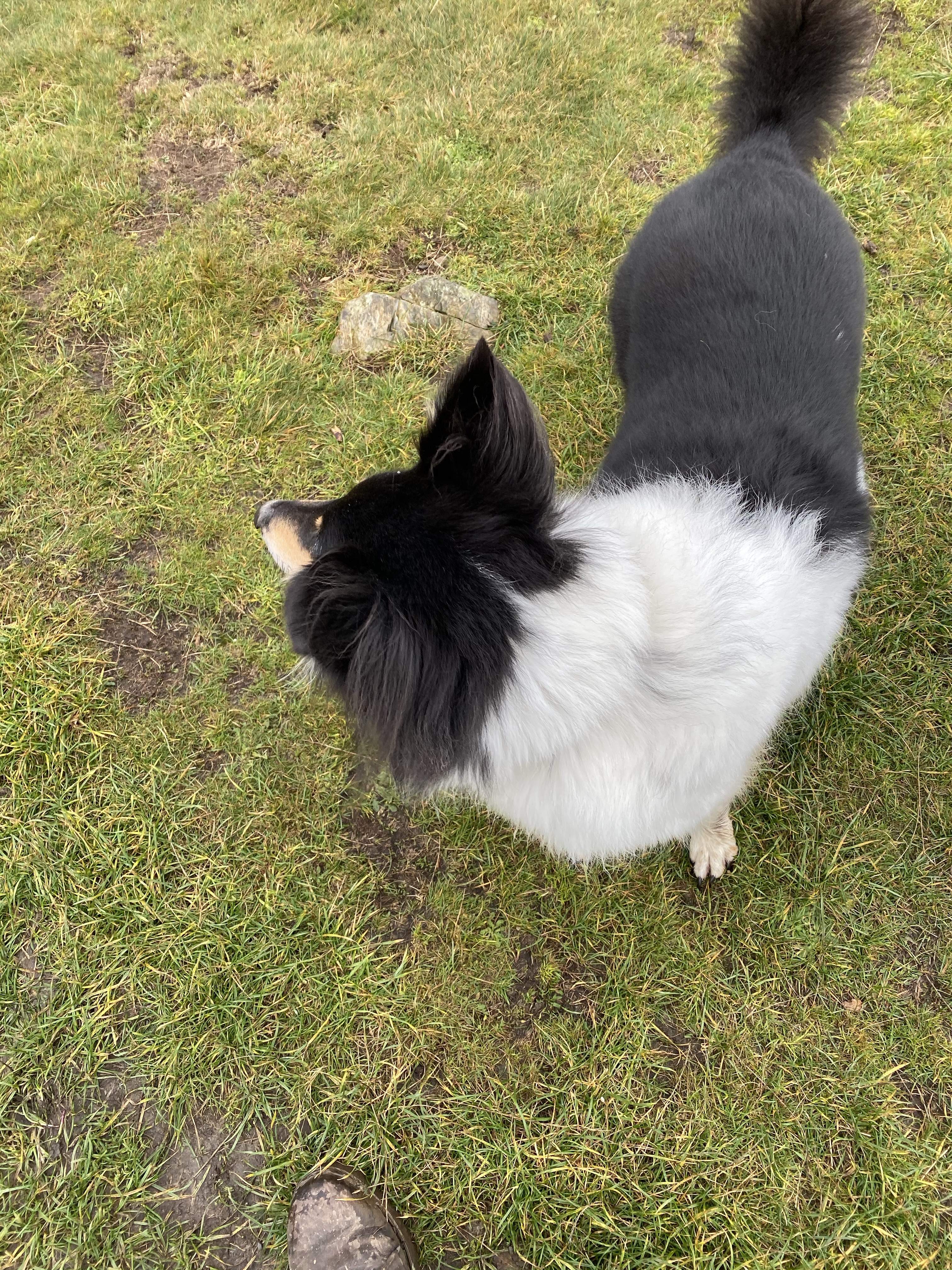
Tess: It’s around here somewhere!
Human: What is?
Tess: That sheep!
Human: Now, you’re not to chase sheep!
Tess: Chase it? I’m terrified of it!
©Stephen Tanham
Share this:

From Stuart
*
This notion, in the vague
form in which it as come down to us,
is probably more easily accessible,
or, as some might have it, ‘fluffier’.
*
Still, few would deny that
places can have atmospheres,
but what one actually puts that
atmosphere down to is these days
largely a matter for personal delectation,
and hence, hardly likely to cause too much in the way of disruption.
*
In the past much more store was set by such things,
and these vague notions assumed
a more ‘concrete’ form
and were correspondingly
given greater weight.
*
But to what end?
Share this:

+ #Silenti, Astrology, Astrophysics, Consciousness, esoteric psychology, Mystery Schools, Spirituality
Cycles of Light (1)
by Steve Tanham
The mysterious mental and emotional construct we call the ‘week’ and its celestial influences…
Click on the link below for the post…
©Stephen Tanham 2020
Stephen Tanham is a Director of the Silent Eye School of Consciousness, a not-for-profit teaching school of modern mysticism that helps people find a personal path to a deeper place within their internal and external lives.
The Silent Eye provides home-based, practical courses which are low-cost and personally supervised. The course materials and corresponding supervision are provided month by month without further commitment.
Steve’s personal blog, Sun in Gemini, is at stevetanham.wordpress.com.


You must be logged in to post a comment.