

I came across this image the other day: a Ford Anglia, 1967. We had one, just this colour, and it was new. The first new car our family ever had.
We’d had it about two weeks when Dad packed us all in and we motored off in the sunshine to Colwyn Bay; there to spend a few days in a B&B, and enjoying the car along various roads on the North Wales coast.
He kept the clear plastic covers on the seats for about two months – till Mum made him remove them one hot day… people did, back then. Anything new was so special!
Heaven… and happy memories. Dad’s been gone these past ten years, but his love of cars lives on… Dunno who saved the poster, but thank you!
©Copyright Stephen Tanham.
©Stephen Tanham 2020
Stephen Tanham is a Director of the Silent Eye School of Consciousness, a not-for-profit teaching school of modern mysticism that helps people find a personal path to a deeper place within their internal and external lives.
The Silent Eye provides home-based, practical courses which are low-cost and personally supervised. The course materials and corresponding supervision are provided month by month without further commitment.
Steve’s personal blog, Sun in Gemini, is at stevetanham.wordpress.com.
Share this:

+ #Cats, #FurryFives, #InnerCatPeace, #RagDollCats, #Silenti, humour, Pet Heaven, Spirituality, The Inner Cat
#FurryFives : wash your human
by Steve Tanham

Now then, girls, these are challenging times, so it’s important to keep your human clean! Let’s illustrate with the arm. First, give it a good sniff to check what kind of train-wreck you’re going to be dealing with…

Then take a deep breath and rasp the tongue along the length of that rascal!

Don’t be afraid to give it a little bite to get the cat juices flowing!

Take frequent breaks and hold the limb still while you focus on the remaining work..

Remember, the job’s not finished till the thumb’s done! Get the tongue out and w-a-s-h that digit!

Job done! Now for a little ‘me-time’ and a wait for the ‘well done’ stroke. Your human lives to fight another day…
©Copyright Stephen Tanham 2020
Share this:


The opening photo was taken in the autumn. It shows the Bolton street where my mother still lives. Born in 1930, she survived the economic depression of the inter-war years, and the bombings, doodlebugs and devastation of WW2.
I was born, at home, in a street of steeply sloping terraced houses not far from where that photo was taken. It was part of an entire hillside of Victorian terraces that filled the wedge between two of the arterial roads running out of Bolton to the west. The local name for the hill was ‘Spion Kop’ – a curious reference to a tragic battle during the Boer war (January 1900) in South Africa, where thousands of soldiers were seen ‘terraced’ up the hillside, defending the strategic point as they were slaughtered.

The battle was important for social reasons, too. The Boer war had seen conscription into the army for the first time – and the battle of Spion Kop showed how poor their health was. This had great political impact back in Britain and led, via an Act of Parliament driven through by Lloyd George in 1911, to the establishment of the National Insurance Act. This replaced the ‘Poor Law’ provisions with a robust mechanism aimed at the national improvement of health, employment and sickness.

My childhood – and those of my local friends, was filled with games played out in the many ‘bomb sites’ that were a feature of all industrial towns. We didn’t think of it as post-war devastation; it was simply where we were… Children have a gift of being in the moment, and, as long as their friends are from similar backgrounds, they are not self-conscious about the conditions of their lives.
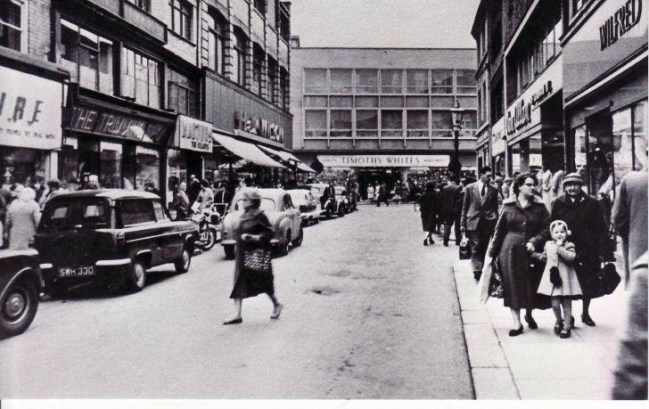
Bolton was a happy place. Although industrially black and often grim, it was fighting its way back from poverty and the war’s deprivation. In tune with this, my mother was intent on filling her sons’ lives with ambition and confidence. The town was surrounded by beautiful Lancashire countryside and there was always excitement to be found on a weekend walk with a picnic ‘up there in the hills’.

My mother’s street is quiet, now. She’s never wanted to move, though she visits us often up here in Cumbria – an hour’s drive north up the M61 and M6 motorways. It’s an easy journey, but she’s always happy to be going home – her aged Pomeranian dog on her lap.
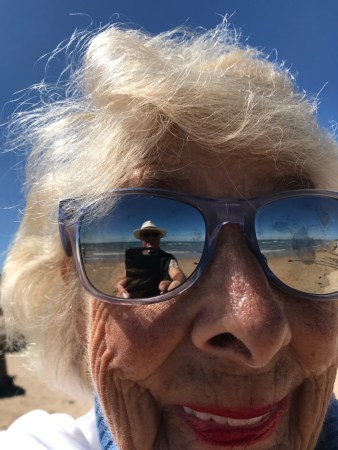
These are testing times, and Bolton is affected by the effects of the Covid-19 virus as much as any other town. In Britain (and much of the rest of western Europe) we are likely, soon, to be ‘locked down’ into our houses; allowed out only to buy food, medicines or to walk a dog… one person per dog, of course.
Supermarkets are having to introduce rationing and set times when only the elderly can shop – a result of the ‘locust effect’ of fearful panic buying that has already stripped the shelves bare.
The last time anything like this happened on the same scale was World War II. My mother, who has recently turned ninety, remembers it well. She grew up hungry, and cold, but, as she says, ‘everyone else was, too…’
Already, mother’s neighbours have approached her to ask if she needs groceries or any else of importance. Normally, we do her shopping weekly for her, but if we are ‘locked down’ in Cumbria, we won’t be able to make the journey. My brother is closer (Preston) but even he may not be able to get to her.
Despite not being related, mother’s neighbours are already constructing a safety net around her. She’s a kind woman, and popular. But, for the past decade, she has struggled with increasing vascular dementia and cannot solve anything problematic. She won’t consider going into a home, of course. Nor will she move away from her beloved Bolton… though we have offered to give her a home here, at least through the pandemic.
The cobbled street she lives in remains a beacon of kindness and caring. There is no funding for this, just the sense of sharing and community from everyone else who lives there. It’s an island of how Bolton used to be; and it makes me very proud of what’s left of my hometown and how it is behaving in the face of this horrific pandemic.
That sense of looking out for ‘everyone else’ is going to be vitally important to our survival as societies. Already, city centres are empty, restaurants and pubs closing and businesses failing. The UK Government has announced a package of what amounts to guaranteed loans to help businesses survive, but loans simply add to the long-term debt of an enterprise. They may help with short-term liquidity – cash – but they store up problems for a future which is likely to be thin on profit for a long time to come.
There is no sign of a Danish-style government intervention whereby the government will fund the wages of all current employees as long as each company operates at 70% of its current employment costs – a wage cut for all, but one that protects the jobs of millions during this dire and prolonged period.
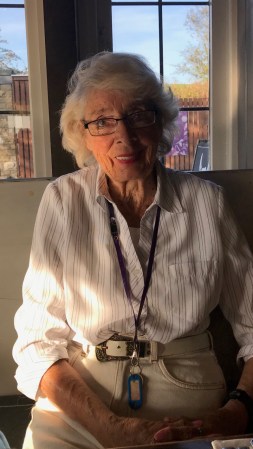
The Covid-19 virus will be calling on Mum’s part of Bolton. We pray that she won’t catch it. If she does, it’s likely that she will leave us. But, for now, she’s warm and in the bosom of her fellow Bolton folk… in a cobbled street that feels like home.
©Stephen Tanham 2020
Stephen Tanham is a Director of the Silent Eye School of Consciousness, a not-for-profit teaching school of modern mysticism that helps people find a personal path to a deeper place within their internal and external lives.
The Silent Eye provides home-based, practical courses which are low-cost and personally supervised. The course materials and corresponding supervision are provided month by month without further commitment.
Steve’s personal blog, Sun in Gemini, is at stevetanham.wordpress.com.
Share this:

+ #ShortWrytz, nature, Photographic techniques, Photography, Places and Prose, Seasons of the year, Silent Eye School, Solar Year, Spirituality, Travel and Photography, Writing
#ShortWrytz : Dreams of Trees
by Steve Tanham
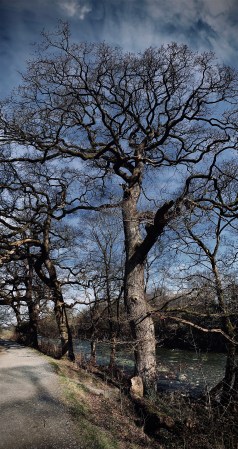
The river is just below. Close and beautiful, as always, but he’s photographed it a hundred times and the winter’s challenge is to find a new place; a place hidden in the old, hidden in the usual.
And then, as he turns to seek elsewhere, it’s there. Devoid of leaves, its tall structure is all there is, but its presence is magnificent and dark with enduring purpose against the cold March sky.
Share this:


(From an interview with R-CatZ Magazine)
Mag: So, Miss Misti, how are you enjoying your life in the Lake District?
Miss Misti: Oh, cool. I mean, so much better than that bush in Bolton!
Mag: I can see! And you get early morning tea in bed, too!
Miss Misti: Comes with the celebrity… And I got two staff as well! That’s his hand I’m snoozing on. She’s busy tapping that screenie thing, as usual.
Mag: And do you have feline company too?
Miss Misti: Naw.. don’t want competition!. Mind you, I got the two moggies next door cowering… but I got my own Collie dog as a pet!
Mag: Well, Miss Misti, we’ll leave you to luxuriate…
Miss Misti: Thanks. I’ll be due a second cup of tea, soon. Suppose I’d better release his hand!
©Stephen Tanham
Share this:


There’s nothing funny about Covid-19, the Wu-Han-originated Coronavirus that has just been declared a global pandemic. But the explosive spread of the infection throws a lot of light on the state of human nature. A friend of mine said, recently, that, according to some 1960s comic books he had found in his loft, we should all be getting our personal flying cars by now; instead we are still persuading people to wash their hands after visiting the toilet…
Like any ‘aggressive’ aspect of nature, a virus can teach us a lot about life. The virus may sound like the work of the Devil, but it may also represent a key stage of the evolutionary path of life on Earth prior to the dominance of cellular organisms.
What is a virus and how is it different to a bacteria? One is an organism – the bacteria – and the other is not. On that basis, the bacteria is the more sophisticated, yet the most deadly of the two is the virus because if it succeeds in attaching itself to a living host, it will always cause a disease. A bacteria is not necessarily harmful and is formed from cells – the same structure of life that we all share… and the virus does not.
A cell has different functions. Firstly, it must persist for as long as it can, and be able to reproduce itself. a cell reproduces by dividing itself to form new cells. Each new cell contains a full copy of all its genetic material – its chromosomes, which are coils of DNA; the same DNA shared by all organic life on the planet.
The cell must be able to exchange material with its surroundings. Food is taken in, and waste is extruded – to form food for other, different kinds of cell, as in all nature.
Cells can also choose to die… Each ‘normal’ cell has a ‘death pathway’, called Apoptosis, which it initiates if it senses that its genetic material has been damaged, and it can no longer safely reproduce. The latest research into cancer cells indicate that the rogue cell is able to prevent the death pathway from being triggered – a little like a dictator locking himself into a nuclear weapons control room so that he can destroy the world. The rogue cell is then able to reproduce and create the ungoverned growth that is cancer. That so much of life remains orderly is a tribute to the usual integrity of the humble cell.
The normal cell is therefore a very stable and benign organism – even bacteria, most of which forms an essential catalyst in the vast cycles of life. The foundations of our evolutionary story are closely related to the simple cells of early ‘bacteria’; indeed, the planet that became the Earth we know was transformed around 2.3 billion years ago by single-celled cyanobacteria (blue-green algae) to create the oxygen-bearing atmosphere that now sustains life on the planet.
To achieve this, the cyanobacteria consumed methane – a far more deadly greenhouse gas – to produce the safer carbon dioxide which has become today’s ‘problem’. We worry about the levels of CO2, but, just prior to the industrial revolution (source Dr. Gary Vasey) the level of CO2 had dropped to a point where life would not have been able to continue. Industrialisation ‘fixed’ the problem.
Food for thought…
But, what about viruses?
Their structure is unlike the single-celled bacteria that transformed the Earth’s atmosphere. They comprise a protein shell that surrounds a nucleus of genetic material in the form of DNA or the simpler RNA – but none of it is alive. It is essentially a chemical missile designed to inject itself into the heart of another living cell. Once there, it uses the life of the host to make copies of itself, eventually bursting open and triggering whatever disease it carries. Viruses are found throughout our environment and all organisms can be affected by them. They are usually specific to a certain type of animal. Occasionally, such as happened with Covid-19, they cross the species boundary and become a deadly agent of disease for mankind.
But it may be that viruses hold a deeper link to our organic past, and that their presence in our world is not random, at all. They may even hold the key to some of our future.
All life on Earth is linked. All life on Earth began with the same cellular building blocks. We are all children of a single first-cell life form that crossed the boundary from molecular (chemical) to living, thereby laying down the rules and the elementary functions of life. This primary forebear has even been given a name: LUCA – Last Common Universal Ancestor.
Evolutionary biologists, who defined the founding principles on which organic life is built, established persistence as the primary determinant. The ability to endure – within a given form – is the building block of everything that follows. Above that is the ability to replicate that form. The cell does this, but the principle of replication, based on the genetic component at the cell’s heart, is the property of its DNA. In other words, the DNA, itself, is the material, the molecule, that made the transition from pre-organic to organic form; and therefore life.
The theories are constantly being challenged and updated, but biologists believe that the precursor to DNA was a similar but less sophisticated structure of spiral ‘genetic acid’ called RNA, and RNA is the predominant material at the centre of the virus, wrapped in its protein shell. In the envisaged RNA world, the primary need was to find a structure that could reliably reproduce itself.
It had always been believed that viruses had to come into existence after bacteria because they needed to be parasitic to the existing cellular world. That, is after all, how they exist today. Some scientists began to speculate that viruses might have existed before cellular life.
A major argument against this was the comparative size of the virus vs single cell. We are about 100,000 times bigger than our cells, a million times bigger than bacteria and 10 million times bigger than the average virus (source). Bigger meant more highly evolved, to a point, so the virus was assumed to have come much later.
Then, in 2013, evolutionary biologists Chantal Abergel and Jean-Michel Claverie of Aix-Marseille University found a sample of Siberian dirt that had been frozen for more than 30,000 years. It contained a new virus they named Pithovirus. (Source)
Pithovirus is the largest virus ever discovered and is even larger than some bacteria. Even stranger, Pithovirus has over 500 genes, some of which replicate the core function of cells. Most startlingly, and seeming to break all the rules, Pithovirus is able to reproduce itself, like a cell, without invading a host’s organism. Since then, more and more examples of ‘giant viruses’ have been found. There is increasing evidence that they may have preceded cellular life: that they are older than LUCA and have continued to evolve in their own right. As the two French researchers said: ‘It may be the reason we haven’t found them is that they are everywhere…’
Yet, they are not cellular. They appear to have followed a parallel evolutionary tree – in effect, a new form of life…
Covid-19 is not a giant virus. It’s a new-to-humans attacker of lungs, similar to any other flu-like germ. It’s very virulent and deadly and it may be about to change the world’s economic and politics. But the order of life to which it belongs may challenge the science of life as we know it. Who knows what miracles of medicine may result from that future study?
©Stephen Tanham 2020
Stephen Tanham is a Director of the Silent Eye School of Consciousness, a not-for-profit teaching school of modern mysticism that helps people find a personal path to a deeper place within their internal and external lives.
The Silent Eye provides home-based, practical courses which are low-cost and personally supervised. The course materials and corresponding supervision are provided month by month without further commitment.
Steve’s personal blog, Sun in Gemini, is at stevetanham.wordpress.com.
Share this:


And then one day there will unfold
Before delighted gaze
A purple ring where thickest mud
Had tempered walks on winter days
⦿
Where sliding boots had struggled
To cross the sodden land
Our eyes now look with wonder
To gaze on colour’s gentle hand
⦿
Time and tide’s persistence
Their essence of ascent
From sodden bulb to flower’s joy
A hidden rite of innocence
⦿
Directed upwards, called to seek
The calling power’s face
As cheek by mote they flex and float
To form the softest carapace
⦿
Awake and break dark winter’s chains
Cast off the inner gloom
And breathe the air with lilac stare
Then give the light its living room
⦿
©Stephen Tanham 2020
Stephen Tanham is a Director of the Silent Eye School of Consciousness, a not-for-profit teaching school of modern mysticism that helps people find a personal path to a deeper place within their internal and external lives.
The Silent Eye provides home-based, practical courses which are low-cost and personally supervised. The course materials and corresponding supervision are provided month by month without further commitment.
Steve’s personal blog, Sun in Gemini, is at stevetanham.wordpress.com.
Share this:


Misti: I like looking left, Tess, don’t you?
Tess: Erm…
Misti: I mean all the stuff in the garden and the hateful crows are left, aren’t they?
Tess: Misti, it’s not quite like that…
Misti: But if I look right, all I see is you!
Tess: sigh…
©Stephen Tanham 2020
Share this:

Follow Sue’s link to a review of Stuart France’s recent work…

Reblogged from Strange Book Reviews:
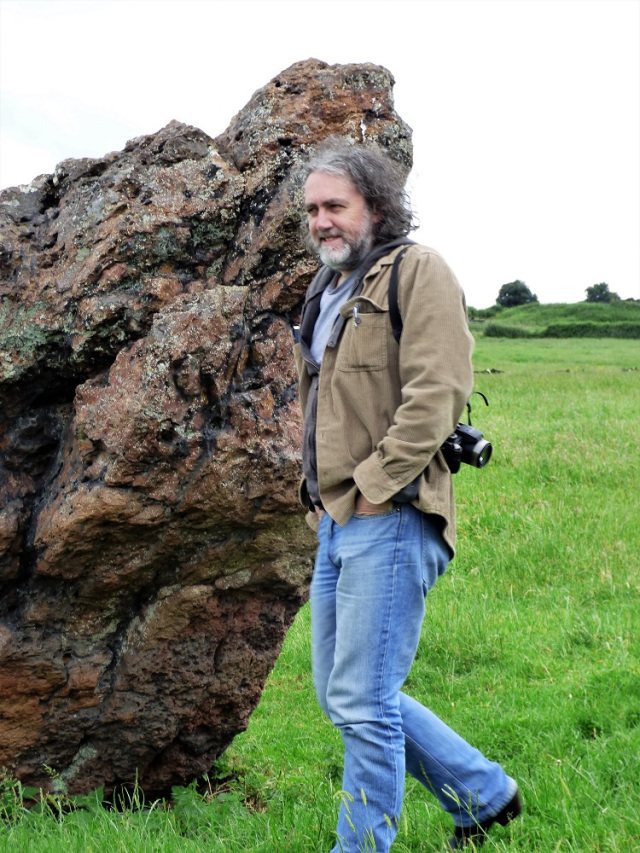 I first met Stuart France only relatively recently (more’s the pity!). I had gone to the UK to explore the land with Sue Vincent and Stuart. On arrival at Sue’s home, I was welcomed by Stuart. We were talking like old friends in minutes! Trust me, spending an evening in the company of Stuart and Sue’s isn’t just magical, it is regenerative and it restores your faith in humanity. As you can see below, and in his blogs, Stuart can be brief and to the point, but he can equally ‘wax lyrical’ about Albion, Magic, The Templars and much much more so enthusiastically that it lifts you to another level. He is a magical man and I’m happy to call him a friend.
By the way, if you haven’t read any of his books, they are deep and filled with wisdom, highly readable and also…
View original post 156 more words
Share this:

+ #Silenti, Biology and mysticism, Consciousness, People power, Politics, Politics and Power, spiritual turning around, Spirituality, Understanding Fear
Echoes of the Bunkermen
by Steve Tanham

I was born in the 1950s. It was an age riven by anxiety about nuclear war. Ten years after the Japanese cities of Hiroshima and Nagasaki had been destroyed by the first use of atomic-powered weapons, the west was still consumed with the horror of seeing Oppenheimer’s equations translated into an explosion that ripped apart buildings, adults and children on a scale envisaged only in science fiction.
The threat of this has not gone away, though it can be argued that the deadliness of what the American ‘war games’ strategists termed ‘Mutually Assured Destruction’ – MAD, has maintained the peace.
Some of the fiction of the time reflected the idea that the only survivors of an active MAD scenario would be be those ‘high’ officials important enough to warrant a place in a nuclear bunker. These were (and are) actual buildings set deep underground and stocked with everything such a group would need to survive the nuclear winter, as it was called, and re-emerge, years later, pure of creed, to begin civilisation, again.
Quite what mother nature would think of such beings was never discussed. But in my own heart, I developed a loathing for such a concept and the ludicrous politics that created such an idea in the first place. My pet name for these high-caste survivors was ‘the bunkermen’. I thought it appropriate, since it seemed always to be men, rather than women, whose aggression led to war, and whose willingness to lie about the facts, inequality and the complexity of human decision-making mirrored their lack of empathy.
As a long-departed aunt once said to me “The men were good at banging the drum, but not so good at mopping up the blood, afterwards.”
Fast forward half a century and, within the invisible bubble of the nuclear MAD, wars continue on a near-global scale. Nuclear-level money is spent on a second level of warfare that targets humans deemed worthy of assassination by descending missile, guided from satellite or drone control systems. Countries which possess the MAD systems may not use their own flags to fight wars, but ally themselves – often covertly – with proxy armies through which they operate on the ground. The past forty years of Afghanistan’s history are a perfect example of how this operates.
The last decade has been a difficult period to live through. Much of what we took for granted as ‘established and stable’ has been or is being swept away by authoritarian politics. To me, it feels as though the spirit of aggression moves through increasingly confrontation politics, designed to follow an age old model of mobilising hatred to create majorities in a politics that would seem dangerously out of touch, were there any alternatives that didn’t sweep away democracy in any form. That may follow, of course…
The results are focussed in two ways. Domestically, the sense of caring is diminished, and public institutions that support it are deliberately weakened. But a far more corrosive effect is being played out on the world stage, in which areas like parts of the Middle East become the point of focus for the most heartless policies – reducing the value of human life to nothing.
It may be that human life has no value to those who control this new order. Our worth may now be measured only in the sense that we are ‘economic units’ in a monetary world where increasing power is vested in fewer and fewer people. There is a certain logic in that being the end point of a system where the measure of value has become so singular. In those ‘fewer and fewer’ controllers I see again the bunkermen, safe in their gated estates, mixing only with their fellow bunker dwellers and exploiting their vast wealth in the cementing of the newly established status quo – in which everyone but them is poorer.
Against this tide of warped materialism stands the silent outrage of those who remember how much work it took to initialise the post-WW2 landscape of social institutions such as the provision of universal healthcare and the establishment of a minimum level of welfare that would provide the basics of living to those who were suffering through no fault of their own.
It’s a truism that ‘change is inevitable’. We can choose to believe that the state of the Earth is a soul-less cycle of cause and effect or we can see that nature has true cycles of evolution beyond the Darwinian model of biological mating and survival. Bigger factors can and do change the course of the planet’s history. The current, bleak outlook of the Covid-19 virus is an example of how something unforeseen a few months ago is changing the entire ‘health’ of the commercial world. I am not proposing that any kind of ‘divine intervention’ is behind the virus’ mutation into the human ecosystem, simply that the palette of such unforeseen and deadly triggers of chaos is much larger than mankind has ever considered – and therefore that our perceived ecological and societal stability may be an illusion we can no longer afford.
Against this background, the breakdown of the old order of ‘caring and inclusive’ societies may need to be re-evaluated. The nature of survival against, say, a deadly virus, requires us to work together, regardless of wealth or rank in society. The rich or powerful man is as much at risk as anyone else. True, they could retreat into a bunker of their own making, as continues to be the doomsday scenario in a post-nuclear holocaust, but who would want to emerge into the poisoned dust of such a world?
We have become disconnected from outrage. In Syria, children are freezing to death in their thousands on a nightly basis as they flee the barrel bombings of their own president; and this is just one example of many. Think Yemen or Myanmar and we will find the same deadly cocktail of a poor part of the world within which authoritarian powers play out ‘strategies’ of control that have failed us for the past century.
The bunker is our enemy more than those who inhabit it. It is state of mind as much as any other. The future of life on Earth is surely that we recognise our connections to every other member of the human race, and act in way that begins to include rather than exclude. In that, we will change the nature of mankind and face the real challenges at the microbial, viral and economic levels in a very different way. If we cannot offer support, then, at least we can turn to face suffering and offer awareness.
That is so much more than nothing… and, for a while we may have the freedom to open our personal bunkers and step out into the complex sunshine of a world not yet destroyed.
Share this:

+ #ShortWrytz, #Silenti, Lake District, landscapes, Photographic techniques, Photography, Silent Eye School, Spirituality
#ShortWrytz : Hope in the Sky
by Steve Tanham
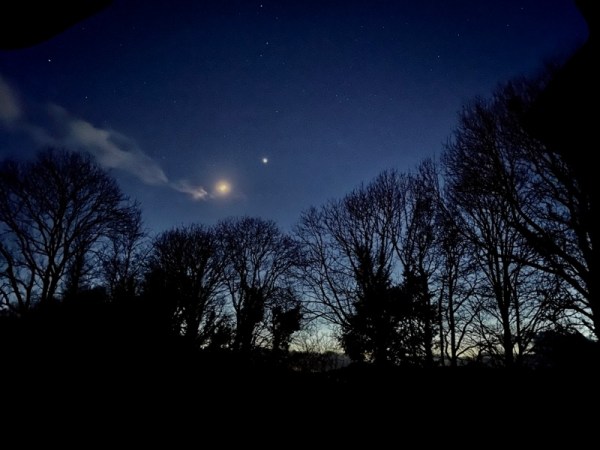
I have always looked for the key ‘moments’ as the turn of the year progresses. My favourite is the first day when you feel like ‘spring is in the air’. But, prior to that, there are certain nights in March when you feel that there is ‘hope’ in the sky – and sometimes that comes in the darkness rather than in the day.
Here in Cumbria, we have long, wet winters. A few days ago, we returned in the early evening from walking Tess, our collie, on one of Morecambe’s beaches (such a good alternative to the endless mud that fills the paths around where we live) to find an intense sense of brightness in the twilight sky. I looked up to see a wispy cloud formation that ended in a bright moon and, nearby, Venus.
I spent the next few minutes with the camera jammed firmly on the car’s roof while I reeled off a variety of shots with different compositions.
The above photo is my favourite. It gives me that ‘hang on’ feeling – that the sky is talking to you, that the long wet and dark winter is slowly giving way to what will be a very welcome spring…
©Stephen Tanham 2020
Stephen Tanham is a Director of the Silent Eye School of Consciousness, a not-for-profit teaching school of modern mysticism that helps people find a personal path to a deeper place within their internal and external lives.
The Silent Eye provides home-based, practical courses which are low-cost and personally supervised. The course materials and corresponding supervision are provided month by month without further commitment.
Steve’s personal blog, Sun in Gemini, is at stevetanham.wordpress.com.
Share this:

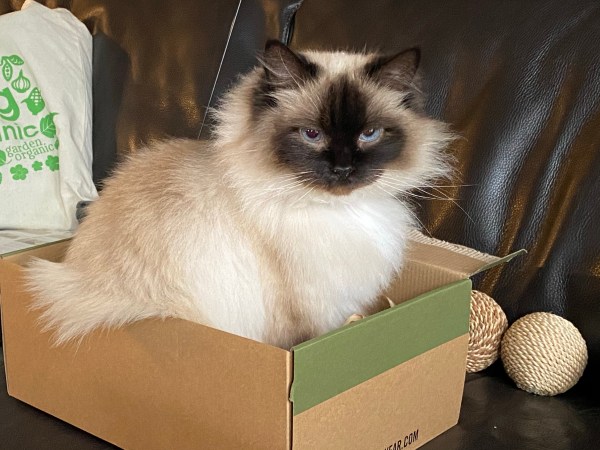
Human: Ah, you’ve found the new box!
Misti: it’s just the right size…
Human: But I was using it to store your play balls!
Misti: I moved them to where they’d be happier.
Human: Ah, yes… sigh.
©Stephen Tanham


 Sun in Gemini
You must be logged in to post a comment.